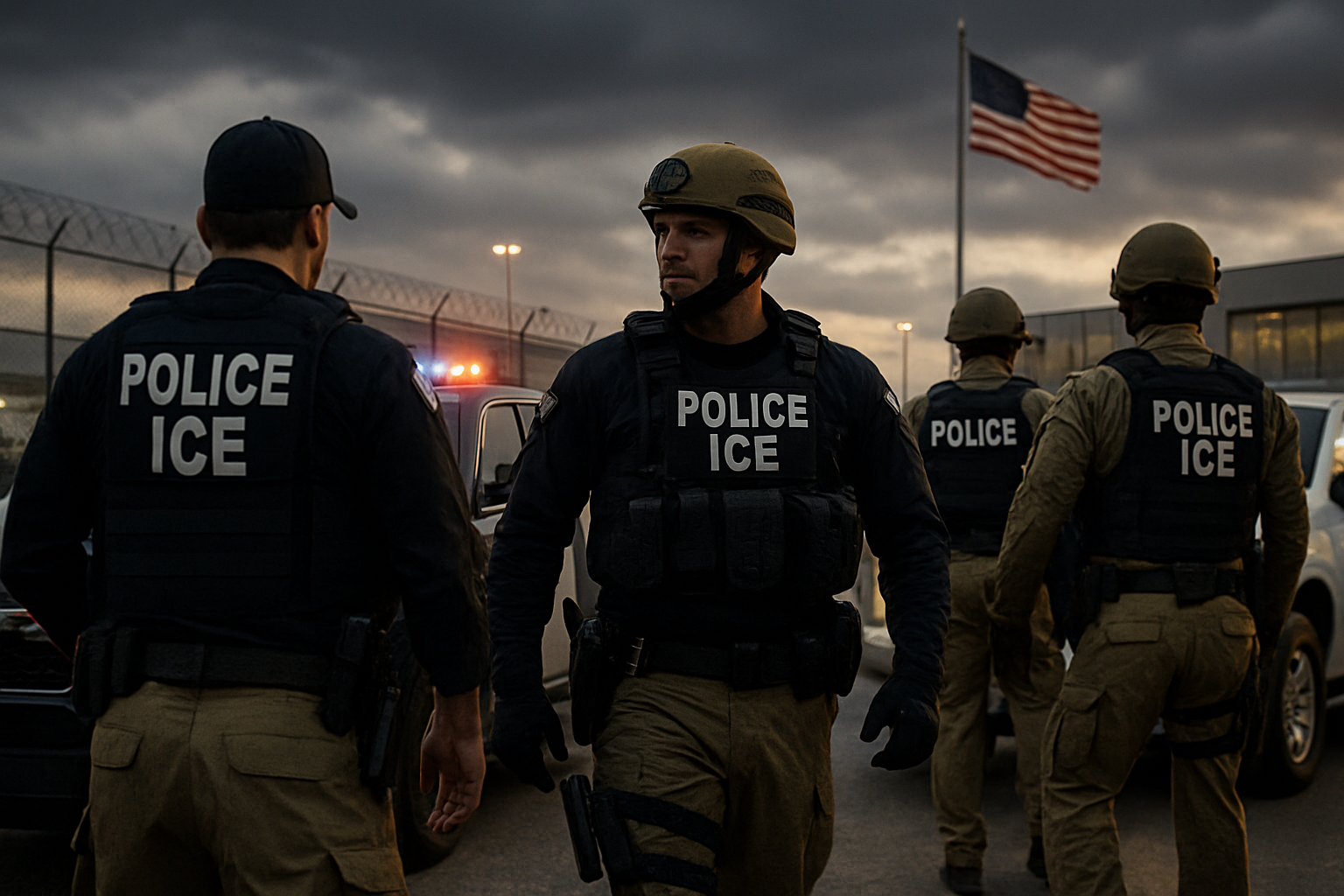
The Trump administration's immigration enforcement operations have intensified dramatically with daily deportation flights now operating from Minneapolis-St. Paul International Airport and federal raids targeting broader populations, including Native Americans facing racial profiling by ICE agents, according to new reports and court documents.
The escalation comes despite a deadly crisis in January that killed two U.S. citizens - Alex Pretti and Renee Nicole Good - leading to the withdrawal of 700 federal agents from Minnesota and implementation of mandatory body cameras for ICE operations in the state.
Daily Deportation Operations Track Record Numbers
A professional airplane enthusiast has been meticulously documenting federally chartered deportation flights departing Minneapolis-St. Paul International Airport as part of "Operation Metro Surge," revealing the scope of the Trump administration's enforcement campaign. The Department of Homeland Security is sending immigration detainees to other states and eventually to their countries of origin on a daily basis.
According to a University of California study, deportations from the U.S. interior have quadrupled - a 4.6-fold increase - during the first nine months of Trump's second administration compared to pre-Trump levels. This surge is driven by increased random arrests of undocumented individuals in public spaces, marking a significant departure from previous enforcement patterns.
The Guatemala Institute of Migration reports that 5,094 Guatemalan nationals were returned from the U.S. and Mexico in January 2026 alone, with an average age of 24 and many having spent three or more years abroad developing technical skills and work experience.
Widespread Targeting Beyond Traditional Enforcement
Court records from Chicago reveal the scope of ICE operations has expanded beyond criminal targets. Department of Homeland Security documents show a September 2025 raid involving federal agents rappelling from Black Hawk helicopters onto a Chicago South Shore apartment building "was based on intelligence that there were illegal aliens unlawfully occupying apartments in the building." Notably, there was no mention of criminal gangs or the Venezuelan Tren de Aragua group in the official documentation.
The enforcement operations have affected even Native Americans in Minneapolis, who report facing racial profiling and wrongful detentions by ICE agents despite being the "First Americans." The Native American community has established 'safe zones' to provide legal aid and many are rushing to obtain tribal identification cards for protection against mistaken detention.
Public Opinion Shifts Against Enforcement Tactics
An NPR/PBS/Marist poll reveals that two-thirds of Americans now believe ICE has "gone too far" in immigration enforcement, marking a significant shift in public opinion, particularly among Democrats and independents, while Republicans maintain their support for aggressive enforcement measures.
The polling shift follows the fatal shootings of Pretti and Good by ICE agents in Minneapolis in January 2026, which sparked protests and contributed to a three-day government shutdown. The crisis forced Trump to acknowledge the need for a "softer touch" approach, leading to the withdrawal of 700 agents from Minnesota.
"This is smarter law enforcement, not less law enforcement."
— Tom Homan, Border Czar
Tactical Adjustments After Deadly Crisis
Following the Minneapolis shootings, DHS Secretary Kristi Noem implemented mandatory body cameras for ICE agents effective February 2, 2026, representing a significant accountability shift. The federal agent deployment in Minnesota was reduced from approximately 2,700-3,000 to 2,000 agents.
The case of five-year-old Liam Conejo Ramos, who was detained with his father and later released after Federal Judge Fred Biery's scathing ruling, became a symbol of the aggressive enforcement tactics and contributed to community trust damage.
Economic and Social Impacts Widespread
The intensified enforcement has created widespread economic and social disruption. Major corporations including Target face employee pressure over ICE workplace raid protocols, while immigrant families are avoiding essential services out of fear. Workforce disruptions have been reported across agriculture, hospitality, and healthcare sectors.
The Mexican consulate has warned nationals about ICE operations during major public events, including the recent Super Bowl LX, advising citizens to "travel responsibly" in the current enforcement climate.
Legal Challenges Mount
Federal Judge Ana Reyes blocked the Trump administration's attempt to terminate Temporary Protected Status (TPS) for approximately 350,000 Haitians, ruling the decision was motivated by discriminatory considerations. An Oregon federal judge has required ICE to obtain warrants unless there's an escape risk, adding to judicial pushback against enforcement tactics.
Civil rights lawsuits challenging visa suspensions affecting 75 countries are proceeding through federal courts, with immigrant rights organizations citing constitutional violations and discriminatory intent.
Congressional Response and Funding Battles
Congressional Democrats are threatening to block DHS funding unless "drastic changes" are implemented in ICE operations, creating an unprecedented political crisis over immigration enforcement accountability. Current DHS funding only extends through February 13, setting up potential new battles over enforcement methods.
House Speaker Mike Johnson has scheduled two weeks of ICE reform debates, highlighting the political pressure mounting on the administration to modify its enforcement approach.
International Scrutiny Intensifies
The Trump administration's immigration enforcement has drawn extensive international media coverage from European, Asian, and American outlets highlighting tensions in the U.S. immigration system. The enforcement expansion now includes major public events beyond traditional workplace and residential raids, creating what observers describe as a "climate of concern" in immigrant communities.
Despite the Minnesota tactical adjustments, the Trump administration maintains that its overall enforcement strategy remains unchanged. The combination of daily deportation flights, expanded raid operations, and judicial challenges represents a critical test of federal law enforcement accountability and democratic oversight over immigration policy.
As enforcement operations continue to expand, the balance between immigration enforcement, community safety, and constitutional rights remains a defining challenge of the Trump administration's second term.