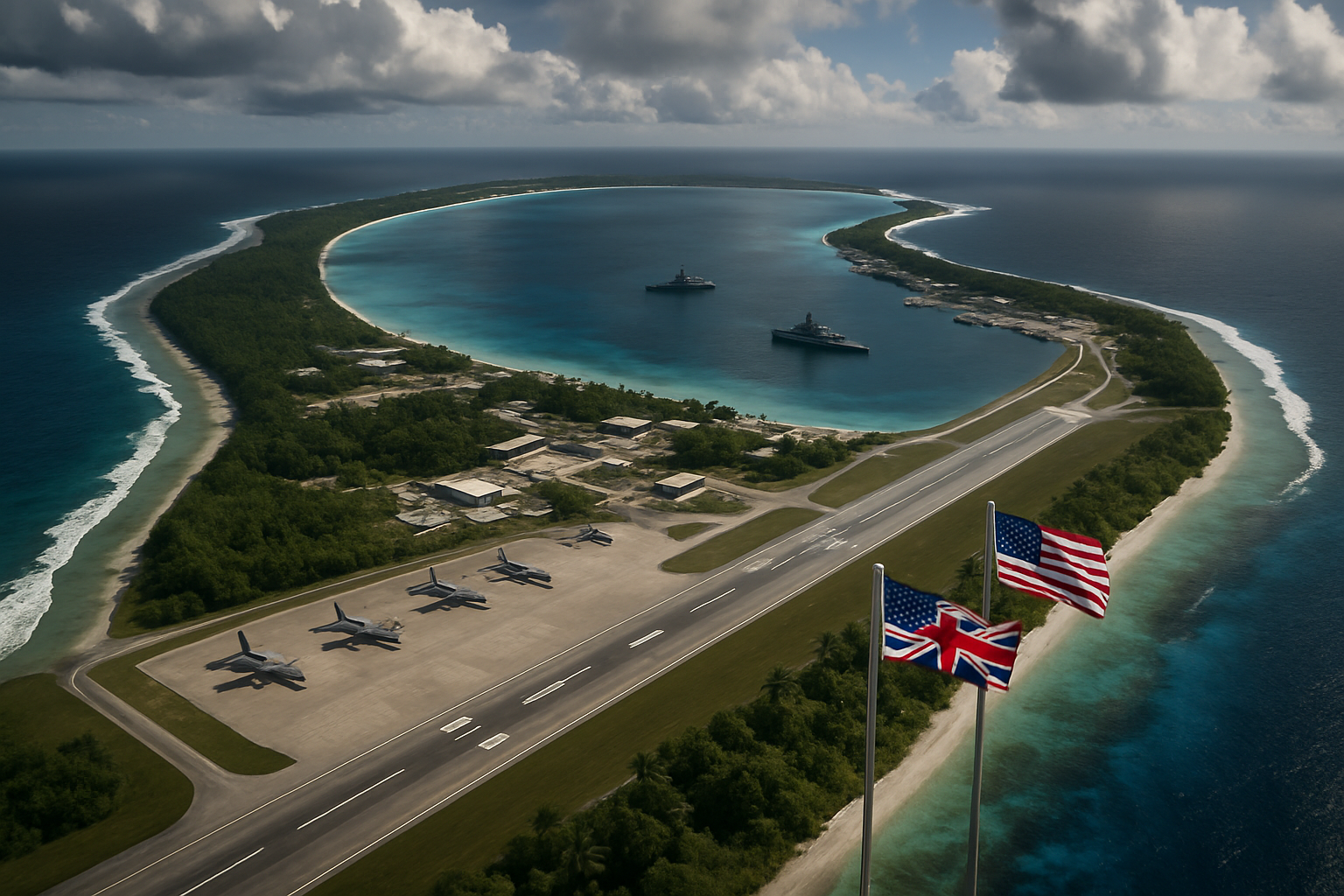
President Donald Trump has issued a forceful warning to the United Kingdom against proceeding with plans to transfer control of the Diego Garcia military base to Mauritius, declaring the move would be "a big mistake" and emphasizing the strategic importance of the facility for U.S. military operations.
In a social media post on Truth Social, Trump wrote, "DO NOT GIVE AWAY DIEGO GARCIA!" and stressed that Prime Minister Keir Starmer should not lose control of the strategic base "for any reason." The warning comes despite the U.S. State Department officially backing the UK's Chagos Islands deal on Tuesday, creating a notable divide between the administration's diplomatic position and the President's personal stance.
The controversy centers on a deal agreed to last year under which Britain would cede sovereignty of the British Indian Ocean Territory to Mauritius while leasing back Diego Garcia for 99 years to continue operating the joint US-UK military base. The arrangement represents one of the most significant territorial transfers involving Western powers in recent decades.
Strategic Military Importance
Trump's intervention highlights the critical strategic value of Diego Garcia in U.S. global military operations. The President warned that the United States "could be forced to use" the military base to "prevent a potential attack" from Iran if nuclear negotiations with Tehran fail, according to reports from multiple international sources.
The facility serves as a crucial staging area for U.S. military operations across the Indian Ocean region, providing strategic access between the Middle East and Asia-Pacific theaters. Located approximately 1,000 miles south of India, the base offers unparalleled positioning for power projection and intelligence operations.
"This land should not be taken away from the U.K. and, if it is allowed to be, it would be a blight on our Great Ally," Trump stated, emphasizing both the strategic and diplomatic implications of the proposed transfer.
Diplomatic Contradictions
The President's public warning creates an unusual diplomatic situation, with the U.S. State Department having formally endorsed the UK's arrangement with Mauritius just one day before Trump's statement. Washington's official backing described the deal as essential for maintaining long-term access to the military facilities while resolving decades-old sovereignty disputes.
In response to Trump's criticism, the UK Foreign Office defended the agreement, stating that the Chagos Islands deal was "crucial to the security of the UK and our key allies, and to keeping the British people safe." British officials emphasized that "the agreement we have reached is the only way to guarantee the long-term future of this vital military base."
The apparent disconnect between official U.S. diplomatic support and Trump's personal opposition reflects broader tensions within the administration over international agreements and alliance relationships.
Historical Context and Controversy
The Diego Garcia issue has been a source of international legal and diplomatic controversy for decades. The Chagos Archipelago was separated from Mauritius when the latter gained independence in 1968, with the islands subsequently leased to the United States for military purposes.
The arrangement forced the displacement of the Chagossian population, creating a long-standing humanitarian grievance that has been the subject of international legal proceedings. Multiple UN resolutions and International Court of Justice advisory opinions have supported Mauritius' sovereignty claims over the archipelago.
The proposed agreement represents Britain's attempt to resolve these legal challenges while maintaining military access through a 99-year lease arrangement. However, Trump's characterization of this lease as "tenuous, at best" suggests concerns about the long-term security of U.S. military operations under the new framework.
Iran Nuclear Context
Trump's warning takes on added significance given ongoing tensions with Iran over its nuclear program. The President's reference to potentially using Diego Garcia to "prevent a potential attack" from Iran underscores the base's role in Middle East contingency planning.
The facility's strategic positioning makes it invaluable for operations targeting Iran, providing a secure staging area beyond the reach of Iranian missile capabilities while remaining within striking distance of key targets. This military calculus appears to be driving Trump's opposition to any arrangement that might compromise long-term access.
Current U.S.-Iran nuclear negotiations have shown mixed results, with fundamental disagreements over the scope of any potential agreement. Iran continues to enrich uranium at 60% purity, approaching weapons-grade levels, while maintaining that ballistic missiles and regional proxy activities remain "red lines" excluded from negotiations.
Regional Security Implications
The Diego Garcia controversy occurs within a broader context of shifting regional security dynamics in the Indian Ocean. China's growing naval presence in the region has elevated the strategic importance of Western military facilities, making retention of Diego Garcia access a higher priority for U.S. defense planners.
The base serves as a critical link in the U.S. military's "island chain" strategy for containing Chinese expansion in the Indo-Pacific, providing capabilities for both surveillance and rapid response operations. Any uncertainty about long-term access could necessitate costly alternative arrangements or compromise operational flexibility.
Trump's public warning also reflects broader administration concerns about alliance burden-sharing and the reliability of international agreements. The President has repeatedly emphasized the need for allies to take greater responsibility for their own defense while questioning the sustainability of traditional security arrangements.
International Reactions
The controversy has generated significant international attention, with multiple countries and international organizations weighing in on the dispute. The African Union and other regional bodies have generally supported Mauritius' sovereignty claims, while Western allies have expressed varying degrees of concern about military access arrangements.
Some analysts view Trump's intervention as undermining traditional diplomatic processes and creating unnecessary tension with key allies. Others argue that the President's direct approach reflects legitimate security concerns that may have been inadequately addressed through conventional diplomatic channels.
The timing of Trump's statement, coming just after official State Department backing for the UK deal, suggests either poor internal coordination or a deliberate decision to distance the President from his administration's diplomatic position.
Looking Forward
The Diego Garcia dispute highlights fundamental tensions between legal/humanitarian concerns and strategic military requirements in the modern international system. Resolution will likely require balancing Mauritian sovereignty claims, Chagossian rights, British interests, and American security needs.
Trump's intervention makes clear that the United States will not simply accept arrangements that might compromise its strategic interests, regardless of diplomatic niceties or historical grievances. This approach reflects broader patterns in the administration's foreign policy, emphasizing bilateral relationships and direct presidential involvement in key decisions.
The ultimate resolution of this dispute will have significant implications for U.S.-UK relations, Indian Ocean security architecture, and the broader precedent for resolving post-colonial territorial disputes involving major power strategic interests.
As negotiations continue, all parties will need to find creative solutions that address legitimate sovereignty claims while maintaining the strategic access that both the United States and United Kingdom consider essential for regional security and global stability.