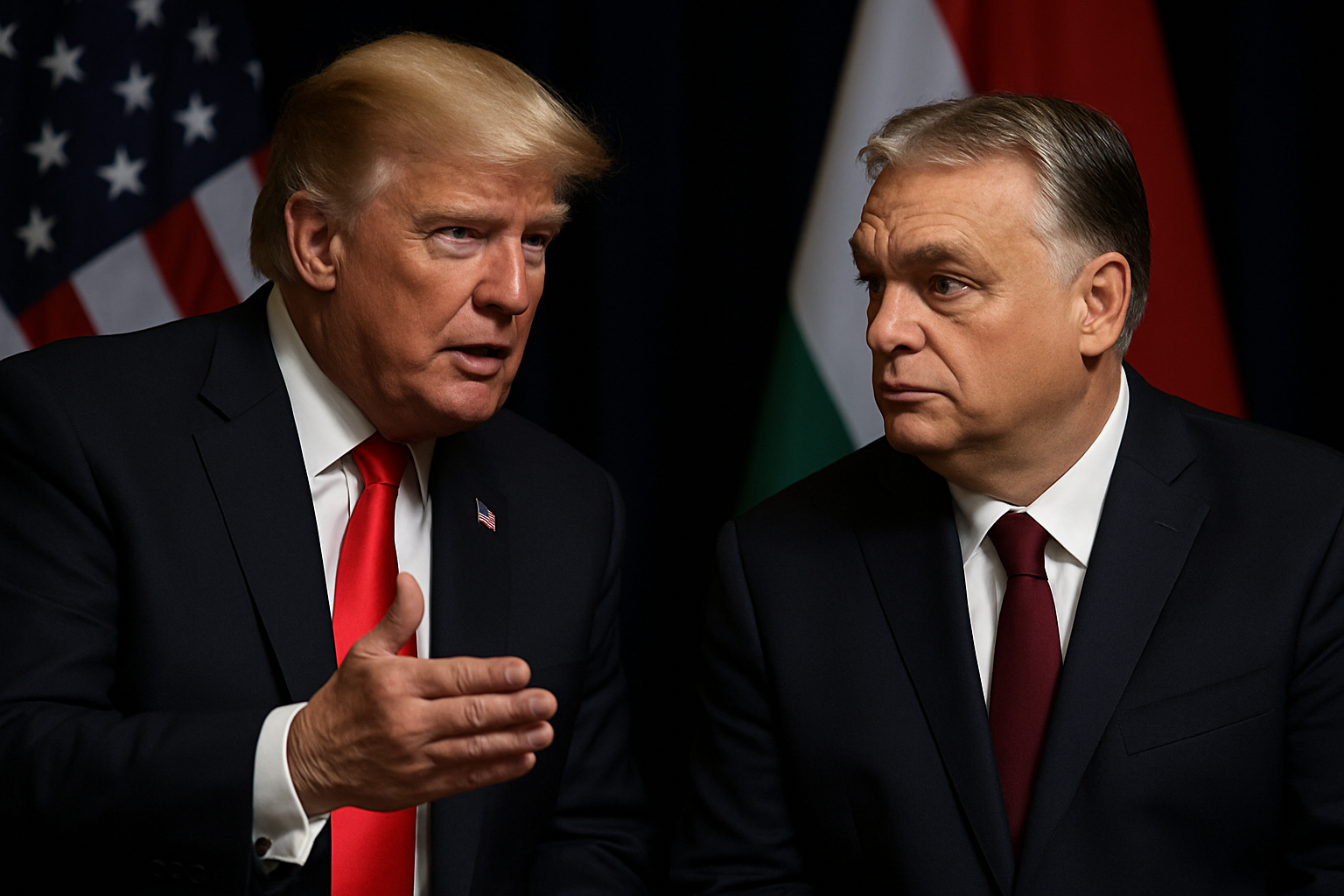
US President Donald Trump has thrown his full support behind Hungarian Prime Minister Viktor Orban ahead of Hungary's April 12 parliamentary elections, marking a significant international intervention as Orban faces his most challenging electoral battle since taking power in 2010.
In a statement posted on social media Thursday, Trump described Orban as "a truly strong and powerful leader" and declared his "complete and unconditional support" for the Hungarian prime minister's re-election bid. The endorsement comes at a critical moment for Orban, whose Fidesz party is polling in second place for the first time since 2010, according to multiple Hungarian polling organizations.
"Viktor is a true friend, fighter and WINNER," Trump wrote in his endorsement. "The relationship between Hungary and the United States has reached new heights, and Viktor can do it again."
Orban's Electoral Vulnerability
The American president's intervention highlights the precarious position of one of Europe's longest-serving leaders. Recent polling data shows Orban's Fidesz party trailing opposition coalitions, marking a dramatic shift in Hungarian politics after more than a decade of dominant rule.
Polish sources report that for the first time since 2010, surveys indicate Fidesz could lose power, creating anxiety within Orban's political circle about the April vote. The prime minister has built his political brand on strong nationalist policies and opposition to EU immigration quotas, positions that have resonated with Trump's own political approach.
Romanian media outlets note that Orban finds himself "in difficulty in the polls" just two months before the crucial election, prompting the Hungarian leader to seek international support to bolster his domestic standing.
Strategic Alliance Between Populist Leaders
The Trump-Orban relationship represents one of the closest ties between the US president and a European leader. Trump has consistently praised Orban's hardline approach to immigration and his nationalist policies, viewing the Hungarian leader as a key ally in his broader critique of liberal international institutions.
During his social media endorsement, Trump emphasized the strengthened bilateral relationship, stating that relations between Hungary and the United States had "reached new heights" under their parallel leadership. This assessment reflects the significant diplomatic warming between Washington and Budapest during Trump's presidency.
"Viktor works hard for Hungary and the United States. We have achieved an extraordinary level of cooperation."
— Donald Trump, US President
Al Jazeera reports that Trump has particularly praised Orban's hardline approach to immigration and nationalist policies, seeing in the Hungarian leader a reflection of his own political philosophy and governing style.
International Implications
Trump's public endorsement of a European leader ahead of democratic elections represents an unusual degree of American intervention in European Union politics. The move is likely to raise concerns among EU officials about external interference in member state elections, particularly given the strained relationship between Brussels and Budapest over rule of law issues.
The endorsement also signals Trump's continued preference for working with populist and nationalist leaders across Europe, rather than traditional EU establishment figures. This approach aligns with his broader strategy of building relationships with leaders who share his skeptical view of multilateral institutions.
Slovak media sources indicate that Trump has "officially entered" the Hungarian campaign with his endorsement, describing it as an unprecedented level of American involvement in European electoral politics.
Nuclear Energy Partnership
The timing of Trump's endorsement coincides with significant developments in US-Hungarian cooperation, including Hungary's launch of its second nuclear power plant construction project. The Paks-2 facility represents Europe's largest nuclear construction initiative, with Russian involvement that has drawn international attention amid ongoing geopolitical tensions.
This nuclear cooperation highlights the complex nature of Hungary's international relationships, as Orban maintains strong ties with both Washington and Moscow, often positioning Hungary as a bridge between East and West.
Domestic Political Context
Orban's electoral challenges stem from a combination of economic pressures, EU tensions, and growing domestic opposition unity. The Hungarian opposition has managed to coordinate more effectively than in previous election cycles, presenting a unified front against Fidesz's continued rule.
Lithuanian sources confirm that Trump's support comes as Orban faces "upcoming general elections" where his political survival is genuinely in question for the first time in over a decade. The opposition has successfully framed the election as a referendum on Orban's authoritarian tendencies and his controversial relationship with Moscow.
Economic concerns, including inflation and EU funding disputes, have also contributed to Orban's declining popularity. The European Union has suspended billions in funding to Hungary over rule of law concerns, creating fiscal pressures that have affected public opinion.
Campaign Strategy and International Support
Trump's endorsement appears designed to help Orban portray himself as an internationally respected leader with strong ties to the world's most powerful democracy. The Hungarian prime minister has consistently emphasized his relationship with Trump as evidence of Hungary's global significance and diplomatic influence.
The endorsement also serves Trump's own political interests, as he seeks to maintain relationships with allied leaders who share his political philosophy. Orban's success or failure in the April elections could influence the broader populist movement across Europe and impact Trump's own international standing.
Ukrainian sources note that Orban is "trailing in the polls for the first time since he took power in 2010," making international support particularly valuable as he seeks to reverse his electoral fortunes.
Regional Security Implications
The Trump-Orban alliance has significant implications for regional security arrangements, particularly regarding NATO unity and EU defense cooperation. Hungary's position within these institutions has often been complicated by Orban's relationships with non-Western powers and his frequent criticism of liberal democratic values.
Orban's electoral fate could influence Hungary's future role within NATO and the EU, particularly regarding sanctions policy toward Russia and support for Ukraine. The Hungarian leader has been one of the most vocal critics of EU sanctions and has maintained economic relationships with Moscow despite international pressure.
Looking Ahead to April
The April 12 election will serve as a crucial test of populist politics in Europe and the effectiveness of international endorsements in domestic campaigns. Trump's support provides Orban with a significant propaganda tool, but it remains unclear whether American backing will translate into Hungarian votes.
Opposition leaders have criticized the international endorsement as evidence of Orban's authoritarian tendencies and his willingness to subordinate Hungarian sovereignty to foreign powers. They argue that Hungary needs leadership that prioritizes European integration and democratic values over personal relationships with controversial international figures.
The election outcome will have implications far beyond Hungary's borders, potentially influencing the future direction of European politics and the strength of the populist movement across the continent. For Trump, Orban's success or failure will serve as an early indicator of his own international influence and the viability of his political coalition.
As Hungary prepares for what many observers consider its most consequential election in decades, Trump's endorsement adds an international dimension to what was already shaping up as a defining moment for European democracy and the future of populist governance.