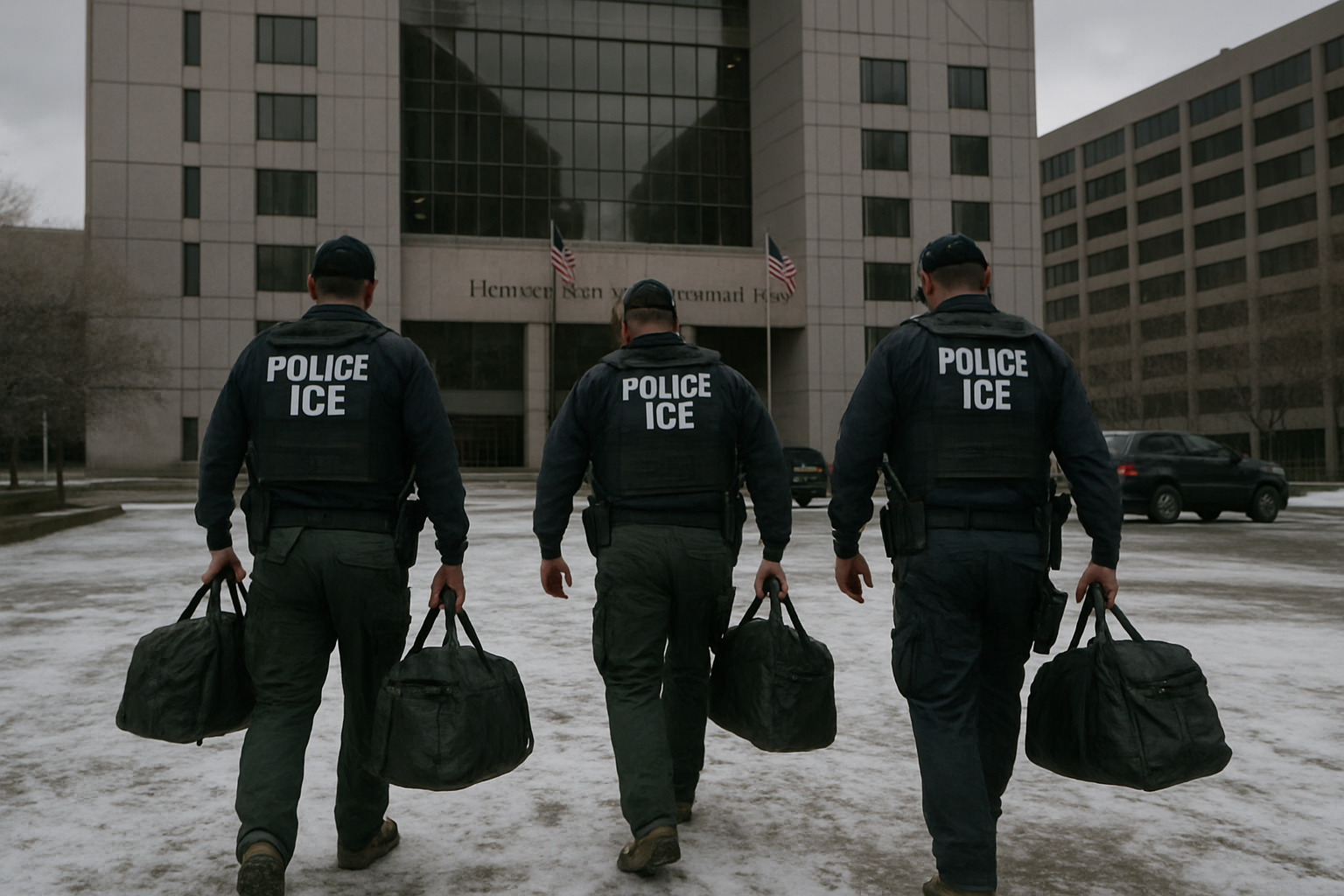
The Trump administration's controversial immigration enforcement surge in Minnesota came to an end Thursday, with Border Czar Tom Homan announcing the conclusion of "Operation Metro Surge" after two months of intensive operations that sparked nationwide protests, resulted in over 4,000 arrests, and led to the deaths of two American citizens.
Speaking at a Minneapolis news conference, Homan confirmed that President Trump had approved his request to conclude the operation, which began in December 2025 as part of the administration's intensified immigration enforcement strategy. The announcement marks the end of one of the most controversial federal law enforcement operations in recent memory.
"I have proposed and President Trump has concurred that this surge operation conclude," Homan told reporters. "A significant drawdown has already been under way this week and will continue through the next week."
Operation Metro Surge: By the Numbers
The operation, which deployed between 2,700 and 3,000 federal agents to Minnesota at its peak, resulted in the detention of more than 4,000 undocumented immigrants over its two-month duration. The surge represented one of the largest domestic immigration enforcement operations in U.S. history, according to multiple international sources monitoring the situation.
However, the operation's aggressive tactics and broad scope drew immediate criticism from civil rights organizations, Democratic politicians, and international observers. The enforcement activities expanded beyond traditional workplace raids to include residential areas, public spaces, and community gatherings, creating what critics described as a "climate of concern" in immigrant communities across Minnesota.
The operation took a tragic turn in January 2026 when two U.S. citizens, Alex Pretti and Renee Nicole Good, were fatally shot by ICE agents during enforcement activities. These deaths sparked nationwide protests and contributed to a three-day partial government shutdown as Congressional Democrats demanded accountability measures.
Political Fallout and Federal Response
The civilian deaths prompted immediate changes to federal enforcement protocols. DHS Secretary Kristi Noem implemented mandatory body cameras for all ICE agents operating in Minneapolis, effective February 2, 2026. The policy represented the first time in the agency's history that such comprehensive recording requirements were instituted for field operations.
"As a result of our efforts here, Minnesota is now less of a sanctuary state for criminals," Homan said at Thursday's news conference, defending the operation's outcomes despite the controversies.
— Tom Homan, Border Czar
Democratic Governor Tim Walz had predicted earlier this week that the operation would end in "days, not weeks and months," based on his conversations with senior Trump administration officials. The governor had been a vocal critic of the federal presence, arguing that the massive deployment was excessive and counterproductive to public safety.
Congressional Democrats had threatened to block Department of Homeland Security funding unless "drastic changes" were implemented in ICE operations. The political pressure intensified after House Speaker Mike Johnson scheduled two weeks of ICE reform debates following the resolution of the government shutdown.
Community Impact and Resistance
The operation profoundly affected Minnesota's immigrant communities, with families reportedly hiding in their homes for weeks to avoid detection. Local advocacy groups documented cases of Native Americans being wrongfully detained despite their indigenous status, leading some tribal communities to establish safe zones and distribute tribal identification cards for protection.
Major corporations, including Target, faced pressure from employees over workplace raid protocols and demands for clearer guidance on federal agent access to stores and parking lots. The enforcement activities disrupted economic sectors including agriculture, hospitality, and healthcare, where immigrant workers comprise significant portions of the workforce.
The case of five-year-old Liam Conejo Ramos, who was detained along with his father at a Texas facility in January, became a symbol of the operation's controversial tactics. Federal Judge Fred Biery ordered their release with a scathing ruling criticizing the administration's approach, and the image of the child in his Spider-Man backpack became an enduring symbol of the enforcement's impact on families.
Legal Challenges and Judicial Oversight
The Minnesota operation faced numerous legal challenges, with federal judges in multiple jurisdictions requiring ICE warrants before arrests unless there was an escape risk. Federal Judge Ana Reyes blocked the Trump administration's attempt to terminate Temporary Protected Status for approximately 350,000 Haitians, citing discriminatory intent based on derogatory statements during the campaign.
Civil rights organizations filed lawsuits challenging visa suspensions affecting 75 countries, arguing that the policies violated due process rights and were motivated by discriminatory animus rather than legitimate policy concerns. These legal challenges contributed to the mounting pressure on the administration to modify its enforcement approach.
International Scrutiny and Media Coverage
The Minnesota operation drew extensive international media coverage, with outlets across Europe, Asia, and the Americas highlighting the tensions within the U.S. immigration system. French media reports described events occurring "in the shadow of ICE," while German sources noted the "brutal approach" that had "shaken the USA."
The Mexican government issued warnings to its nationals about ICE operations during major public events, including the Super Bowl, demonstrating how the enforcement activities affected diplomatic relationships and international perceptions of American domestic policy.
Shifting Public Opinion
Polling data from NPR/PBS/Marist revealed that two-thirds of Americans believed ICE had "gone too far" in its immigration enforcement, marking a significant shift in public opinion. The polling showed increased disapproval among Democrats and independents, while Republicans maintained their support for enforcement activities.
This shift in public sentiment contributed to what Trump administration officials began characterizing as a need for a "softer touch" in immigration enforcement—a significant departure from the typically hardline stance that had defined the president's immigration policies.
Economic and Social Consequences
The operation's economic impacts extended beyond Minnesota's borders. A University of California study revealed that deportations from the U.S. interior had quadrupled during the first nine months of Trump's second administration compared to pre-Trump levels. Guatemala's Institute of Migration reported that 5,094 Guatemalan nationals were returned from the U.S. and Mexico in January 2026 alone, many having developed technical skills and work experience during their time abroad.
The enforcement activities led immigrant families to avoid essential services, creating public health concerns and straining community trust. Educational institutions reported increased absenteeism as families kept children home out of fear, while healthcare providers noted reduced utilization of services among immigrant populations.
Future of Immigration Enforcement
While announcing the end of Operation Metro Surge, Homan emphasized that approximately 2,000 federal agents would remain in Minnesota, and he indicated he would personally "stay in Minnesota a little longer to oversee the drawdown, to ensure its success." The border czar characterized the scaling back as "smarter law enforcement, not less law enforcement."
The administration maintained that its overall enforcement strategy remained unchanged despite the tactical adjustments in Minnesota. Daily deportation flights continued from Minneapolis-St. Paul International Airport, and enforcement operations expanded to other states, suggesting that the Minnesota conclusion represented a strategic repositioning rather than a fundamental policy change.
Setting Precedents for Accountability
The Minnesota operation's conclusion sets important precedents for federal law enforcement accountability. The implementation of body cameras, the reduction in agent numbers following public outcry, and the judicial oversight requirements established new frameworks for how immigration enforcement operations might be conducted and monitored in the future.
The case demonstrates the complex interplay between federal enforcement authority, state and local cooperation, judicial oversight, and public opinion in shaping immigration policy implementation. It also highlights the ongoing tensions between the administration's enforcement priorities and community safety, constitutional rights, and international diplomatic relationships.
As federal agents begin their withdrawal from Minnesota, the operation's legacy will likely influence how future immigration enforcement is planned, implemented, and overseen. The precedent of scaling back operations due to public pressure and political opposition may affect similar operations in other states, while the accountability measures implemented could become standard practice for federal law enforcement agencies.
The conclusion of Operation Metro Surge marks not just the end of a specific enforcement action, but potentially the beginning of a new phase in how America balances immigration enforcement with civil rights, public safety, and democratic accountability in an increasingly polarized political environment.