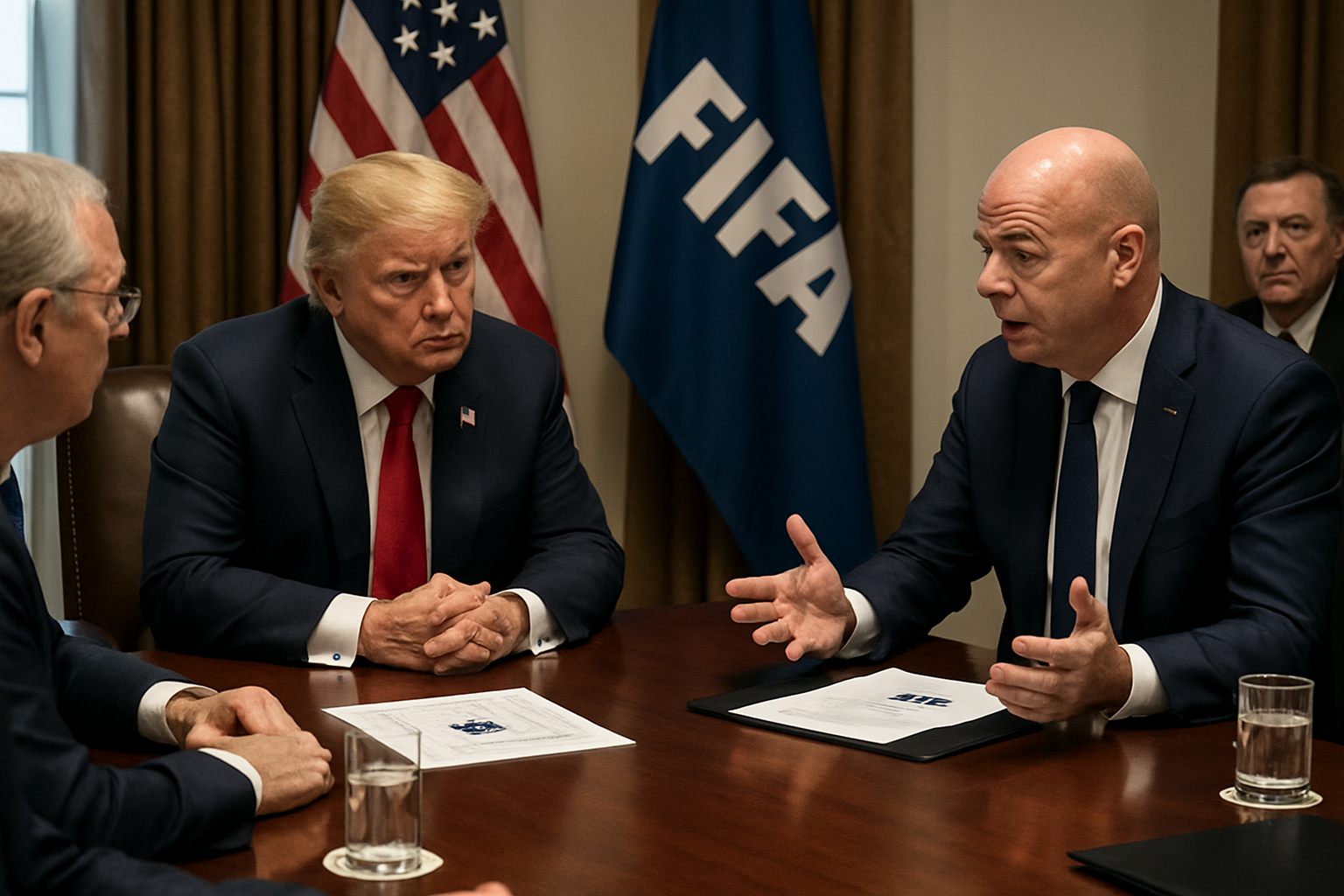
A top Trump administration envoy has made an unprecedented request to FIFA President Gianni Infantino to replace Iran's national team with Italy at the 2026 World Cup, according to multiple reports, marking a dramatic escalation in diplomatic tensions surrounding the tournament.
Paolo Zampolli, serving as President Trump's special envoy for global partnerships, confirmed to the Financial Times that he had suggested the controversial idea to both Trump and FIFA President Gianni Infantino. The proposal comes amid ongoing geopolitical tensions between the United States and Iran that have cast uncertainty over the tournament scheduled to begin June 11, 2026.
"I'm an Italian native and it would be a dream to see the Azzurri at a US-hosted tournament," Zampolli told the Financial Times, revealing personal motivation behind the diplomatic overture.
Historical Context of Iran's World Cup Crisis
This latest development represents a new chapter in the complex saga surrounding Iran's participation in the 2026 World Cup. The tournament has been plagued by uncertainty regarding Iran's involvement since early 2026, when geopolitical tensions between Iran and the United States reached critical levels.
Iran was originally drawn in Group G alongside Belgium, New Zealand, and Egypt, with matches scheduled in Inglewood, California (June 15 against New Zealand and June 21 against Belgium) and Seattle (June 26 against Egypt). However, the nation's participation has been subject to ongoing diplomatic negotiations and security concerns.
FIFA President Gianni Infantino had previously provided assurances that Iran would participate in the tournament, stating definitively in March 2026 that "Iran will be at the World Cup and will play their group matches in the United States, according to the original planning." This came after Iran had formally requested FIFA to relocate their matches to Mexican venues due to security concerns.
Italy's World Cup Absence and Political Implications
The timing of Zampolli's request carries particular significance given Italy's stunning absence from the 2026 World Cup. The four-time World Cup winners and defending European champions suffered a shocking 4-1 penalty defeat to Bosnia and Herzegovina in the playoff finals on March 31, 2026, marking their third consecutive World Cup miss (2018, 2022, 2026).
Italian sources suggest that Zampolli's proposal is being framed as an attempt to "repair relations between Trump and [Italian PM Giorgia] Meloni," according to ANSA reports. Relations between the Trump administration and Italy have become strained, particularly over disagreements regarding Iran policy and broader Middle Eastern strategy.
The diplomatic rift between Trump and Meloni reached a public crescendo in April 2026 when Trump called the Italian Prime Minister "unacceptable" and declared "I was wrong about her courage" in a Corriere della Sera interview, following Meloni's criticism of Trump's attacks on Pope Leo XIV and her refusal to support certain aspects of U.S. Iran policy.
FIFA's Position and Tournament Integrity
FIFA has consistently maintained its commitment to political neutrality while navigating the unprecedented challenges posed by geopolitical tensions. The organization has faced criticism for its handling of the Iran situation, with calls for stronger protection mechanisms for athletes facing persecution.
The 2026 World Cup represents the largest tournament in FIFA history, featuring an expanded 48-team format with 104 matches across the United States, Canada, and Mexico. Nearly 2 million tickets have already been sold for the tournament, which concludes on July 19, 2026, at the New York New Jersey Stadium.
Any change to the tournament format at this late stage would create massive logistical challenges, affecting not only the teams involved but also broadcasters, ticketholders, and the estimated 200,000+ Iranian-Americans in the Los Angeles "Tehrangeles" community who had been anticipated to support their national team.
Broader Geopolitical Context
The request comes against the backdrop of the most complex international relations environment since the Cold War. The Trump administration has been managing multiple simultaneous crises, including ongoing tensions in the Middle East, strained NATO relationships, and unprecedented challenges to traditional diplomatic frameworks.
Iran's sports participation has become increasingly politicized, with the country's women's football team seeking asylum in Australia earlier in 2026 after being labeled "wartime traitors" by Iranian state television for their silence during the national anthem at international matches.
The situation has tested FIFA's foundational principle that football should transcend political boundaries, while simultaneously exposing the organization to criticism for inadequate protection mechanisms for athletes facing persecution for symbolic protests.
Economic and Strategic Implications
The 2026 World Cup is projected to be the most commercially successful tournament in FIFA history, with unprecedented revenue expectations across the three host nations. Any changes to the participating teams could affect broadcasting rights, sponsorship agreements, and tourism projections, particularly for Mexico, which is counting on the tournament for post-pandemic economic recovery.
Italy's absence from the tournament has already cost the nation an estimated 30 million euros in FIFA prize money and sponsorship bonuses, while creating a political crisis that led to the resignation of Italian Football Federation President Gabriele Gravina and coach Gennaro Gattuso.
Looking Ahead
With less than two months remaining until the tournament begins, any resolution to the Iran question must come quickly. The situation represents a template-setting precedent for how international sporting bodies navigate geopolitical tensions in an increasingly multipolar world.
The outcome will likely influence not only the immediate tournament but also establish frameworks for future international sporting events dealing with similar political challenges. As the world's most-watched sporting spectacle, the World Cup carries unique symbolic weight in demonstrating whether sport can truly transcend political realities.
FIFA has yet to officially respond to Zampolli's request, but the organization faces mounting pressure to clarify Iran's status and maintain tournament integrity while managing unprecedented diplomatic complexities. The situation continues to evolve as the June 11 opening match at Estadio Azteca in Mexico City approaches.