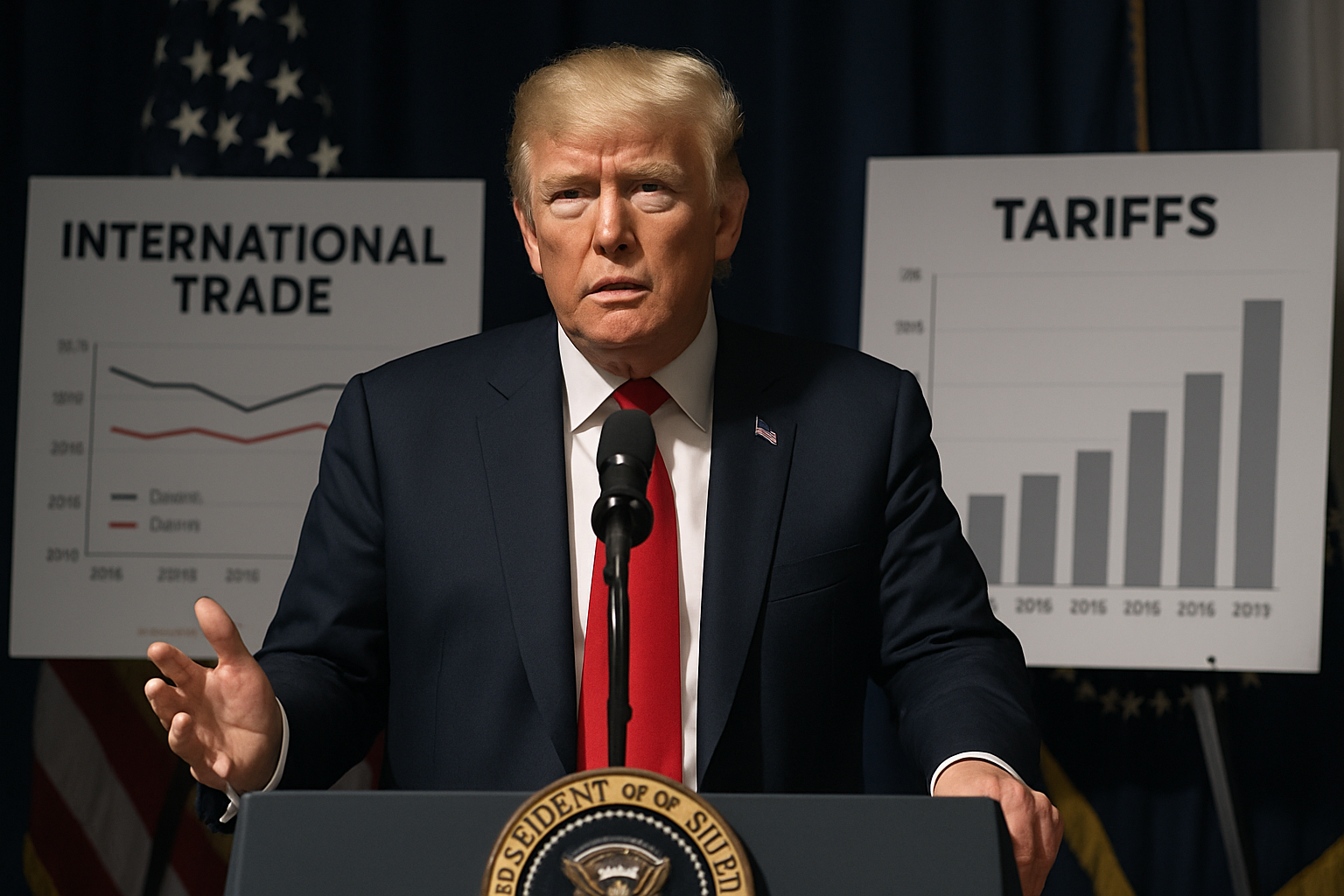
President Donald Trump has escalated his global trade war by raising worldwide tariffs to 15% following a devastating 6-3 Supreme Court ruling that struck down his previous tariff regime as unconstitutional, creating an unprecedented constitutional crisis and drawing sharp criticism from international leaders.
The dramatic escalation came just hours after the Supreme Court delivered a historic blow to Trump's trade policy, with Chief Justice John Roberts authoring a majority opinion that applied the "major questions doctrine" to rule that the International Emergency Economic Powers Act (IEEPA) "does not authorize president to impose tariffs" without clear congressional authorization.
Swift Defiance of Supreme Court Ruling
Trump's immediate response to the court's decision represented the most severe attack on the federal judiciary in modern presidential history. The president called the justices "absolutely ashamed," described them as a "disgrace to our nation," and declared them "disloyal to Constitution" in a series of inflammatory statements that legal scholars characterized as an unprecedented challenge to the separation of powers.
Within hours of the ruling, Trump implemented the maximum 15% tariff rate permitted under Section 122 of the 1974 Trade Act, effective for 150 days. The provision, which has remained largely unused in modern history, allows the executive to bypass Congress temporarily to address international payment imbalances.
"In response to this ridiculous, poorly written, and extraordinarily anti-American decision, I will be increasing global tariffs to the maximum allowable level of 15 percent with immediate effect."
— President Donald Trump, via Truth Social
International Leaders Express Alarm
The tariff escalation has drawn condemnation from across the globe, with European officials expressing serious concerns about American trade policy predictability and its impact on global economic stability.
Brazilian President Luiz Inácio Lula da Silva called for equal treatment of all countries, warning against creating a "new Cold War" through discriminatory trade policies. Swedish media described the situation as "a real mess," while Spanish business leaders and diplomats struggled to understand the scope of Trump's latest threats.
Former President Barack Obama issued a statement condemning the Supreme Court decision as leaving Americans "less safe, less healthy," calling Trump's policy response a "gift to billionaire polluters" while expressing broader concerns about democratic institutions under pressure.
Constitutional Crisis Deepens
Legal experts describe Trump's immediate implementation of alternative tariffs as creating the most serious executive-judicial confrontation since the Watergate era. The president's direct defiance of the Supreme Court through immediate replacement measures represents an unprecedented challenge to judicial review and the fundamental principle of separation of powers.
The Supreme Court ruling was based on the "major questions doctrine," which requires clear congressional authorization for executive actions of "vast economic and political significance." The 6-3 decision included conservative justices, demonstrating that even Trump-appointed judges refused to endorse expansive executive trade power interpretations.
Congressional resistance to Trump's trade policies has been mounting, with the House passing legislation 219-211 to end Canada tariffs with six Republican defections joining Democrats – the first significant bipartisan rebuke of Trump's trade authority in his second term.
Economic and Market Implications
Wall Street initially surged on news of the Supreme Court ruling, with the Nasdaq gaining 0.90% to 22,886.07 and the S&P 500 rising 0.69% to 6,090 points as markets celebrated reduced trade uncertainty. However, gains moderated following Trump's announcement of replacement tariffs.
Oil prices increased more than $1 per barrel on the heightened uncertainty, while the potential for billions in tariff refunds creates administrative challenges for importers who have paid approximately $200 billion since Trump's return to office.
The US trade deficit remains at $901.5 billion annually as of December 2025, essentially unchanged despite extensive tariff policies, demonstrating the structural nature of trade imbalances that transcend tariff adjustments.
Global Trade Partners Respond
China welcomed the Supreme Court ruling as vindication of its position, potentially strengthening Beijing's negotiating stance before Trump's scheduled visit to China on March 31-April 2. The ruling comes as China announced zero-tariff access for 53 African countries beginning May 1, representing the most comprehensive China-Africa trade expansion in history.
European Union officials expressed cautious optimism about the court ruling but remain concerned about replacement measures. The EU has been implementing its own strategic responses, including tariff reductions with China on dairy products affecting over $500 million in trade.
The new 15% tariff framework maintains exemptions for minerals, fertilizers, metals, energy equipment, agricultural products, pharmaceuticals, and medical raw materials, and does not apply to USMCA partner countries.
Legal Challenges Expected
Constitutional experts predict immediate legal challenges to Trump's use of Section 122 authority, questioning whether the alternative statutory framework can support such broad trade restrictions. The World Trade Organization rules limit unilateral tariff actions, creating additional grounds for international legal challenges.
Environmental groups are simultaneously challenging Trump's climate policy rollbacks, creating multiple fronts of legal resistance to the administration's regulatory approach. The convergence of trade and environmental challenges represents a comprehensive test of executive authority limits.
Historical Significance and Future Implications
The current crisis represents the most significant constitutional law moment extending far beyond trade policy to fundamental questions of governmental power balance in the 21st century. The Supreme Court's willingness to constrain presidential emergency powers, even with politically loyal appointees, demonstrates that institutional independence can prevail over political considerations.
The 150-day limit on the new tariffs creates urgent pressure for congressional approval or alternative policy approaches. Trump must secure legislative support or find new legal authorities before the temporary measures expire, establishing a critical test period for American constitutional governance.
International observers are closely monitoring the American institutional response as a crucial factor for global cooperation on trade, security, and democratic governance. The resolution of this crisis will establish precedents for presidential power limitations that will influence executive authority confrontations for generations to come.
Congressional Response and Political Ramifications
The crisis has exposed deep divisions within the Republican Party, with six House Republicans breaking ranks to support ending Canada tariffs despite intense White House pressure. Speaker Mike Johnson's unsuccessful attempt to prevent the floor vote highlighted growing caucus anxiety about Trump's unpredictable trade approach.
Democrats have seized on the vote to criticize the limited scope of Republican opposition while using the constitutional crisis to highlight concerns about democratic institutions. The midterm election implications for competitive seats add political complexity to the constitutional questions at stake.
The success or failure of this confrontation between executive power and constitutional limitations will influence not only American governance but also serve as a template for how democratic institutions respond to executive power challenges worldwide. As the 150-day countdown begins, the stakes could not be higher for the future of American democracy and international stability.