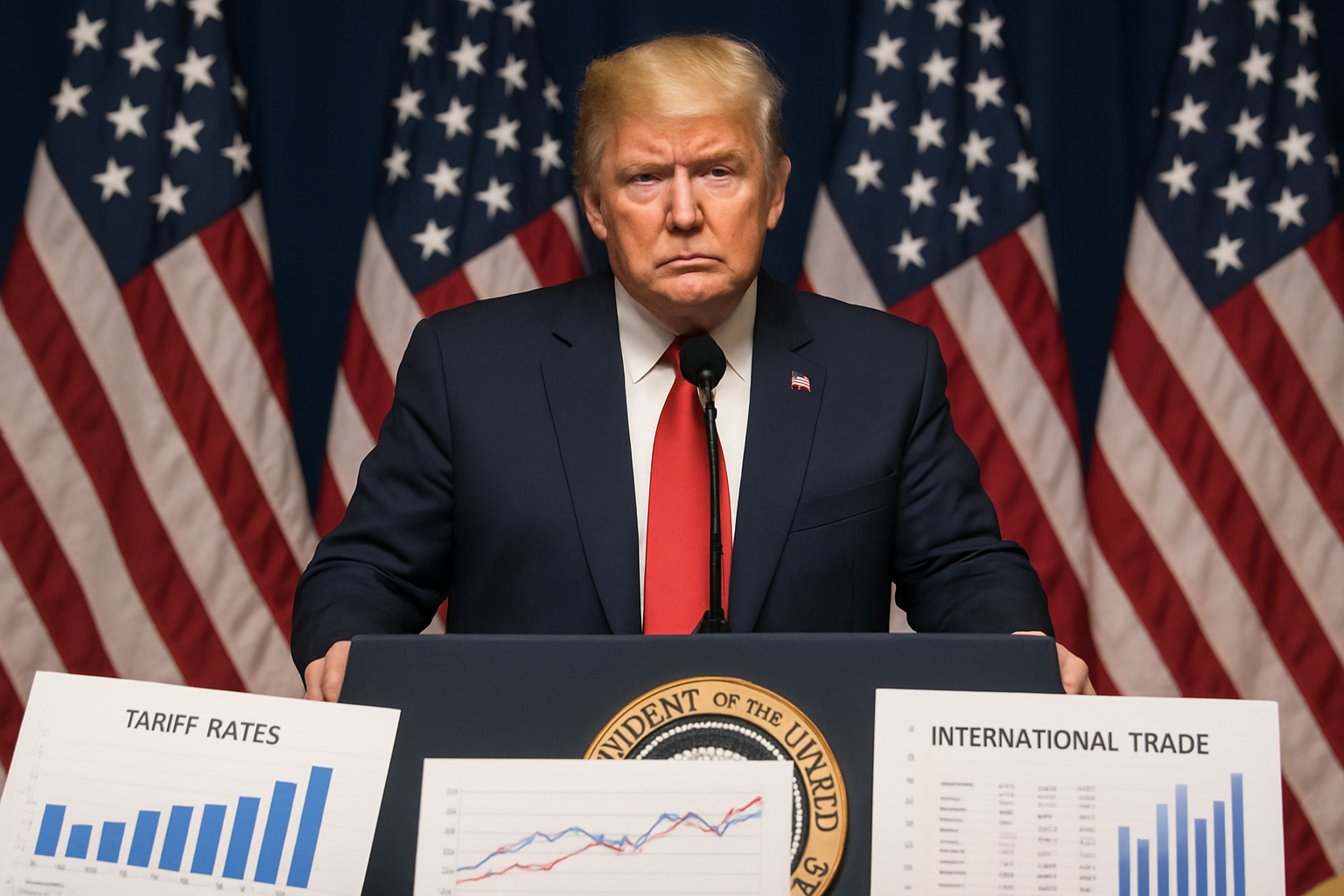
President Donald Trump raised global tariffs to 15 percent on Saturday, doubling down on his aggressive trade agenda just hours after the Supreme Court delivered a devastating 6-3 ruling declaring his previous tariff program illegal under the International Emergency Economic Powers Act.
The dramatic escalation, announced via Truth Social, represents the maximum tariff level permitted under Section 122 of the Trade Act of 1974 and marks one of the most defiant responses to judicial authority in modern American history. Trump immediately attacked the Court's decision, calling the justices "absolutely ashamed," a "disgrace to our nation," and "disloyal to the Constitution."
Constitutional Crisis Unfolds
The Supreme Court's historic ruling, authored by Chief Justice John Roberts, applied the "major questions doctrine" to declare that the International Emergency Economic Powers Act (IEEPA) "does not authorize the president to impose tariffs" without explicit congressional authorization for actions of "vast economic and political significance."
Within hours of the Friday ruling, Trump invoked Section 122 of the Trade Act, which allows him to impose 15% tariffs for a maximum of 150 days before requiring congressional extension. The move creates an unprecedented constitutional standoff between executive defiance and judicial review.
"The Court took away leverage but made it more draconian because they agreed the president has right to full embargo."
— Scott Bessent, Treasury Secretary
Legal experts describe Trump's immediate alternative tariff implementation as the most serious challenge to separation of powers since Watergate, testing fundamental democratic institutions during a critical period of American governance.
Global Markets React to Uncertainty
Financial markets initially surged on news of the Supreme Court victory, with the Nasdaq jumping 0.90% to 22,886.07 and the S&P 500 gaining 0.69% to 6,090 points as investors celebrated reduced trade uncertainty. However, gains moderated after Trump's swift tariff replacement announcement.
Oil prices rose over $1 per barrel amid concerns about escalating trade tensions, while European markets experienced mixed reactions. The ruling potentially affects billions in tariff refunds for U.S. importers who have paid approximately $133 billion since Trump's return to office.
German businesses are already calculating potential refund claims that could reach billions, while the logistics of processing such massive reimbursements threatens to strain federal administrative capacity.
International Responses Vary
China immediately welcomed the Supreme Court ruling as vindication of its position, strengthening Beijing's negotiating stance ahead of Trump's scheduled March 31-April 2 visit. The ruling comes as China announced zero-tariff access for 53 African countries beginning May 1, 2026, demonstrating its commitment to multilateral trade expansion.
European Union officials expressed cautious optimism about the Court decision while voicing concern about Trump's replacement tariffs. French President Emmanuel Macron praised the ruling as evidence that "it's good to have power and counterbalances to power in democracy."
The decision particularly affects U.S. relations with Canada, where a bilateral House vote had already passed 219-211 to end Trump's tariffs, marking the first significant bipartisan rebuke of his trade policies in his second term.
Congressional Resistance Grows
The Supreme Court ruling vindicated House Republicans who had increasingly opposed Trump's unpredictable trade approach. Six Republicans joined nearly all Democrats in the Canada tariff vote, with House Speaker Mike Johnson unable to prevent the floor vote despite intense White House pressure.
This growing congressional resistance reflects deep unease within Trump's own party about aggressive use of trade tools and expanding executive authority over economic policy. The defections came from districts with substantial Canadian trade relationships or business investments.
Democrats are now introducing additional legislation requiring transparency in Trump's trade negotiations and demanding explanations for the administration's economic coercion tactics against traditional allies.
Economic Impact and Trade Consequences
Despite extensive tariff policies since Trump's return, the U.S. trade deficit reached $901.5 billion annually in December 2025, essentially unchanged from pre-tariff levels. This demonstrates the structural nature of America's trade imbalances, which extend beyond what tariff adjustments can address.
The new 15% global tariff affects all imports except those from USMCA partners and maintains exemptions for minerals, fertilizers, metals, energy equipment, agricultural products, pharmaceuticals, and medical raw materials. However, the 150-day time limit creates urgent pressure for congressional action or policy modification.
Small businesses celebrated initial relief from import cost pressures following the Court ruling, though uncertainty about replacement tariffs continues to complicate supply chain planning and investment decisions.
Legal Challenges Mount
Constitutional law experts predict immediate legal challenges to Trump's alternative tariff authority under Section 122. World Trade Organization rules limit unilateral tariff actions, creating additional grounds for international legal challenges over sovereignty issues.
Environmental groups and Democratic states are simultaneously pursuing court challenges to Trump's sweeping climate policy reversals, including the formal revocation of Obama-era greenhouse gas regulations - creating multiple fronts of legal resistance to the administration.
"This represents the most significant legal defeat for Trump's economic agenda since his return to office."
— Constitutional Law Expert
Historical Precedent and Future Implications
The Supreme Court's application of the major questions doctrine establishes a crucial precedent limiting presidential emergency trade powers, even with politically loyal appointees. The ruling demonstrates that institutional independence can prevail over political considerations during periods of expanded executive authority.
This watershed moment in American constitutional law extends beyond trade policy to fundamental questions of governmental power balance in the 21st century. The precedent will likely influence future confrontations over executive economic authority and emergency powers usage.
International observers are closely monitoring American institutional resilience as a crucial factor for global cooperation. The Supreme Court's ruling provides a template for democratic institutional responses to executive power challenges worldwide.
Strategic Competition Context
The constitutional crisis unfolds amid intensifying global strategic competition. China's comprehensive Africa trade expansion, offering zero tariffs to 53 nations, contrasts sharply with America's bilateral, coercive approach to international economic relations.
European Union leaders are using this moment to strengthen internal market integration and reduce dependence on both American and Chinese economic systems. The crisis accelerates global discussions about alternative frameworks for international trade and cooperation.
Trump's defiance also complicates his planned diplomatic initiatives, including critical Iran nuclear negotiations where economic pressure has been a key bargaining tool alongside military deterrence.
Looking Ahead
The next 150 days will prove decisive for American constitutional governance. Trump must either secure congressional approval for extended tariff authority or find alternative approaches to his trade agenda. The stakes extend far beyond economics to fundamental questions about democratic institutions and rule of law.
Success or failure in resolving this crisis will influence international perceptions of American stability and policy predictability for years to come. Allied nations are watching closely to determine whether traditional frameworks can adapt to Trump's transactional foreign policy approach or whether new cooperation models must emerge.
As global markets await clarity on U.S. trade policy direction, the constitutional confrontation between Trump and the Supreme Court represents perhaps the most significant test of American democratic institutions since the founding of the republic. The resolution will establish precedents for presidential power limitations that will echo through American governance for generations.