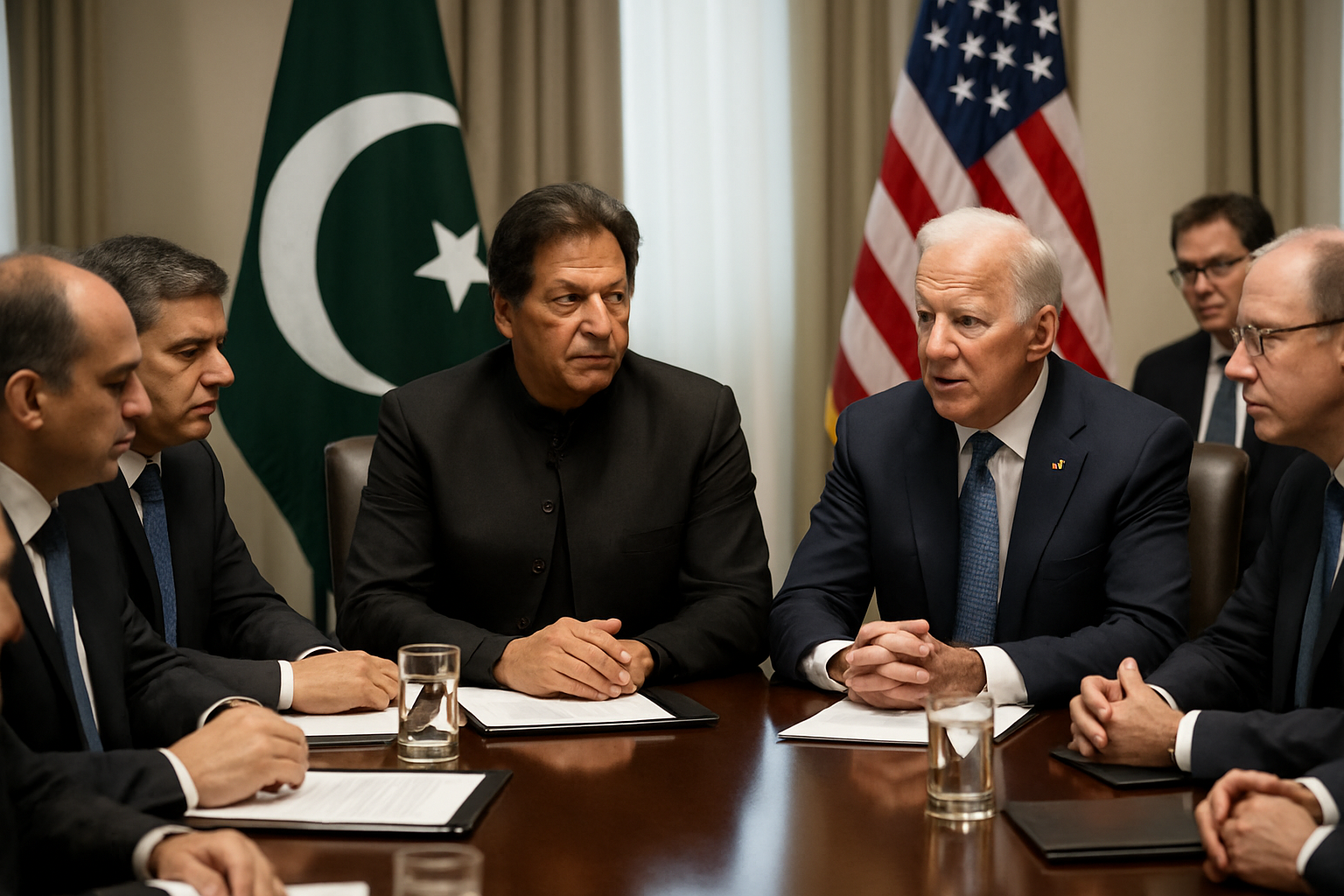
President Donald Trump announced Tuesday evening an indefinite extension of the US-Iran ceasefire at Pakistan's request, while Iran categorically rejected participation in peace talks, casting doubt on efforts to resolve the most dangerous international crisis since the Cold War.
Speaking via Truth Social, Trump said he had agreed to Pakistani Prime Minister Shehbaz Sharif's and Army Chief Field Marshal Asim Munir's request to extend the ceasefire "until such time as their leaders and representatives can come up with a unified proposal." The announcement came just hours before the truce was scheduled to expire on Wednesday.
Iran's response was swift and defiant. Foreign Ministry spokesman Baghaei declared the Islamic Republic had "no plans for further negotiations with the US," citing Washington's "excessive demands" and the ongoing naval blockade of Iranian ports as evidence of American bad faith.
Pakistan's Diplomatic Achievement Under Threat
The indefinite extension represents both the success and fragility of Pakistan's unprecedented mediation efforts. The "Islamabad Accord" framework, crafted by PM Sharif and Field Marshal Munir, achieved the original ceasefire just 88 minutes before Trump's "whole civilization will die tonight" deadline on April 8, marking the most direct US-Iran diplomatic engagement since 1979.
That initial breakthrough crashed oil prices nearly 20 percent from $119.50 to $100 per barrel Brent crude and ended a global aviation crisis affecting 18,000 flights worldwide. Pakistan's innovative "message relay system" demonstrated that middle powers could bridge major adversaries when traditional diplomatic mechanisms fail.
"Based on the fact that the government of Iran is seriously fractured and this is not surprising, and at the request of Field Marshal Asim Munir and Prime Minister Shehbaz Sharif of Pakistan, we have been asked to hold our Attack on the Country of Iran until such time as their leaders and representatives can come up with a unified proposal."
— Donald Trump, Truth Social
Naval Blockade Continues Amid Diplomatic Efforts
Despite the ceasefire extension, Trump emphasized that US military forces would maintain the blockade of Iranian ports and remain "ready and able" for resumed action. The blockade, implemented after peace talks collapsed on April 13, is widely considered an act of war under international law and affects shipping through the Strait of Hormuz, which handles 40 percent of global oil transit.
Iran's Revolutionary Guard has declared "complete control" over the strategic waterway, threatening to create a "deadly whirlpool" for vessels challenging Iranian sovereignty. Oil markets responded immediately to Tuesday's developments, with Brent crude surging above $106 per barrel.
Nuclear Program Remains Core Sticking Point
The fundamental disagreements that caused the Islamabad talks to collapse remain unchanged. US demands center on Iran's nuclear program, specifically requiring Tehran to suspend uranium enrichment at 60 percent purity and abandon its stockpile of over 400 kilograms of weapons-grade material—sufficient for multiple nuclear weapons if weaponized.
Iranian Foreign Minister Abbas Araghchi has maintained that Iran will "never abandon enrichment even if war is imposed," reflecting the Islamic Republic's position that nuclear capabilities are an "inalienable right." This nuclear sticking point has prevented breakthrough agreements since the collapse of the Joint Comprehensive Plan of Action (JCPOA) in 2018.
Lebanon Loophole Complicates Peace Framework
A critical complication emerged from Israeli Prime Minister Benjamin Netanyahu's explicit exclusion of Lebanon from the ceasefire arrangements. During the April 13 talks, Israeli strikes killed over 254 people in a single day—the deadliest bombardment since the conflict began—while 1.2 million Lebanese civilians have been displaced.
Vice President JD Vance, who led the 21-hour marathon negotiations in Islamabad, acknowledged Iran had a "legitimate misunderstanding" about Lebanon's inclusion, but emphasized the US never agreed to include Israeli-Lebanese operations in the ceasefire scope.
International Coalition Shows Strains
The crisis has exposed significant divisions within the international community. NATO allies have largely rejected broader military involvement, with UK Prime Minister Keir Starmer declaring Britain "will not be dragged into Iran war" and France and Germany emphasizing diplomatic approaches over military solutions.
Australia and Japan declined to provide naval vessels for the blockade, representing the most significant rejection of American military leadership since the 2003 Iraq War. Only Israel has offered "full support and close coordination" with US operations.
The regional coalition of Saudi Arabia, UAE, Qatar, and Egypt has maintained unprecedented unity despite Iranian retaliation attacks that killed one person in Abu Dhabi, injured 32 at Kuwait airports, and wounded eight in Qatar during missile and drone attacks.
Economic and Humanitarian Implications
The ongoing crisis has created massive global economic disruption. The International Energy Agency maintains its largest strategic reserve release in 50 years—400 million barrels from 32 countries—while major shipping companies like Maersk and MSC have suspended Persian Gulf operations, stranding over 150 tankers worth billions in cargo.
Consumer impacts include fuel rationing for 170 million people in Bangladesh, wartime austerity measures in Pakistan, and threatened heating cost surges across Europe. The aviation industry warns of potential renewed flight cancellations on the scale of COVID-19 disruptions.
Humanitarian casualties continue to mount, with Iran's Red Crescent reporting over 787 civilian deaths, including a Pentagon-confirmed elementary school strike that killed 165-185 students due to "outdated targeting data," prompting war crimes investigations.
Congressional Opposition and Domestic Pressure
Operation Epic Fury has faced unprecedented domestic opposition, with only 25 percent American support—nearly unprecedented unpopularity for early-stage military operations. Senator Richard Blumenthal has expressed being "more concerned than ever" about potential ground troops deployment.
The operation has cost $11.3 billion in its first week alone, with Pentagon projections extending through September, far beyond initial timelines. Financial markets have served as what analysts call the "ultimate constraint" on prolonged military confrontation.
Nuclear Governance Crisis Context
The crisis unfolds against the backdrop of broader nuclear governance challenges. The New START treaty expired in February 2026, marking the first time in over 50 years without US-Russian nuclear constraints, while China expands its nuclear arsenal and Iran approaches weapons-grade capabilities.
UN Secretary-General António Guterres has called the situation the "greatest test of multilateral cooperation in the modern era," with nuclear risks at their "highest level in decades."
Template-Setting Implications for 21st Century Diplomacy
The success or failure of Pakistan's mediation efforts carries implications far beyond the immediate crisis. The innovative "message relay system" demonstrates how middle powers can facilitate communication between major adversaries when traditional diplomatic channels fail.
China has provided "full support" for Pakistan's initiative, while Germany has noted "positive signs" for diplomatic engagement. The framework could establish precedents for 21st-century conflict resolution in an increasingly multipolar world.
Uncertain Path Forward
Trump's characterization of Iran's government as "seriously fractured" reflects intelligence assessments of internal divisions within Tehran's leadership. However, Iran's categorical rejection of negotiations under current conditions suggests minimal prospects for immediate breakthrough.
Parliament Speaker Mohammad Bagher Qalibaf has warned that Iran will not negotiate "under the shadow of threat," while threatening to demonstrate a "new balance of power on the battlefield" with prepared "new cards" if military pressure continues.
Stakes for Global Governance
The indefinite ceasefire extension represents a high-stakes diplomatic gamble that Iran will eventually submit to US demands versus Tehran's categorical rejection of negotiations under duress. The outcome will significantly impact global energy security, nuclear governance credibility, and international law enforcement mechanisms for decades.
As the world's most dangerous crisis since the Cold War enters this new phase, the coming period will be decisive in determining whether Pakistan's innovative diplomatic framework can bridge fundamental disagreements that have prevented US-Iran breakthrough for decades, or whether the region returns to maximum international danger.
The template-setting significance extends beyond bilateral relations, affecting territorial sovereignty enforcement, energy security paradigms, and conflict resolution approaches globally. Success would demonstrate that multilateral cooperation and diplomatic innovation can prevail even in the darkest hours, while failure could accelerate military solutions worldwide, encouraging proliferation and undermining diplomatic credibility for decades to come.