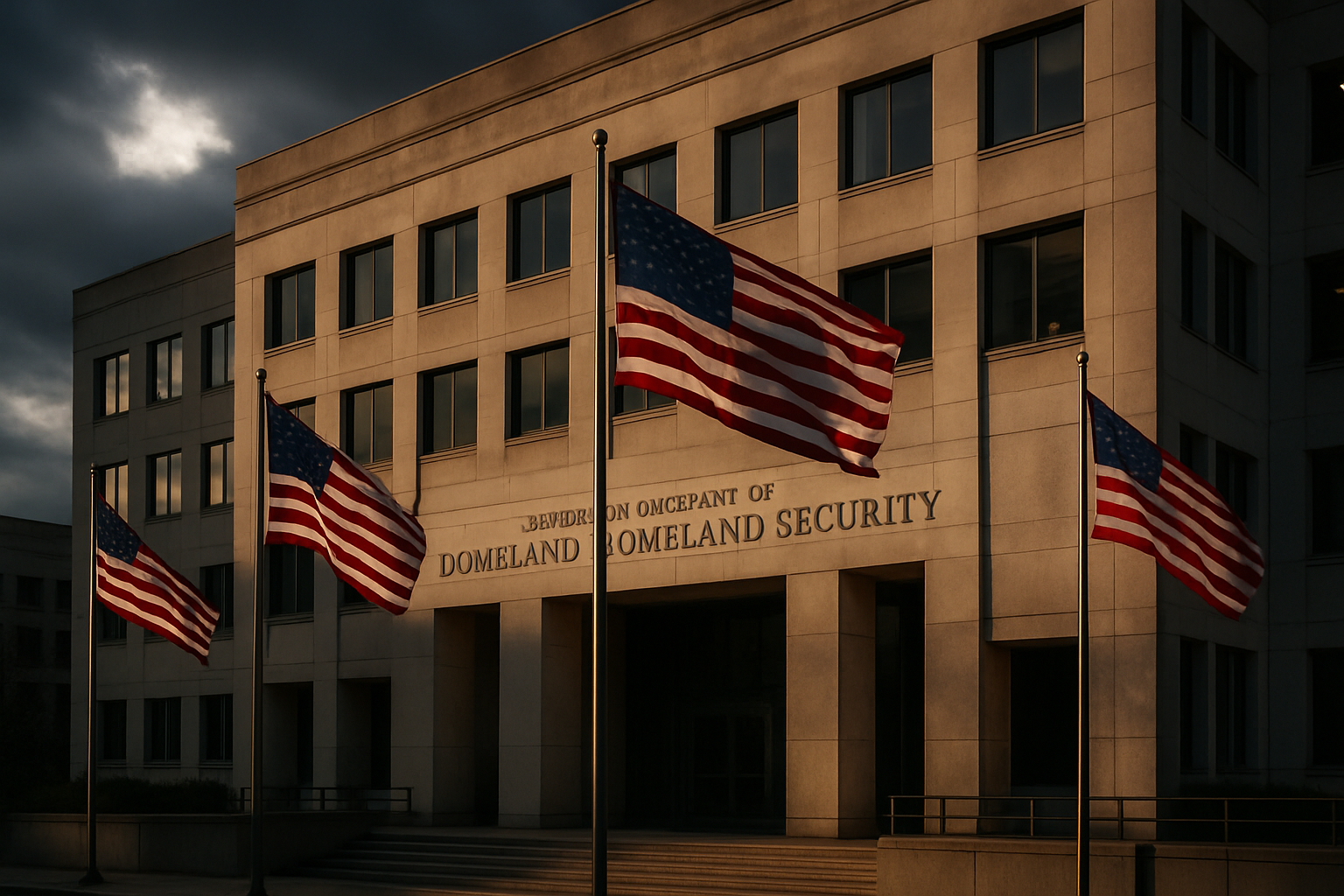
President Donald Trump announced Thursday that he was firing Department of Homeland Security Secretary Kristi Noem and would nominate Oklahoma Republican Senator Markwayne Mullin to replace her, marking the first major Cabinet dismissal of Trump's second term.
Trump broke the news via Truth Social, thanking Noem for her service while noting she had achieved "numerous and spectacular results (especially on the Border!)" He stated that Noem would be moving to a new role as "Special Envoy for The Shield of the Americas," describing it as the administration's "new Security Initiative in the Western Hemisphere."
The dismissal comes after mounting bipartisan criticism of Noem's leadership during a series of controversial immigration enforcement operations that culminated in a political crisis earlier this year. Noem had overseen Trump's aggressive immigration crackdown, including the controversial "Operation Metro Surge" in Minnesota that resulted in over 4,000 arrests but also sparked nationwide protests and a government shutdown.
Background of Mounting Controversies
Noem's tenure at DHS was marked by increasingly aggressive immigration enforcement tactics that drew criticism from both Democrats and some Republicans. The breaking point came in January 2026 when ICE agents fatally shot two U.S. citizens, Alex Pretti and Renee Nicole Good, during immigration enforcement operations in Minneapolis.
The shootings triggered massive protests, a three-day government shutdown, and forced the administration to withdraw 700 federal agents from Minnesota. Noem was compelled to implement mandatory body cameras for ICE agents in Minneapolis, marking a significant policy reversal from the administration's hardline approach.
"This week's hearings showed she faced bipartisan criticism that went beyond typical partisan divides," noted a congressional aide familiar with the proceedings.
— Congressional Source
The former South Dakota governor had become one of Trump's most high-profile Cabinet secretaries through social media posts that portrayed immigrants in harsh terms. However, her quick labeling of the Minneapolis shooting victims as "domestic terrorists" was later undercut by video evidence, creating further controversy.
The Minnesota Crisis and Federal Response
Operation Metro Surge, which began in December 2025, deployed between 2,700 and 3,000 federal agents to Minnesota in what became the most intensive immigration enforcement operation in decades. The operation resulted in the deaths of Pretti and Good during what officials described as enforcement actions, though video evidence later contradicted initial official accounts.
The crisis deepened when Congressional Democrats demanded accountability measures and threatened to block DHS funding. The standoff contributed to a partial government shutdown in February 2026, resolved only when Trump agreed to implement body camera requirements and reduce the federal agent presence in Minnesota.
Border Czar Tom Homan characterized the Minnesota adjustments as "smarter law enforcement, not less law enforcement," but the political damage to Noem's reputation was significant. Polling showed that two-thirds of Americans believed ICE had "gone too far" in its enforcement tactics.
Markwayne Mullin: The Replacement
Trump's choice of Senator Markwayne Mullin represents a return to a more traditional political background for the DHS role. Mullin, 47, is a second-term Republican senator from Oklahoma who previously served in the House of Representatives from 2013 to 2023.
Sources close to Trump indicated that the president was impressed by Mullin's television appearances, particularly his combative interview style when defending Trump administration policies. White House staffers frequently dispatched Mullin for cable news appearances, and Trump would often call the senator after interviews to praise his performance.
Mullin brings a unique background to the role, having worked in the family plumbing business before entering politics and notably serving as a former mixed martial arts fighter. His Native American heritage (Cherokee Nation) could provide a different perspective on border security issues.
Broader Immigration Policy Context
Noem's dismissal comes during a period of intense scrutiny of the Trump administration's immigration policies. A University of California study revealed that deportations had quadrupled during the first nine months of Trump's second term compared to pre-Trump levels, driven largely by increased random arrests of undocumented individuals in public spaces.
The administration faced multiple federal court challenges to its policies. Federal Judge Ana Reyes blocked the termination of Temporary Protected Status for approximately 350,000 Haitians, citing discriminatory intent. An Oregon federal judge required ICE to obtain warrants before arrests unless there was an escape risk, and civil rights organizations filed lawsuits challenging visa suspensions affecting 75 countries.
"The departure of Secretary Noem represents a significant moment for immigration policy," said immigration law expert Maria Santos. "The question now is whether Senator Mullin will continue the same aggressive approach or chart a different course."
— Maria Santos, Immigration Attorney
International and Economic Implications
The immigration enforcement escalation under Noem had drawn extensive international attention. European media outlets used terms like "bloodbath" to describe the operations, while the Mexican government issued warnings to its nationals about ICE operations during major public events, including Super Bowl LX.
Economic impacts were significant, with immigrant families avoiding essential services and major corporations like Target facing employee pressure over ICE workplace protocols. Agriculture, hospitality, and healthcare sectors reported workforce disruptions as enforcement actions expanded beyond traditional targets.
Native American communities reported racial profiling incidents and established safe zones, with tribal governments issuing special identification cards for protection. Daily deportation flights from Minneapolis and other airports became a visible symbol of the administration's enforcement priorities.
Congressional Response and Confirmation Process
Mullin's nomination will require Senate confirmation, though as a sitting senator, he is expected to face a smoother confirmation process than many Cabinet nominees. His colleagues know him well, and his previous confirmation for his current Senate position suggests he can navigate the process successfully.
House Speaker Mike Johnson had previously scheduled two weeks of ICE reform debates following the Minneapolis crisis, and these discussions may influence how Mullin approaches his potential new role. Congressional Democrats have threatened to block DHS funding unless "drastic changes" are implemented in immigration enforcement practices.
Trump announced that Mullin would take over the position on March 31, providing a transition period during which Noem will continue in her current role while assuming her new diplomatic position.
Looking Forward: Policy Implications
The transition from Noem to Mullin comes at a critical juncture for U.S. immigration policy. The administration faces ongoing legal challenges, international criticism, and domestic political pressure to moderate its approach while maintaining its core constituency's support for strict enforcement.
Noem's new role as Special Envoy for The Shield of the Americas suggests the administration intends to leverage her experience in a different capacity, focusing on hemispheric security cooperation. This position could involve coordination with Latin American governments on migration issues and security challenges.
For Mullin, the challenge will be balancing the administration's enforcement priorities with the need to address the operational and political problems that emerged during Noem's tenure. His background in business and martial arts, combined with his political experience, may bring a different management style to the sprawling DHS bureaucracy.
The department oversees not only immigration enforcement through ICE and Customs and Border Protection but also the Federal Emergency Management Agency, the Transportation Security Administration, the U.S. Coast Guard, and cybersecurity operations through the Cybersecurity and Infrastructure Security Agency.
As Noem's tenure ends, it serves as a reminder of the political costs of controversial policy implementation, even when those policies align with an administration's core priorities. Mullin's nomination represents an opportunity for the administration to reset its approach while maintaining its fundamental policy direction.
The confirmation process and Mullin's early actions as DHS Secretary will provide crucial indicators of whether the Trump administration intends to moderate its immigration enforcement approach or simply change the personnel implementing its existing strategy.