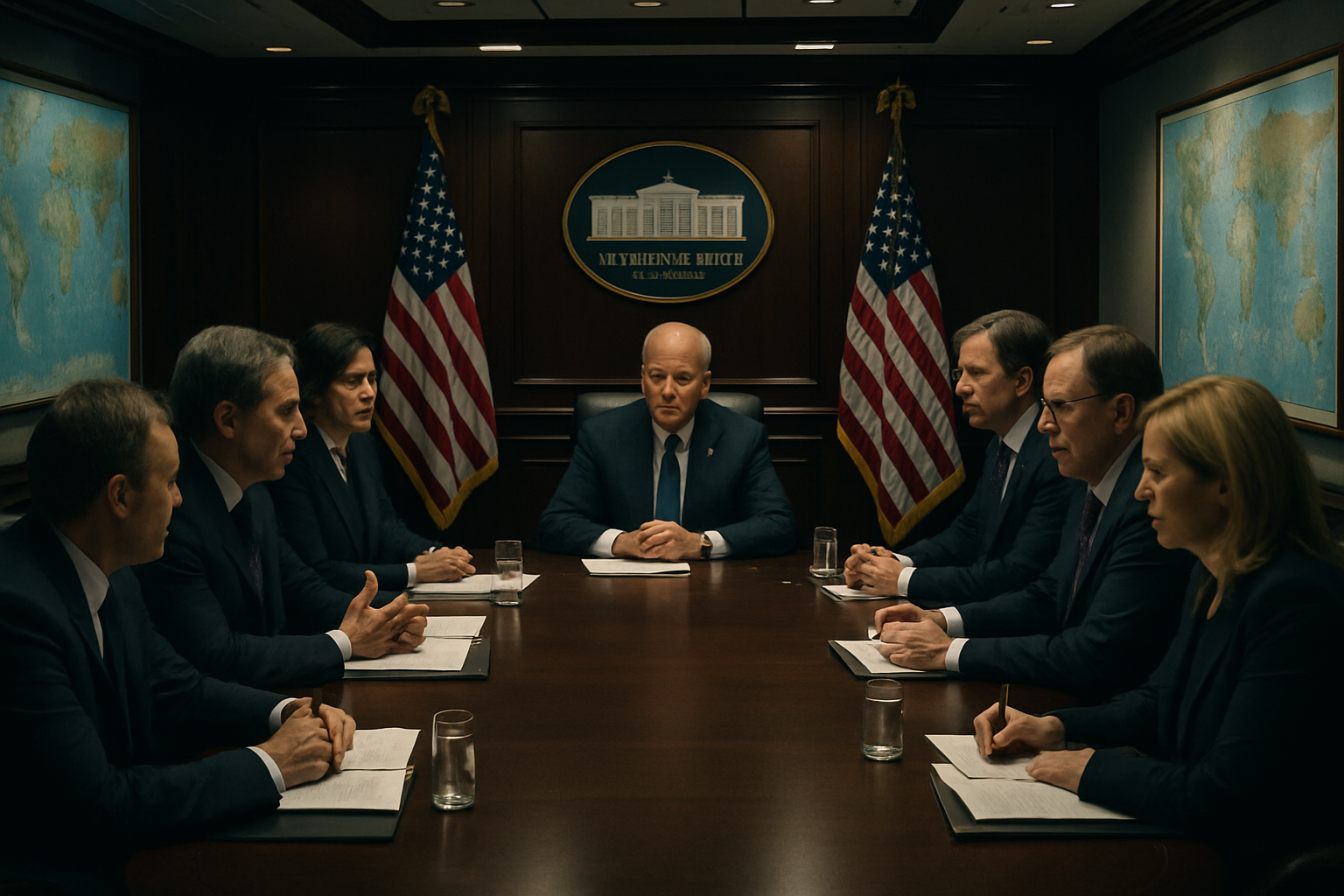
The Trump administration is navigating an unprecedented array of diplomatic challenges and opportunities, from breakthrough nuclear negotiations with Iran to controversial immigration enforcement and strategic cabinet appointments that are reshaping America's global relationships.
Iran Nuclear Talks: Geneva Breakthrough Amid Military Tensions
In a dramatic escalation of diplomatic momentum, Iranian Foreign Minister Abbas Araghchi announced "broad agreement on a set of guiding principles" with the United States during Geneva talks on February 17-18, marking the most substantial progress since the JCPOA collapse in 2018. The talks, facilitated by Switzerland with Oman's continued mediation, represent a significant evolution from the initial Muscat venue to European neutral territory.
However, fundamental obstacles persist. Iran continues uranium enrichment at 60% purity—approaching the 90% weapons-grade threshold—while maintaining that ballistic missiles and regional proxy activities remain "red lines" excluded from nuclear-only discussions. US Secretary of State Marco Rubio insists any comprehensive agreement must address missiles, armed groups, and human rights concerns.
"I don't think they want the consequences of not making a deal," Trump warned aboard Air Force One, issuing his most explicit threat yet regarding potential diplomatic failure.
— President Donald Trump
The diplomatic breakthrough occurs against a backdrop of unprecedented military escalation. Trump has deployed dual aircraft carriers—the USS Gerald R. Ford and USS Abraham Lincoln—creating the largest US naval presence in the Middle East in years, positioned 800 kilometers from Iran's coast. Recent incidents include an F-35C shooting down an Iranian Shahed-139 drone and IRGC harassment of US tankers in the Strait of Hormuz, which handles 40% of global oil transit.
Regional Coalition and Strategic Partnerships
Perhaps most remarkable is the unprecedented regional coalition backing the diplomatic process. Saudi Arabia, the UAE, Qatar, and Egypt have formed an extraordinary Middle Eastern consensus in favor of preventing military confrontation. Oman's neutral mediation, leveraging its historical role in the 2015 JCPOA negotiations, has proven essential for maintaining structured dialogue despite severe trust deficits.
Israeli coordination remains critical to any framework's success. Netanyahu's multiple meetings with Trump have emphasized Israeli red lines requiring comprehensive agreements that include "limiting ballistic missiles and ending Iranian axis support." Nuclear-only frameworks are viewed as insufficient for addressing existential security threats from Iran's integrated missile and proxy network, including Hezbollah, Hamas, and the Houthis.
Immigration Challenges and Domestic Pressures
The administration faces mounting challenges to its immigration policies, with approval ratings for Trump's immigration enforcement hitting new lows according to Reuters/Ipsos polling. Public support has particularly declined among American men, traditionally a key demographic for the administration's immigration messaging.
Federal courts continue to push back against sweeping policy changes. A federal judge in Philadelphia ordered the restoration of a George Washington slavery exhibit, invoking George Orwell's "1984" in ruling against what the court characterized as governmental attempts to rewrite history. The Justice Department has maintained that the administration alone can decide what stories are told at National Park Service properties.
Simultaneously, the administration renewed executive orders authorizing the detention of Cuba-bound vessels while extending "national emergency" declarations regarding Cuba. These actions demonstrate the continuation of hardline policies toward certain nations while pursuing diplomatic engagement with others.
Vice President Vance's Expanding Role
Vice President JD Vance has emerged as a key figure in the administration's foreign policy apparatus. Speaking on Iran policy, Vance declared that Trump has "a lot of tools" to ensure Iran doesn't acquire nuclear weapons, emphasizing the administration's comprehensive approach to regional security challenges.
International observers note Vance's unique position as potentially the most powerful candidate for the 2028 Republican presidential nomination. European officials describe varying reactions to Vance compared to Trump—while Trump generates "eye rolls" of exasperation, Vance creates a more complex dynamic that foreign officials find harder to read.
Vance has also weighed in on cultural issues with international implications, expressing disappointment that Chinese-American skiing champion Eileen Gu continues to represent China in international competition. "Those who have been nurtured and trained by America should compete for America," Vance stated, reflecting broader tensions over dual loyalties and national representation.
Unprecedented Legal and Financial Battles
In an extraordinary development that creates unprecedented ethical complications, President Trump is seeking billions of dollars in damages from the federal government he leads. The request puts his own Justice Department in an awkward position, with Attorney General Pam Bondi navigating the complex legal and ethical terrain of a president effectively suing his own administration.
This situation exemplifies the unprecedented nature of many challenges facing the current administration, where traditional governmental norms and procedures are being tested in ways not previously encountered in American politics.
International Nuclear Governance Crisis
The Iran negotiations occur within a broader nuclear governance crisis. The New START treaty expired on February 5, marking the first time in over 50 years that the US and Russia operate without nuclear constraints. UN Secretary-General António Guterres has warned that nuclear risks are at their "highest in decades," with China's nuclear expansion from 350 to over 500 warheads further complicating the strategic landscape.
Success in the Iran negotiations could provide a template for 21st-century nuclear crisis resolution. However, failure might accelerate military solutions that could reshape Middle Eastern geopolitics for decades, encourage nuclear proliferation elsewhere, and undermine diplomatic credibility for addressing territorial and security disputes worldwide.
Domestic Political Calculations
The administration faces significant domestic pressures that influence its international approach. Iran faces over 42,000 protest arrests since 2022, with Nobel laureate Narges Mohammadi receiving an additional 7.5-year sentence during the current talks. The Iranian regime appears to be prioritizing nuclear capabilities over economic relief through sanctions removal.
Meanwhile, the Trump administration must balance Republican hawk pressure—which views diplomatic engagement as appeasement—against the need for foreign policy victories. The president's approach of maintaining "maximum pressure" through economic sanctions while engaging diplomatically represents an attempt to thread this political needle.
Strategic Implications and Future Outlook
The coming weeks represent a decisive phase for multiple foreign policy initiatives. The Geneva talks have established a framework for continued negotiations, but fundamental positions on uranium enrichment, missile capabilities, and regional activities remain largely unchanged from decade-old challenges.
The stakes extend far beyond bilateral US-Iran relations. Success could prevent a regional war that would destabilize energy markets globally, provide a diplomatic template for nuclear crisis resolution, and strengthen non-proliferation norms. Failure might accelerate military solutions with massive implications for Middle Eastern stability, global energy security, and international law enforcement mechanisms.
The administration's multi-front approach—combining military deterrence, economic pressure, diplomatic engagement, and strategic partnerships—represents a comprehensive test of whether innovative diplomatic solutions can address some of the world's most intractable security challenges. The template established by these efforts will likely influence international conflict resolution approaches well beyond the current administration.
As President Trump noted in his characteristically direct style, "In case we don't make a deal, we'll need it... if we need it, we'll have it ready." This encapsulates the administration's dual-track strategy: pursuing diplomatic breakthroughs while maintaining the capability and willingness to use alternative means if diplomacy fails.