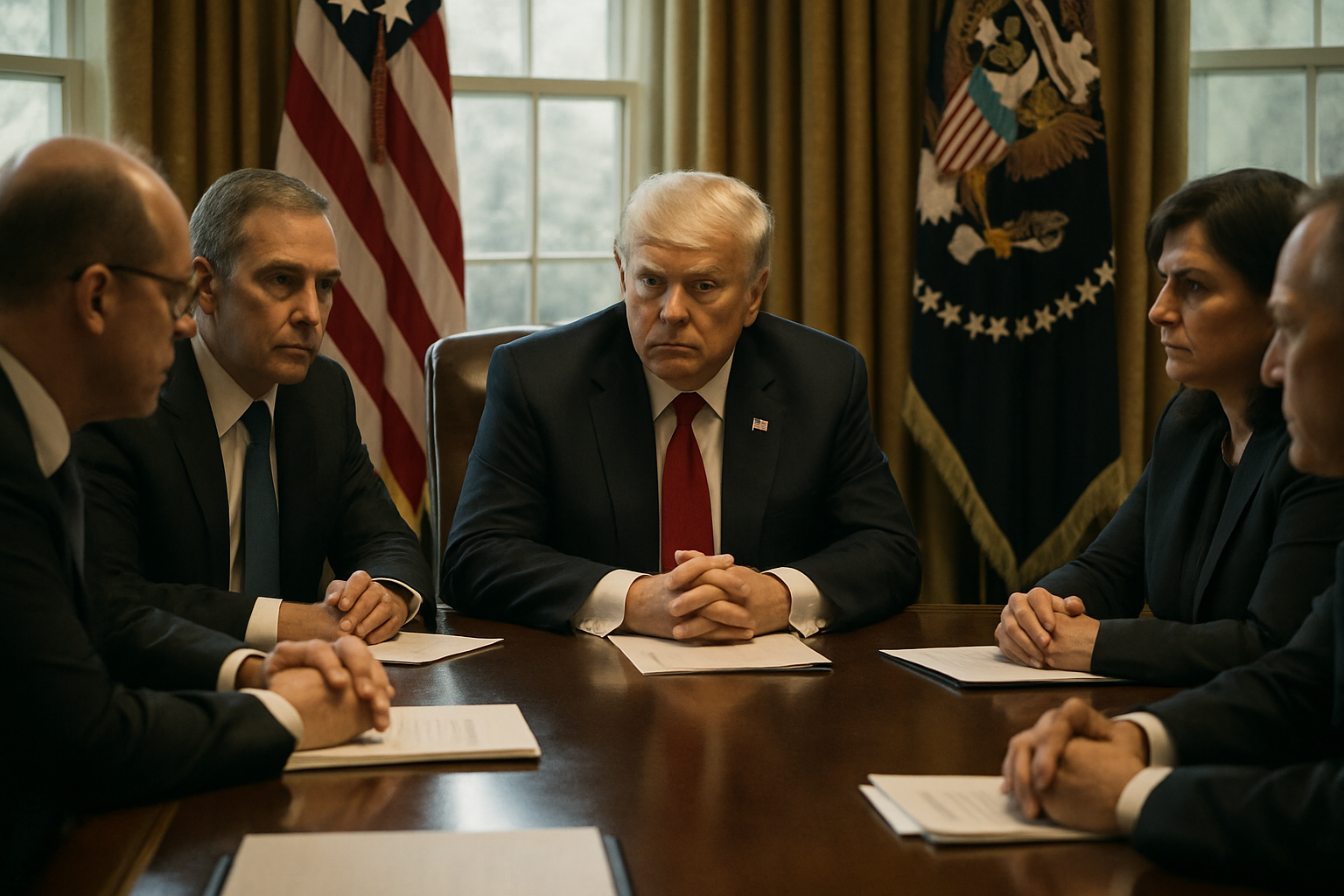
The Trump administration faces mounting international tensions as foreign policy decisions create ripple effects across global alliances, with recent developments highlighting fundamental shifts in American diplomatic strategy amid what many consider the most complex international environment since the Cold War.
Recent international headlines reveal the administration's multi-faceted approach to foreign relations, from ceremonial recognitions to substantive policy disputes. The planned renaming of Palm Beach International Airport to "Donald J. Trump International Airport" represents more than symbolic politics—it underscores a presidency that has fundamentally altered traditional diplomatic norms and international engagement patterns.
Alliance Relations Under Strain
The administration's relationship with traditional allies has been marked by unprecedented tensions, particularly evident in recent NATO developments. European partners have delivered historic rejections to American military coalition requests, with German Defense Minister Boris Pistorius publicly questioning what "handful European frigates" could accomplish that the "powerful US Navy cannot." This resistance represents the most comprehensive rejection of American military leadership since the Iraq War.
France has explicitly rejected warship deployments for Middle Eastern operations, while Japan and Australia have declined naval vessel requests despite their critical dependence on regional trade routes. The coordinated European response, invoking "Iraq lessons" and emphasizing they "cannot repeat the same mistakes," signals a fundamental shift in how allies view American military interventions.
These tensions culminated in Trump's defensive social media response declaring the United States "no longer 'needs' or wants assistance from NATO countries—IN FACT, WE NEVER NEEDED IT!" This policy reversal from coalition-building to unilateral action represents a historic departure from post-WWII alliance frameworks.
European Strategic Autonomy Emerges
The rejection of American military requests has paradoxically coincided with unprecedented European unity in defending their own territories. When Iranian forces struck Cyprus—marking the first attack on European soil since WWII—European nations responded with an immediate naval coalition including British, Spanish, Italian, French, Dutch, and Greek vessels. The European Union activated its ESTIA crisis mechanism for the first time in history, demonstrating that Europeans are willing to defend themselves while declining to support what they view as American "optional wars."
"The U.S. has been very clear that they want to divide Europe. They don't like the European Union... Our answer should not be that we handle Trump bilaterally, but that we do it together."
— Kaja Kallas, EU Foreign Policy Chief
EU Foreign Policy Chief Kaja Kallas has delivered some of the strongest criticism of the Trump administration, accusing Washington of actively seeking to "divide Europe" and demonstrating hostility toward the European Union as an institution. Her comments in a Financial Times interview represent the most direct European challenge to American leadership since the Suez Crisis of 1956, though in a fundamentally different multipolar context.
Nuclear Crisis Management
The administration's approach to nuclear diplomacy has proven particularly challenging. Despite achieving what negotiators described as "broad agreement on guiding principles" in Geneva talks with Iran—representing the most progress since the 2018 JCPOA collapse—fundamental scope disagreements proved insurmountable. Iran maintained ballistic missiles and regional proxies as "red lines" excluded from nuclear-only discussions, while the US demanded comprehensive agreements addressing missiles, armed groups, and human rights.
The diplomatic breakdown occurred against the backdrop of a broader nuclear governance crisis, with the New START treaty expiring in February 2026—marking the first time in over 50 years without US-Russia nuclear constraints. UN Secretary-General Guterres warned of nuclear risks reaching their "highest levels in decades," while Iran continues uranium enrichment at 60% purity with over 400 kilograms of weapons-grade material.
Congressional Opposition Intensifies
Bipartisan congressional scrutiny of the administration's foreign policy has reached unprecedented levels. Senator Richard Blumenthal expressed being "more concerned than ever" about potential ground troop deployments, while lawmakers demand comprehensive briefings on strategy, costs, and exit plans for ongoing military operations.
The resignation of Joseph Kent, director of the National Counterterrorism Center, over disagreements with military policy represents the first senior administration official to publicly break with the president over foreign interventions. Kent's warning that "Iran posed no imminent threat" and accusations of pressure from "Israeli officials and powerful members of American media" developing "disinformation campaigns" highlight deep internal divisions over military engagement.
Economic Diplomacy and Sanctions Weaponization
The administration has increasingly relied on economic warfare as its primary diplomatic tool. Treasury sanctions have been systematically deployed against foreign critics, including Colombian President Gustavo Petro, Brazilian Supreme Court Minister Alexandre de Moraes, and UN Special Rapporteur Francesca Albanese. This represents a shift from targeting security threats to silencing diplomatic opposition.
Spain's refusal to provide military base access for Middle Eastern operations led to immediate trade threats, with Trump ordering Treasury Secretary Scott Bessent to "cut off all dealings" with Madrid. The confrontation with Spain exemplifies the administration's pattern of combining diplomatic outreach with simultaneous economic pressure.
Regional Power Dynamics
Middle Eastern regional powers have demonstrated unprecedented consensus in supporting diplomatic solutions over military confrontation. Saudi Arabia, UAE, Qatar, and Egypt—traditional American partners—have backed diplomatic processes while expressing frustration with insufficient consultation on military operations. This extraordinary regional unity has been strained by retaliatory attacks targeting member territories, creating an impossible choice between US alliance obligations and regional security.
The administration's explicit regime change advocacy, with Trump claiming the right to "personally choose" Iranian leadership, represents the most direct assertion of American control over foreign government affairs since 1979. This policy evolution from nuclear-focused diplomacy to comprehensive political transformation has effectively eliminated diplomatic solutions in favor of military approaches.
Global Economic Consequences
International crises have created severe global economic disruptions. Oil prices have surged past $100 per barrel amid threats to the Strait of Hormuz, which handles 40% of global oil transit. Over 18,000 flights have been cancelled worldwide—the most extensive disruption since COVID-19—with eight Middle Eastern countries simultaneously closing airspace.
The International Energy Agency was forced to release a record 400 million barrels from strategic reserves, representing the largest intervention in 50 years. Natural gas prices have increased 24% in Europe and 78% in the US, while major shipping companies have suspended Persian Gulf operations, stranding over 150 tankers worth billions in cargo.
Historical Significance and Global Implications
These developments represent what UN Secretary-General Guterres called the "greatest test of multilateral cooperation in the modern era." The rapid transition from diplomatic frameworks to military escalation demonstrates the fragility of crisis management in the multipolar era. Success in containing current conflicts could provide templates for 21st-century dispute resolution, while failure might accelerate the preference for military solutions over diplomatic engagement.
The administration's "business-style diplomacy" combines traditional military deterrence with direct leader-to-leader engagement while bypassing multilateral frameworks. This approach has achieved mixed results: successful energy partnerships in Latin America but failures in nuclear diplomacy and alliance management.
Looking Forward: Template-Setting Moment
March 2026 represents a potential watershed moment for international relations, with implications extending decades beyond the current administration. The European choice of strategic autonomy over traditional American deference, combined with unprecedented congressional oversight and international resistance to military interventions, suggests fundamental changes in how global governance operates.
International partners are developing alternative frameworks to reduce dependence on American leadership while maintaining necessary cooperation on global challenges. Whether this leads to renewed Western unity through institutional adaptation or continued fragmentation will determine the trajectory of international relations for the remainder of the century.
The stakes involve not only immediate conflict prevention but the credibility of diplomatic solutions, nuclear governance mechanisms, energy security architecture, and the fundamental principles of the post-WWII international order. Success or failure in managing these challenges will establish precedents for international cooperation, territorial sovereignty enforcement, and conflict resolution that will influence global governance for generations.
As the administration navigates these complex challenges, the world watches to see whether innovative diplomatic approaches can bridge longstanding international disagreements or whether military solutions will increasingly replace negotiated settlements as the preferred method of resolving international disputes in the 21st century.