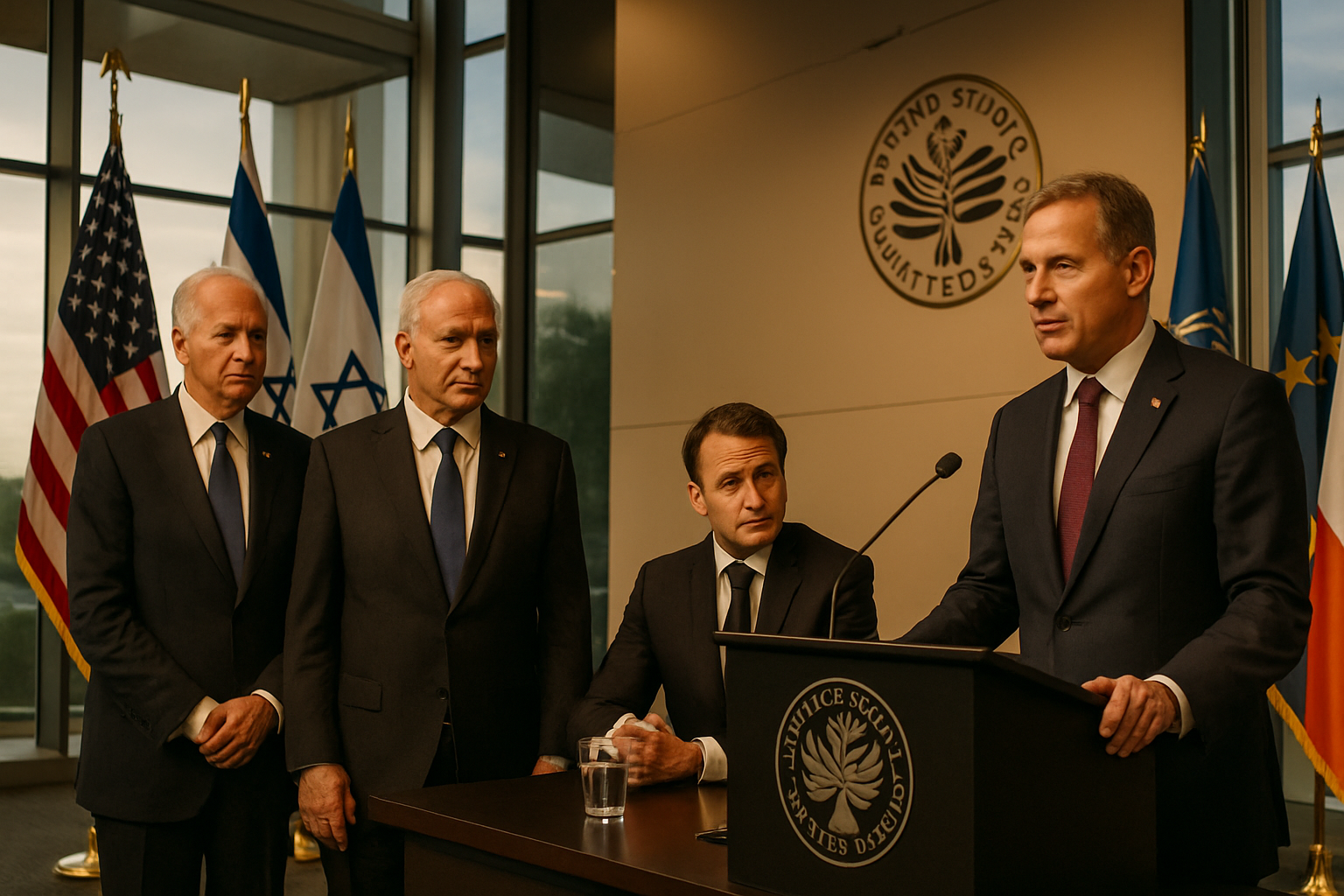
President Trump's administration is orchestrating an unprecedented diplomatic offensive across multiple international fronts, highlighted by the inaugural Board of Peace summit scheduled for February 19 in Washington and high-stakes discussions with Israeli Prime Minister Benjamin Netanyahu about ongoing Iran nuclear negotiations.
The convergence of these diplomatic initiatives represents a defining moment for Trump's foreign policy approach in his second term, as his administration attempts to balance traditional alliance commitments with innovative peace-building mechanisms while managing escalating tensions in the Middle East.
Board of Peace Initiative Takes Center Stage
The Trump administration has confirmed that the first meeting of the newly established Board of Peace will convene on February 19, 2026, at the U.S. Institute of Peace in Washington. This ambitious initiative, which evolved from conceptual discussions at the World Economic Forum in Davos, now represents a formal international organization with 27 member nations committed to conflict resolution and reconstruction efforts.
Hungarian Prime Minister Viktor Orban has confirmed his attendance, becoming the first European leader to publicly endorse participation in what Trump has characterized as a "business approach" to international peace-building. The Board is designed to mobilize over $1 billion in commitments for Gaza reconstruction while serving as a broader template for global conflict resolution.
"This represents a new paradigm for international peace-building with long-term implications beyond the current administration,"
— Senior White House Official
The initiative deliberately operates outside traditional UN frameworks, with Trump maintaining executive authority as chair while seeking to demonstrate that innovative leader-driven formats can mobilize resources more effectively than conventional diplomatic channels.
Netanyahu-Trump Summit Addresses Iran Strategy
Israeli Prime Minister Benjamin Netanyahu is scheduled to meet with President Trump on Wednesday, February 11, to coordinate strategies regarding ongoing U.S.-Iran nuclear negotiations. Netanyahu's office has emphasized that any nuclear agreement must address Iran's ballistic missile capabilities and support for regional proxy groups, establishing clear red lines for Israeli acceptance of diplomatic solutions.
The timing of this bilateral meeting, occurring just one day before the Board of Peace summit, underscores the interconnected nature of Middle Eastern diplomatic efforts and Israel's central role in regional security calculations.
Netanyahu is expected to arrive in Washington on Tuesday and return to Israel by Friday, with his schedule carefully coordinated to align with the broader diplomatic calendar. U.S. Special Envoy Steve Witkoff and senior advisor Jared Kushner toured a U.S. aircraft carrier in recent days, demonstrating the administration's dual-track approach of military deterrence alongside diplomatic engagement.
Iranian Nuclear Negotiations Continue
The backdrop to the Netanyahu-Trump meeting includes ongoing nuclear negotiations between the United States and Iran, which resumed with talks in Muscat, Oman. Iranian Foreign Minister Abbas Araghchi has expressed willingness to engage in "reassuring" agreements while maintaining firm positions on uranium enrichment rights and excluding ballistic missiles from nuclear-only discussions.
Intelligence reports suggest Iran is considering significant concessions, including a potential three-year uranium enrichment halt and transfer of existing nuclear stockpiles to Russia. However, fundamental disagreements persist over the scope of negotiations, with Iran insisting on nuclear-only talks while the U.S. demands comprehensive agreements addressing missiles and regional proxy activities.
Regional Coalition Building
The diplomatic initiatives have garnered unprecedented support from regional powers, with Saudi Arabia, the United Arab Emirates, Qatar, and Egypt all backing the diplomatic processes. This remarkable Middle Eastern consensus reflects shared concerns about preventing military confrontation and its potential impact on global energy markets and maritime security.
Oman has emerged as a crucial mediator, leveraging its historical neutrality and successful role in facilitating the 2015 Joint Comprehensive Plan of Action (JCPOA) negotiations. The Sultanate's diplomatic infrastructure and relationships with all parties have proved essential for maintaining dialogue amid persistent military tensions.
Military Tensions Amid Diplomacy
Despite diplomatic progress, military incidents continue to punctuate the engagement process. Recent confrontations include a U.S. F-35C fighter jet shooting down an Iranian Shahed-139 drone near the USS Abraham Lincoln in the Arabian Sea, and Iranian Revolutionary Guard Corps vessels harassing U.S.-flagged tankers in the Strait of Hormuz.
These incidents, occurring during active diplomatic negotiations, highlight the challenges of maintaining military deterrence while pursuing diplomatic breakthroughs. Oil prices have fluctuated in response to these tensions, rising over $1 per barrel during recent confrontations.
International Context and Implications
The Trump administration's diplomatic offensive occurs against a backdrop of broader international challenges, including the recent expiration of the New START nuclear arms control treaty with Russia and ongoing Ukraine-Russia peace negotiations in Abu Dhabi. The coincidence of these diplomatic efforts creates both opportunities for template-setting and risks of diplomatic overextension.
European responses to the Board of Peace initiative have been mixed, with some allies supporting diplomatic innovation while others express concerns about undermining established multilateral frameworks. The success or failure of these initiatives could significantly influence international approaches to conflict resolution for years to come.
Economic Pressure and Diplomatic Incentives
Simultaneously with diplomatic engagement, the Trump administration has maintained economic pressure through targeted sanctions. Executive orders threatening 25% tariffs on countries conducting business with Iran demonstrate the administration's dual-track approach of combining maximum pressure with selective engagement.
Iran faces significant domestic pressure with over 42,000 protest-related arrests and severe economic sanctions creating regime survival imperatives for sanctions relief. These domestic pressures may provide additional incentives for diplomatic flexibility, though they also create constraints on Iranian negotiating positions.
Stakes and Strategic Assessment
The convergence of the Board of Peace summit, Netanyahu-Trump consultations, and Iran nuclear negotiations represents a critical test of innovative diplomatic approaches to longstanding Middle Eastern conflicts. Success could provide a template for addressing other global conflicts while demonstrating the effectiveness of leader-driven peace initiatives.
However, fundamental disagreements persist across all diplomatic tracks. Iran's exclusion of missiles and proxy activities from nuclear talks conflicts with U.S. and Israeli demands for comprehensive agreements. The Board of Peace faces challenges in securing meaningful financial commitments while maintaining political unity among diverse member nations.
The coming weeks will determine whether this ambitious diplomatic agenda can achieve breakthrough results or whether it represents another cycle of elevated expectations followed by limited concrete progress. The international community is closely monitoring these efforts as potential models for 21st-century conflict resolution or cautionary tales about the limits of diplomatic innovation.
Regional stability, global nuclear governance, and the credibility of diplomatic solutions to territorial and security conflicts all depend on the outcomes of these interconnected initiatives. The success or failure of Trump's peace diplomacy will likely influence international approaches to conflict resolution well beyond the current administration.