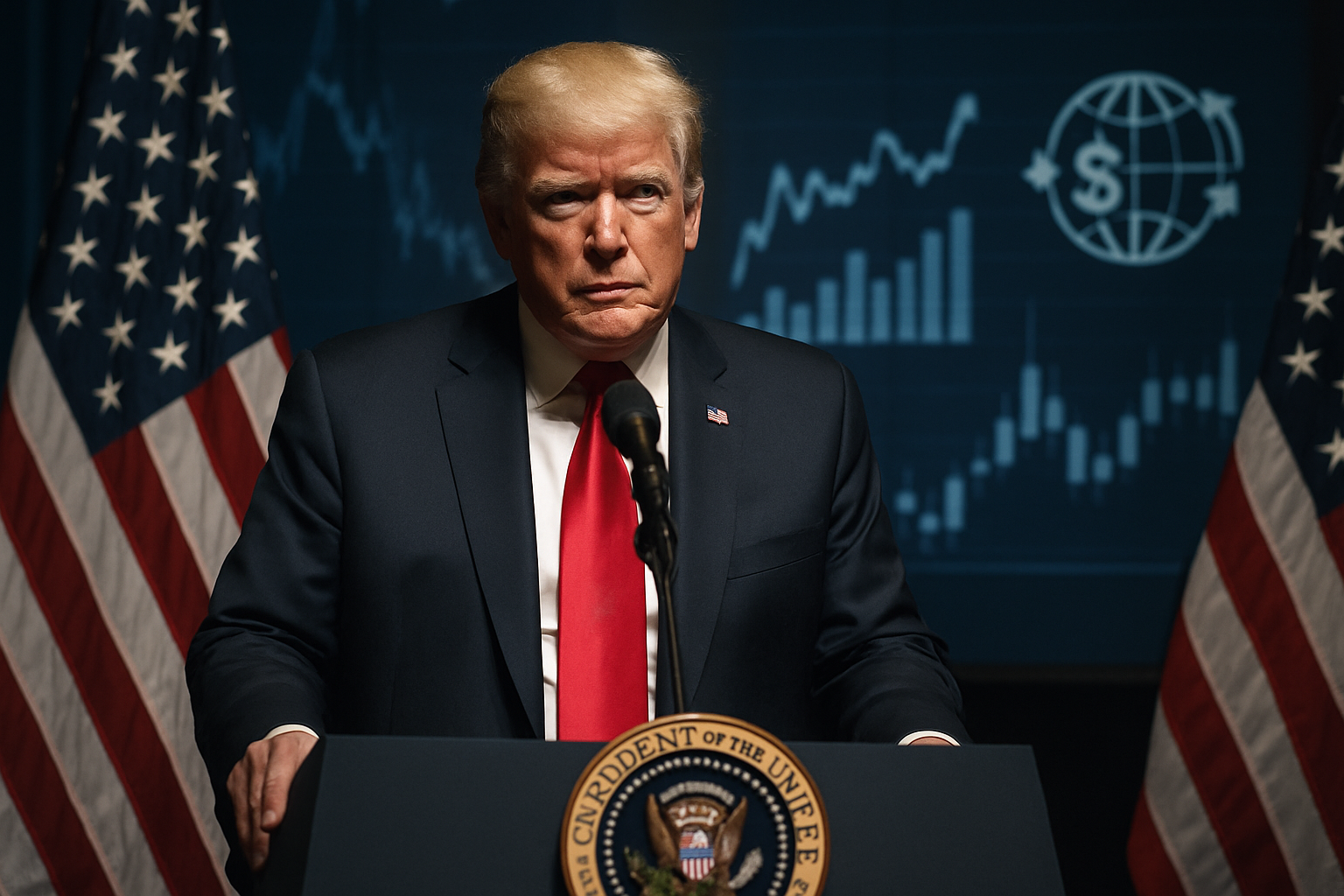
President Donald Trump has escalated his global trade war to unprecedented levels, raising worldwide tariffs to 15% following a devastating Supreme Court defeat and threatening even higher duties for countries that "play games" with American trade policy, creating the most serious constitutional crisis since Watergate.
The dramatic escalation came after the Supreme Court delivered a historic 6-3 ruling striking down Trump's original tariff program under the International Emergency Economic Powers Act (IEEPA), with Chief Justice John Roberts applying the "major questions doctrine" to declare that the president exceeded his legal authority to impose sweeping global trade measures without congressional authorization.
Supreme Court Strikes Down Presidential Trade Authority
In an unprecedented judicial rebuke, the Supreme Court ruled that Trump's use of IEEPA to impose global tariffs was unconstitutional, marking the first major defeat of his economic agenda in his second term. Chief Justice Roberts authored the majority opinion, establishing that actions of "vast economic and political significance" require explicit congressional authorization.
The ruling immediately triggered the most severe attack on the judiciary by a sitting president in modern American history. Trump called the justices "absolutely ashamed," "a disgrace to our nation," and "disloyal to the Constitution," representing an unprecedented challenge to the separation of powers fundamental to American democracy.
"Any country that wants to play games with the ridiculous supreme court decision, especially those that have 'Ripped Off' the U.S.A. for years, and even decades, will be met with a much higher tariff, and worse, than that which they just recently agreed to."
— President Donald Trump
Within hours of the ruling, Trump implemented new 15% global tariffs using Section 122 of the Trade Act of 1974 - the maximum legal level allowed for 150 days without congressional approval. This direct defiance of the Supreme Court created what constitutional scholars describe as the most serious executive-judicial confrontation since Watergate.
Global Markets React to Constitutional Crisis
International markets initially surged on hopes of reduced trade uncertainty, with the Nasdaq climbing 0.90% to 22,886.07 and the S&P 500 gaining 0.69% to 6,090 points. However, gains moderated when Trump announced replacement tariffs, while oil prices rose over $1 per barrel amid concerns about global economic stability.
Hong Kong businesses expressed confidence in weathering the new uncertainties, with local financial officials describing the impact of 15% global tariffs as "limited." However, European markets showed more concern, with officials demanding "absolute clarity" on fresh US trade developments.
The European Parliament took the unprecedented step of postponing a vote on the EU-US trade deal due to Trump's imposition of blanket 15% import duties. European Parliament trade committee chairman Bernd Lange suggested freezing US trade agreements due to the "chaos" created by Trump's unpredictable trade approach.
International Outcry and Diplomatic Tensions
The escalation drew sharp international condemnation. Former President Barack Obama called the administration's actions a "gift to billionaire polluters," while European officials expressed serious concerns about American policy predictability affecting international business planning and strategic partnerships.
China welcomed the Supreme Court ruling as vindication, strengthening Beijing's position ahead of Trump's scheduled March 31-April 2 visit to China. The timing is particularly significant as China announced zero-tariff access for 53 African countries starting May 1, 2026 - the most comprehensive China-Africa trade expansion in history, directly competing with US bilateral trade strategies.
Canada faces continued uncertainty despite congressional opposition to Trump's trade policies. The House recently passed legislation 219-211 to end Canada tariffs, with six Republican defections joining Democrats in the first significant bipartisan rebuke of Trump's trade authority in his second term.
Constitutional Implications and Congressional Response
The Supreme Court's application of the "major questions doctrine" creates a higher bar for executive branch economic policy without explicit congressional authorization, strengthening institutional checks and balances during periods of expanded presidential power.
The 150-day limit on Section 122 tariffs creates urgent pressure for congressional approval or alternative policies. House Speaker Mike Johnson was unable to prevent the Canada tariff vote despite White House pressure, highlighting growing Republican anxiety about Trump's unpredictable trade approach.
Legal experts predict immediate constitutional challenges to the new 15% tariff framework, with questions about WTO compliance and the scope of presidential trade authority under Section 122. Environmental groups are simultaneously challenging climate policy rollbacks, creating multiple legal resistance fronts against the administration.
Economic Reality vs Trade Policy
Despite extensive tariff policies throughout Trump's presidency, the US trade deficit reached $901.5 billion annually in December 2025, essentially unchanged from pre-tariff levels. This demonstrates the structural nature of trade imbalances that extend beyond tariff adjustments, undermining the core rationale for Trump's trade war.
The persistence of trade deficits despite aggressive tariff implementation raises questions about the effectiveness of unilateral trade measures in addressing complex global economic relationships. Industries from agriculture to automotive face uncertainty as billions invested in federal compliance standards are now eliminated or modified.
Global Implications and Strategic Competition
The tariff escalation occurs amid broader geopolitical tensions, including the recent expiration of the New START nuclear treaty between the US and Russia - the first time in over 50 years without nuclear constraints between the superpowers. This creates additional uncertainty in international relations as traditional arms control frameworks collapse.
China's strategic response includes expanding economic partnerships in Africa and securing EU dairy tariff reductions from 21.9%-42.7% to 7.4%-11.7%, affecting over $500 million in trade. These moves demonstrate Beijing's sophisticated approach to building alternative economic relationships while the US focuses on bilateral confrontation.
Looking Ahead: 150-Day Countdown
The 150-day limit on Trump's new tariff authority creates a critical period for American constitutional governance. Trump must either secure congressional approval for extended tariffs or find alternative approaches, setting precedents for executive power limitations that will affect future administrations for generations.
International observers are closely monitoring American institutional resilience as a crucial factor for global cooperation. The success or failure of this constitutional confrontation will influence international approaches to democratic governance, economic policy coordination, and multilateral frameworks essential for global governance in the 21st century.
This watershed moment in presidential power versus constitutional limitations extends far beyond trade policy to fundamental questions of governmental power balance. The resolution will establish critical precedents for executive authority confrontations, emergency powers usage, and the role of institutional checks in contemporary governance during an era of increasing global competition and domestic polarization.