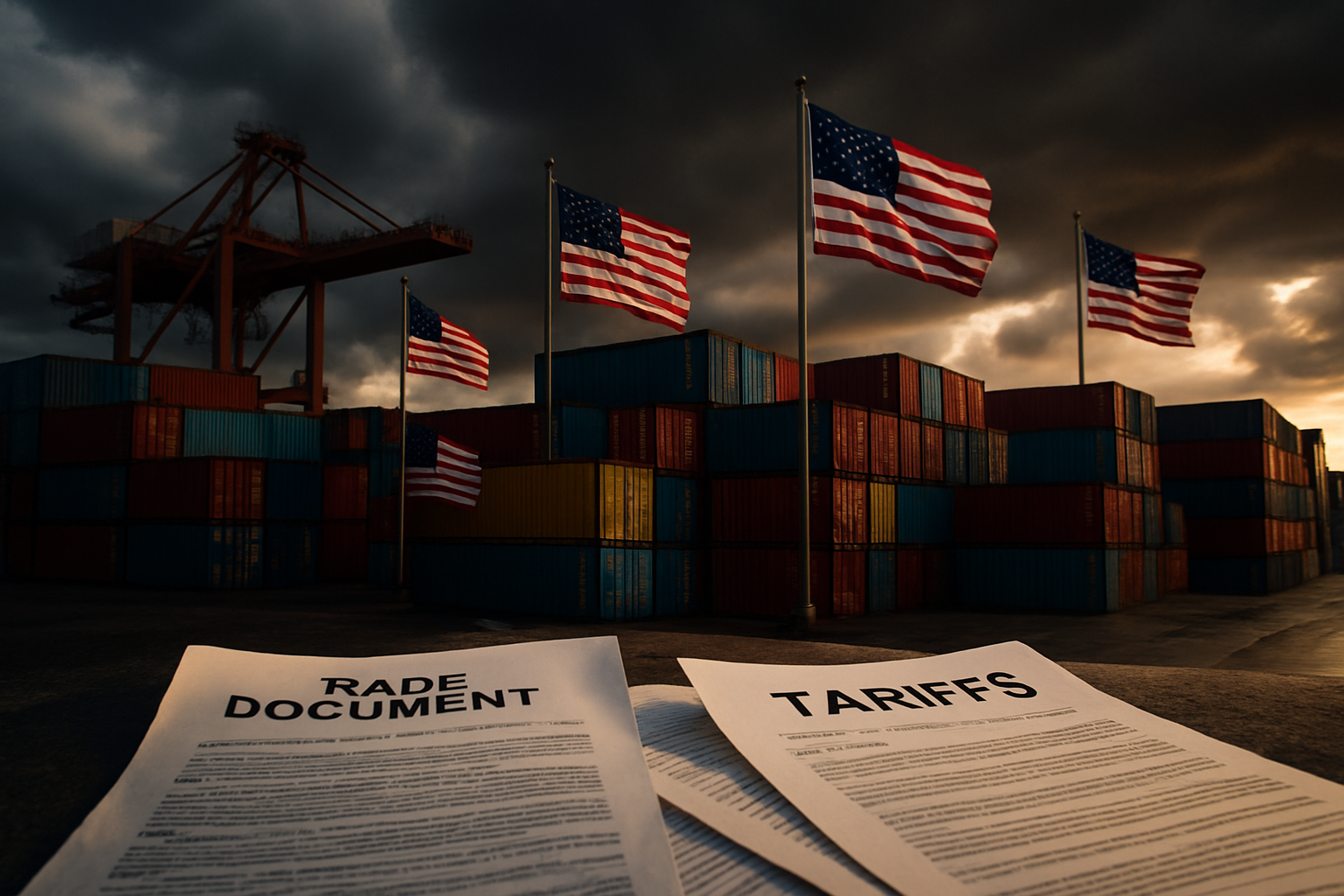
President Donald Trump implemented a sweeping 10% global tariff on February 24, 2026, using alternative legal authorities after the Supreme Court delivered a historic 6-3 ruling striking down his previous comprehensive tariff program, creating the most serious constitutional crisis between the executive and judicial branches since Watergate.
The new tariffs took effect at 12:01 AM Eastern Time on Monday, affecting imports from all countries except USMCA partners (Canada and Mexico). The move came just hours after Trump launched an unprecedented attack on Supreme Court justices, calling them "absolutely ashamed," "disgrace to our nation," and "disloyal to Constitution" following Friday's devastating constitutional ruling.
Supreme Court Delivers Historic Constitutional Ruling
Chief Justice John Roberts authored the majority opinion applying the "major questions doctrine," declaring that the International Emergency Economic Powers Act (IEEPA) "does not authorize president to impose tariffs" without explicit congressional authorization for actions of "vast economic and political significance." The ruling represents the first major defeat of Trump's economic agenda in his second term and establishes crucial precedent limiting presidential emergency powers for trade policy.
The Court's decision removed Trump's primary legal framework for imposing tariffs, forcing the administration to pivot to Section 122 of the Trade Act of 1974, which permits a maximum 15% tariff rate for 150 days before requiring congressional approval. Trump initially implemented the policy at 10% but sources indicate the White House is preparing orders to escalate to the maximum 15% level.
"The Court took away leverage but made it more draconian because they agreed the president has right to full embargo."
— Treasury Secretary Scott Bessent
Global Market Response and Economic Impact
Financial markets initially celebrated the Supreme Court ruling with significant gains - the Nasdaq surged 0.90% to 22,886.07 points and the S&P 500 rose 0.69% to 6,090 points as investors welcomed reduced trade uncertainty. However, these gains moderated after Trump announced the replacement tariff structure.
Oil prices rose more than $1 per barrel reflecting global economic tensions, while the Mexican stock exchange (BMV) showed mixed performance with a daily gain of 0.22% despite weekly losses. European markets demonstrated resilience, though small-cap funds in Sweden diverged significantly from broader regional strength.
The implementation creates massive administrative challenges, as the U.S. Customs and Border Protection agency must process potentially billions of dollars in refunds for importers who paid approximately $200 billion in tariffs since Trump's return to office. Trump predicted these refunds would be "tied up in court for years."
International Reactions and Diplomatic Fallout
The European Union delivered a forceful response, with the European Commission demanding the United States honor its 2025 joint declaration trade commitments. "An agreement is an agreement," declared EU officials following emergency talks between EU Trade Commissioner Šefčovič, US Trade Representative Greer, and Commerce Secretary Lutnick.
European Parliament Trade Committee Chairman Bernd Lange, a German Social Democrat, suggested the EU should consider freezing US trade agreements due to the "chaos" in American trade policy. This represents an unprecedented strain in transatlantic economic relations.
China welcomed the Supreme Court ruling as vindication of its position, strengthening Beijing's negotiating stance before Trump's scheduled March 31-April 2 visit to China. The Chinese government announced its own zero-tariff access program for 53 African countries starting May 1, 2026 - the most comprehensive China-Africa trade expansion in history, demonstrating Beijing's alternative approach to global economic leadership.
Former Prime Minister Ralph Gonsalves of Saint Vincent and the Grenadines warned that the tariffs would have "significant negative impact" on small Caribbean nations, primarily through increased inflation affecting goods both manufactured in the US and transshipped through American ports.
Congressional Resistance Validates Institutional Opposition
The Supreme Court ruling vindicated congressional Republicans who had begun showing unprecedented resistance to Trump's trade policies. The House passed legislation 219-211 to end Canada tariffs, with six Republican defections joining Democrats - the first significant bipartisan rebuke of Trump's trade authority in his second term.
House Speaker Mike Johnson's unsuccessful attempt to prevent the vote highlights growing anxiety within the Republican caucus about Trump's unpredictable trade approach. The 150-day limit on Section 122 tariffs creates urgent pressure for congressional approval or alternative policies, setting up a constitutional showdown between executive authority and legislative oversight.

New Tariff Framework and Exemptions
The 10% tariffs apply to all imports except those from USMCA partners and specific exempted categories including minerals, fertilizers, metals, energy equipment, agricultural products, pharmaceuticals, and medical raw materials. This framework affects global supply chains worth hundreds of billions of dollars annually.
Small businesses across multiple industries face immediate cost pressures, though some exporters initially celebrated relief from the more complex "reciprocal tariff" system struck down by the Court. The administrative burden of determining which goods qualify for exemptions creates additional complexity for importers and customs officials.
Constitutional Implications and Separation of Powers
Legal scholars describe the confrontation as the most serious test of separation of powers in decades. Trump's immediate defiance through alternative tariffs after calling the justices disloyal represents an unprecedented challenge to judicial review and constitutional governance.
The major questions doctrine application creates a higher bar for executive branch economic policy without explicit congressional authorization, strengthening institutional checks and balances during a period of expanded presidential power. This precedent will influence executive authority limitations for generations.
Constitutional experts predict immediate legal challenges to the Section 122 authority, questioning whether balance-of-payments justifications can support such broad tariff applications. The 150-day timeline creates a critical countdown for Trump to either secure congressional approval or face another potential legal defeat.
Trade Deficit Reality Unchanged
Despite extensive tariff policies throughout Trump's presidency, the U.S. trade deficit reached $901.5 billion annually as of December 2025 - essentially unchanged from pre-tariff levels. This demonstrates the structural nature of trade imbalances that extend beyond tariff adjustments and raises questions about the effectiveness of unilateral trade measures.
However, employment data remains strong with 130,000 jobs added in January 2026 versus forecasts of 55,000, and unemployment declining to 4.3%. This economic resilience suggests that broader economic fundamentals may be independent of trade intervention strategies.
Future Implications and Global Governance
The crisis extends far beyond trade policy to fundamental questions of governmental power balance in the 21st century. International observers monitor American institutional resilience as crucial for global cooperation on economic policy coordination and democratic governance.
Success or failure in resolving this constitutional confrontation will influence international approaches to institutional checks, rule of law enforcement, and multilateral cooperation frameworks essential for global governance. The stakes include democratic institutional effectiveness, international law credibility, and template-setting for executive power challenges worldwide.
The 150-day countdown represents a critical period for American constitutional governance, with implications extending beyond trade to the fundamental balance between presidential authority and constitutional limitations that will establish precedents for future administrations and global democratic governance approaches.