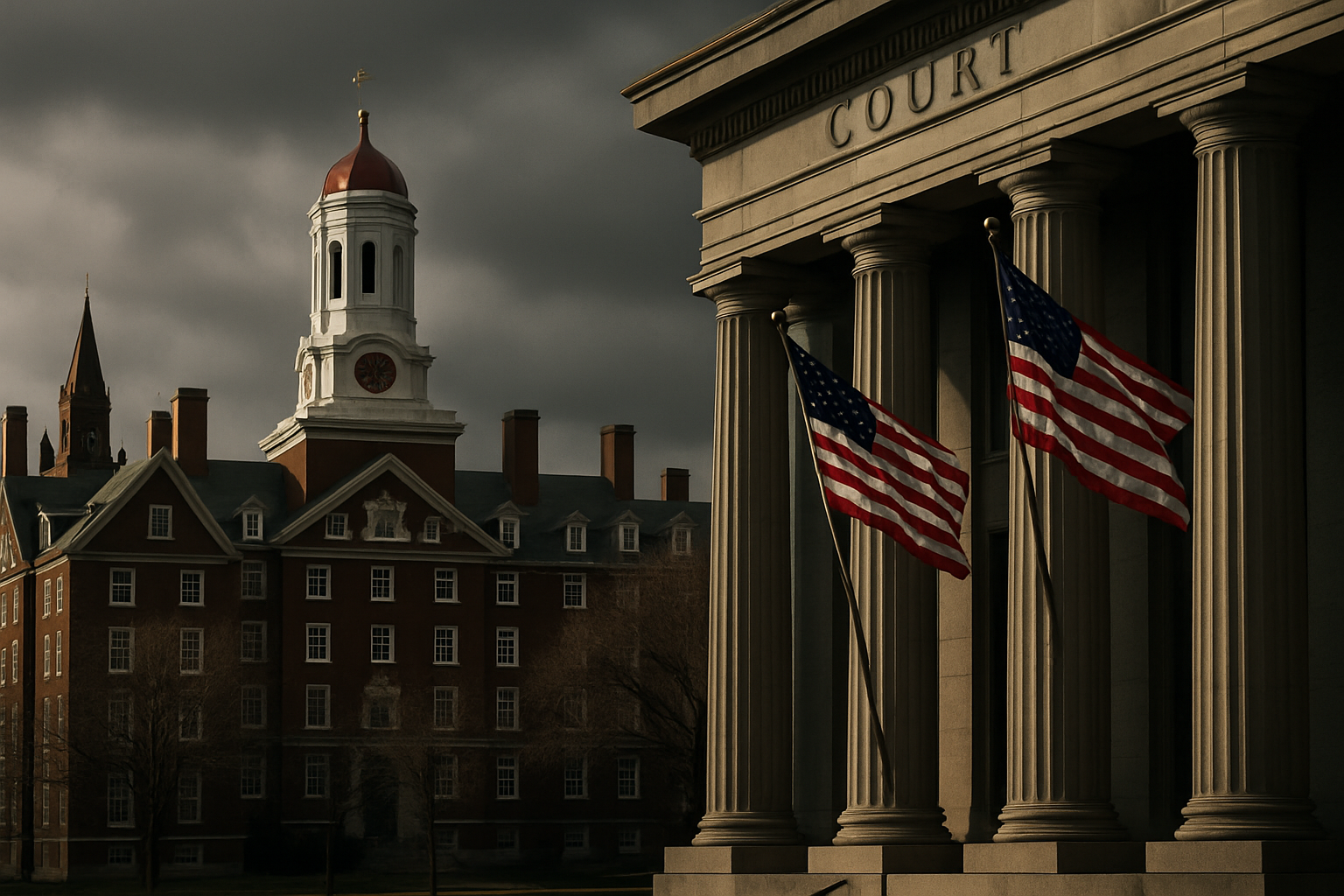
President Donald Trump announced on February 3, 2026, that he is seeking $1 billion in damages from Harvard University, accusing the prestigious institution of antisemitism and promoting "woke ideologies" while failing to protect Jewish students during pro-Palestinian demonstrations.
The explosive announcement, made via Trump's Truth Social platform, marks a dramatic escalation in the ongoing conflict between the Trump administration and elite American universities. "We want nothing further to do with Harvard, into the future," Trump declared, though he did not specify the exact legal grounds for the damages claim.
According to multiple international sources, including reports from Le Monde, Tagesschau, and Al Jazeera, the lawsuit centers on allegations that Harvard has been "heavily antisemitic" and promotes what Trump characterizes as "radical left ideologies." The Portuguese news outlet RTP reported that Trump is seeking approximately €850 million (about $1 billion) in compensation.
Roots of the Confrontation
The conflict between Trump and Harvard has been building since the beginning of his second term in the White House. The dispute stems from campus tensions surrounding pro-Palestinian demonstrations and what the administration views as inadequate protection for Jewish students at the university.
French media reports indicate that the Trump administration has filed similar lawsuits against other American universities, accusing them of promoting "woke" ideology while failing to sufficiently protect their Jewish students during pro-Palestinian demonstrations. The timing appears linked to a recent New York Times report that reignited tensions between the president and the elite institution.
German news sources suggest that Trump's fury was specifically triggered by recent media coverage, leading him to once again lash out against the university on his social media platform and demand compensation for what he characterizes as institutional bias.
Legal and Constitutional Implications
Legal experts are questioning the viability of such an unprecedented lawsuit against a private educational institution. The $1 billion figure represents one of the largest damage claims ever made by a sitting president against a university, raising significant constitutional questions about the separation of powers and academic freedom.
Harvard University has not immediately responded to requests for comment regarding the lawsuit. The institution, founded in 1636 and considered America's oldest institution of higher education, has faced increasing scrutiny over its handling of campus tensions related to Middle Eastern conflicts.
The case adds to a growing pattern of legal confrontations between the Trump administration and various institutions. As documented in previous reports, Trump's second term has been marked by multiple legal challenges across policy areas, including immigration enforcement, election administration, and now educational institutions.
Broader Context of University Relations
The Harvard lawsuit represents part of a broader Trump administration strategy targeting what it characterizes as liberal bias in higher education. The president has consistently criticized elite universities for promoting what he terms "woke" ideologies and has threatened various forms of federal intervention.
The timing of the announcement is particularly significant, coming amid a period of intense political and legal activity for the Trump administration. The president is currently dealing with multiple challenges including a partial government shutdown, immigration enforcement controversies, and ongoing international tensions.
Campus tensions at universities across the United States have intensified since the October 7, 2023 Hamas attacks on Israel and subsequent Israeli military response in Gaza. Many institutions have struggled to balance free speech protections with maintaining safe environments for all students, particularly Jewish and Muslim students.
International Reaction and Analysis
International media outlets have been closely monitoring the development, with coverage spanning from Europe to the Middle East. The Times of Israel noted that Trump's statement came "without specifying what the damages were," highlighting the unusual nature of such a public announcement via social media.
Venezuelan news sources reported that the confrontation began with Trump's second term inauguration, suggesting this represents a new phase in federal-university relations. The international attention reflects global concern about the state of academic freedom and institutional independence in the United States.
Al Jazeera characterized the announcement as Trump's "plan to sue Harvard," indicating that the actual legal filing may still be forthcoming. The distinction between Trump's public statements and formal legal action remains unclear, adding to uncertainty about the lawsuit's ultimate scope and timeline.
What This Means for Higher Education
The Harvard case could set a significant precedent for federal-university relations if it proceeds through the courts. Legal scholars are watching closely to see whether other universities might face similar challenges and how institutions will respond to what many view as unprecedented federal pressure.
The $1 billion figure, if pursued successfully, would represent a devastating financial blow to even the wealthiest universities. Harvard's endowment, while substantial at over $50 billion, would face significant impact from such a judgment, potentially affecting operations, research, and student aid programs.
University administrators nationwide are likely reassessing their policies regarding campus demonstrations, free speech guidelines, and crisis communications as they observe how this high-profile case unfolds.
The case also raises broader questions about the role of federal government in regulating campus speech and academic policies, areas traditionally governed by institutional autonomy and academic freedom principles. The outcome could reshape the relationship between federal authorities and higher education institutions for years to come.