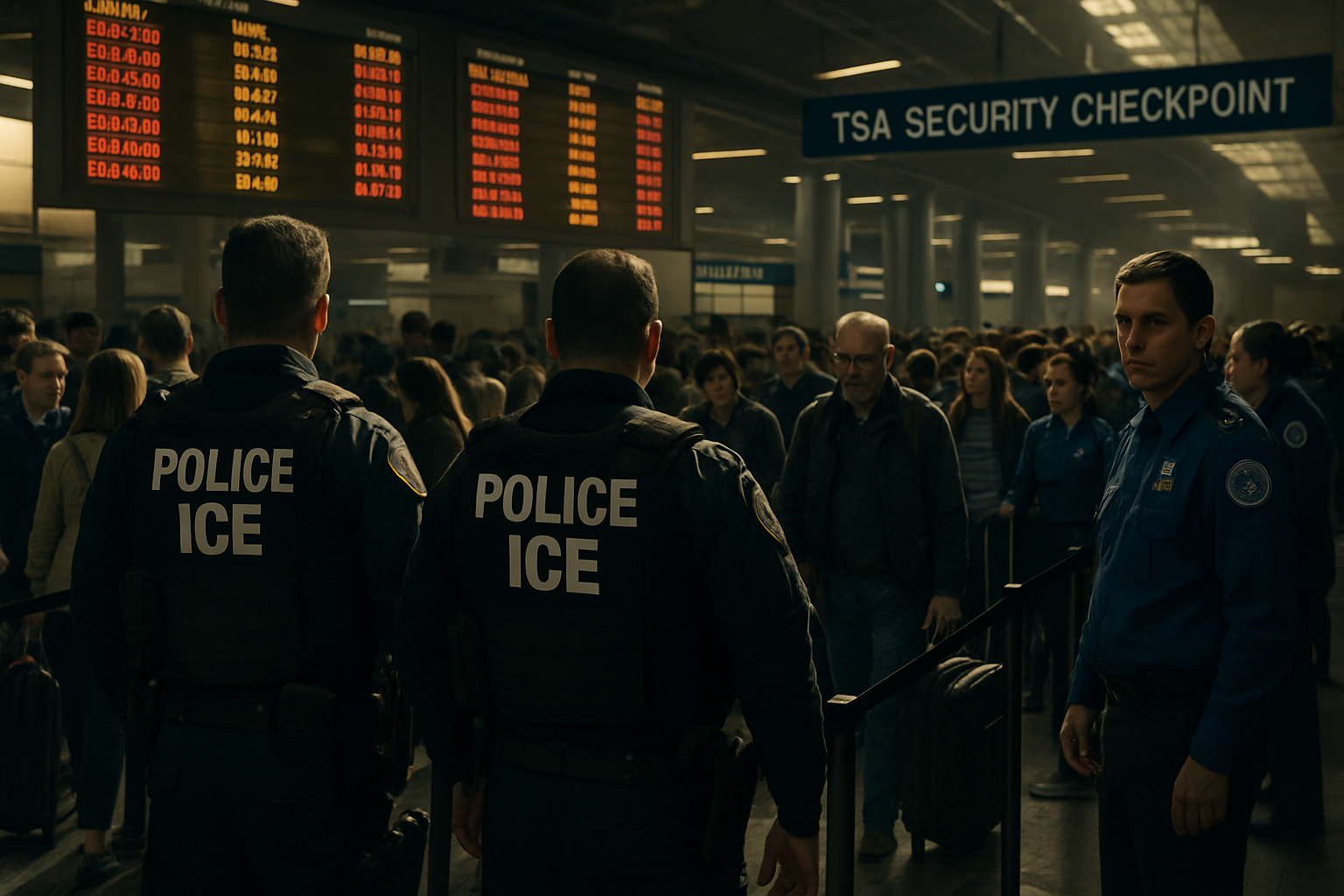
President Donald Trump announced Sunday that Immigration and Customs Enforcement (ICE) agents will be deployed to US airports starting Monday to assist with security operations, as a prolonged government shutdown enters its sixth week and Transportation Security Administration workers face their second missed paycheck.
The unprecedented move comes as Border Czar Tom Homan and Transportation Secretary Sean Duffy argued on Sunday news shows that ICE personnel can help alleviate chronic understaffing at airport security checkpoints, which have created hours-long delays at major US airports.
"I will move our brilliant and patriotic ICE Agents to the Airports where they will do Security like no one has ever seen before," Trump posted on Truth Social, threatening the deployment if Congressional Democrats don't agree to fund TSA operations.
Security Experts Raise Concerns
Aviation security specialists have expressed serious reservations about using immigration enforcement officers for airport security screening, noting the significant differences in training and expertise between the two agencies. ICE agents specialize in immigration law enforcement, while TSA personnel undergo months of specialized training in aviation threat identification and passenger screening protocols.
The Transportation Security Administration workers union criticized the plan, stating it doesn't address what they see as the underlying problem of inadequate pay that has led to chronic staffing shortages even before the current funding crisis.
TSA workers are scheduled to miss their second paycheck on March 27, as the partial government shutdown stretches into its 36th day with no resolution in sight.
Immigration Enforcement Under Scrutiny
The airport deployment proposal comes amid mounting criticism of the Trump administration's expanded immigration enforcement operations. According to polling data, two-thirds of Americans believe ICE has "gone too far" in its enforcement activities.
The administration's immigration policies have faced significant legal challenges, including fatal civilian encounters that led to previous government shutdowns and mandatory body camera requirements for ICE agents. Operation Metro Surge in Minnesota, which resulted in over 4,000 arrests, was scaled back earlier this year following the deaths of two US citizens, Alex Pretti and Renee Nicole Good, in ICE operations.
"This represents an unprecedented merger of immigration enforcement with aviation security that raises fundamental questions about agency specialization and public safety."
— Aviation Security Expert
Congressional Standoff Continues
The funding crisis stems from disagreements over immigration enforcement practices and border security funding. Congressional Democrats are demanding comprehensive ICE accountability reforms before approving any funding measures, while the administration maintains its current enforcement strategy is necessary for national security.
House Speaker Mike Johnson's scheduled ICE reform debates have stalled amid the broader funding crisis, with Democrats threatening to block Department of Homeland Security funding unless "drastic changes" are implemented in immigration enforcement protocols.
The current standoff represents an escalation of Trump's pressure tactics in federal negotiations, though early reactions from Democratic leadership suggest hardened opposition rather than willingness to make concessions.
Economic Impact Mounting
The extended airport delays are creating significant economic disruption across the aviation sector, with airlines facing operational challenges and potential losses in the hundreds of millions of dollars. Industry pressure is mounting for a swift resolution to restore normal airport operations.
International media coverage has focused on the crisis as an example of American governmental dysfunction, particularly during a period when the US is engaged in complex diplomatic negotiations on multiple fronts.
Historical Context and Legal Precedents
There is no historical precedent for using immigration enforcement agents for airport security operations, raising questions about the legal authority for such deployments and the potential implications for federal law enforcement boundaries.
The proposal builds on the administration's broader immigration enforcement expansion, which has included a $38.3 billion detention infrastructure expansion and deportation operations that have quadrupled compared to previous levels, according to University of California research.
Federal courts have increasingly required ICE to obtain warrants before arrests and have blocked several administration immigration policies, creating a complex legal landscape that the agency must navigate while implementing enforcement operations.
International Implications
The crisis has drawn attention from international partners concerned about American institutional stability and policy predictability during ongoing diplomatic negotiations. European media outlets have questioned whether the US can maintain effective governance while managing complex domestic and foreign policy challenges simultaneously.
The Mexican government has previously issued warnings about ICE operations during major public events, reflecting broader international concern about the scope and methods of US immigration enforcement.
Path Forward Uncertain
Resolution of the crisis likely requires significant compromises from both sides, including potential ICE accountability measures and border security funding agreements. The standoff demonstrates how immigration policy disputes can cascade across multiple government functions, affecting millions of Americans and the broader economy.
As the shutdown enters its sixth week, the airport deployment threat represents a new escalation in the ongoing battle over immigration policy, with implications that extend far beyond traditional enforcement operations into critical infrastructure and public safety systems.
The outcome of this crisis may establish important precedents for future federal funding disputes and the limits of executive pressure tactics in congressional negotiations, while testing the boundaries between different federal law enforcement agencies and their specialized roles in protecting American security.