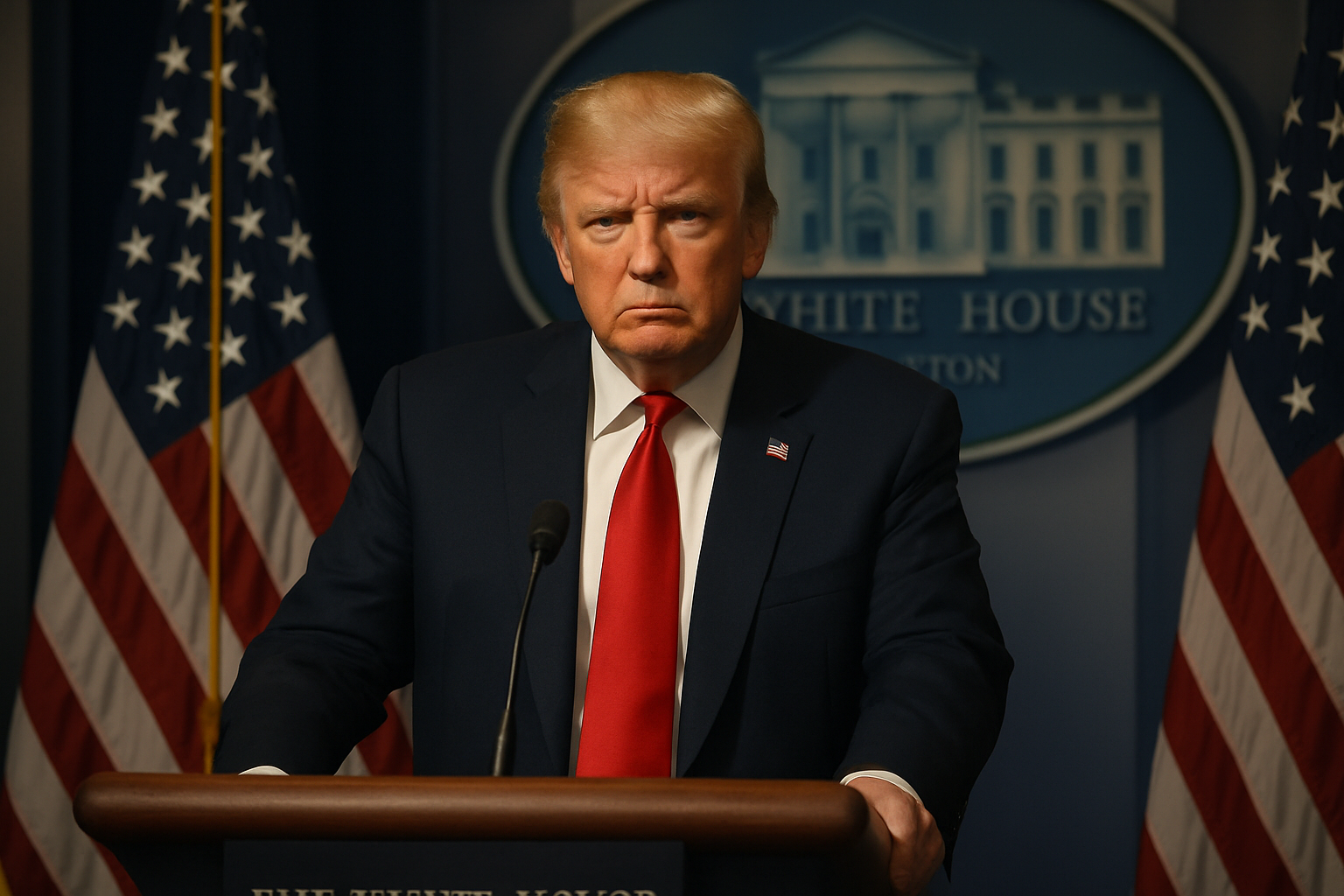
President Donald Trump issued an unprecedented threat Saturday to deploy Immigration and Customs Enforcement (ICE) agents at U.S. airports if congressional Democrats refuse to fund airport security operations, escalating tensions in an ongoing federal funding crisis that has left Transportation Security Administration personnel facing their second missed paycheck.
"I will move our brilliant and patriotic ICE Agents to the Airports where they will do Security like no one has ever seen before," Trump declared on Truth Social, marking one of his most direct confrontations with Democrats over federal funding priorities since returning to office.
The threat comes as TSA personnel nationwide are set to miss their second full paycheck on March 27 amid a partial government shutdown affecting the Department of Homeland Security. The funding impasse, now in its 36th day, stems from deep disagreements between Republican and Democratic lawmakers over immigration enforcement practices and border security measures.
Federal Shutdown Deepens Airport Crisis
The current partial shutdown has exposed critical vulnerabilities in America's aviation security infrastructure. With TSA agents working without pay for over a month, wait times at major airports have extended to several hours, creating massive disruptions for travelers and raising serious concerns about security effectiveness.
Multiple international sources confirm that the crisis has reached unprecedented levels, with some airports reporting skeleton crews and significant screening delays that threaten both passenger safety and the broader aviation industry's operational capacity.
The standoff represents a continuation of broader immigration policy disputes that have plagued the Trump administration throughout 2026. Earlier this year, similar funding disagreements led to a three-day government shutdown in February following fatal ICE shootings in Minneapolis, forcing the administration to implement new accountability measures including mandatory body cameras for immigration agents.
Questions Over ICE's Airport Security Role
Trump's proposal to substitute ICE agents for TSA personnel has drawn immediate criticism from security experts and Democratic lawmakers, who question whether immigration enforcement officers possess the specialized training required for aviation security screening.
ICE agents are primarily trained for immigration enforcement, detention operations, and criminal investigations related to border security. Their expertise differs significantly from TSA's focus on identifying potential security threats, screening passengers and baggage, and maintaining aviation safety protocols established after September 11, 2001.
According to historical context from Trump's previous term, immigration enforcement has become increasingly controversial. Recent polling indicates that two-thirds of Americans believe ICE operations have "gone too far," particularly following high-profile incidents including fatal shootings of U.S. citizens Alex Pretti and Renee Nicole Good in Minneapolis earlier this year.
The proposed deployment would mark an unprecedented expansion of ICE's operational scope beyond traditional immigration enforcement into critical infrastructure security, raising questions about the agency's preparedness for such responsibilities.
Congressional Democrats Resist Pressure
Democratic leadership in Congress has shown no signs of yielding to Trump's ultimatum, maintaining their position that any funding agreement must include comprehensive reforms to immigration enforcement practices and enhanced accountability measures.
The February incidents in Minneapolis, which resulted in civilian casualties and sparked nationwide protests, have hardened Democratic resolve to demand significant changes to ICE operations before approving additional homeland security funding. House Speaker Mike Johnson previously scheduled extensive ICE reform debates, but those discussions have stalled amid the current funding crisis.
Congressional sources indicate that Democrats view Trump's airport threat as political theater designed to deflect attention from underlying issues with immigration enforcement rather than a serious policy proposal. The party has consistently argued that rushing to fund agencies without proper oversight mechanisms risks repeating past enforcement failures.
International Implications and Public Safety Concerns
The prolonged shutdown has attracted international attention, with European media extensively covering what they characterize as American governmental dysfunction during a critical period. The crisis comes as the Trump administration faces multiple international challenges, including ongoing tensions in the Middle East and complex diplomatic negotiations.
Aviation industry analysts warn that the current security staffing crisis could have cascading effects on international travel and trade. The United States processes millions of passengers daily through its airport system, and any significant degradation of security capabilities could prompt other nations to issue travel advisories or implement additional screening measures for U.S.-bound flights.
The potential deployment of ICE agents to airports also raises questions about the militarization of civilian infrastructure and the precedent such moves might set for future federal crisis responses. Critics argue that using immigration enforcement officers for airport security represents a fundamental misunderstanding of both agencies' core competencies.
Economic and Operational Impact
The ongoing crisis has already produced significant economic consequences across the aviation sector. Major airports report increasing passenger complaints about extended wait times, while airlines face operational challenges related to security screening delays.
Industry estimates suggest that the current situation, if prolonged, could cost the aviation sector hundreds of millions of dollars in lost productivity and passenger confidence. The threat of replacing trained TSA personnel with ICE agents adds another layer of uncertainty for airlines already struggling to maintain normal operations.
Corporate pressure has intensified on lawmakers to resolve the crisis, with major employers including Target facing employee demands for clarity on federal law enforcement protocols in their facilities. The broader economic implications extend beyond aviation to encompass various sectors dependent on reliable federal services.
Historical Context and Precedent
Trump's threat represents an escalation of tactics that have characterized his approach to congressional negotiations throughout 2026. Earlier this year, his administration successfully navigated a government shutdown resolution through a combination of policy concessions and political pressure, but the current impasse appears more entrenched.
The ICE deployment threat echoes broader patterns in Trump's governance style, where federal agencies are repositioned to serve multiple policy objectives simultaneously. However, the specific proposal to use immigration agents for airport security lacks historical precedent and raises novel questions about federal agency coordination.
Previous administrations have typically maintained clear distinctions between different federal law enforcement agencies' responsibilities, recognizing that specialized training and expertise are crucial for effective operations. Trump's willingness to blur these lines reflects his broader approach to federal governance, which prioritizes political leverage over traditional bureaucratic protocols.
Looking Forward: Resolution Prospects
As the standoff enters its sixth week, both sides appear increasingly entrenched in their positions. Trump's ICE deployment threat may represent an attempt to force Democratic concessions by raising the stakes of continued inaction, but early reactions suggest it has instead hardened opposition resolve.
Industry observers note that the crisis highlights fundamental weaknesses in the federal funding process, where essential services become hostage to broader political disputes. The current situation demonstrates how immigration policy disagreements can cascade across multiple government functions, affecting millions of Americans who depend on federal services.
Resolution of the crisis will likely require significant compromises from both parties, potentially including enhanced ICE accountability measures demanded by Democrats and border security funding sought by Republicans. However, the addition of airport security concerns adds complexity to negotiations already complicated by deep partisan divisions over immigration policy.
The ultimate outcome of this confrontation may establish important precedents for future federal funding disputes and the acceptable limits of executive pressure tactics in congressional negotiations. As TSA workers approach their second missed paycheck and travelers face increasing airport delays, the urgency for resolution continues to mount across the political spectrum.