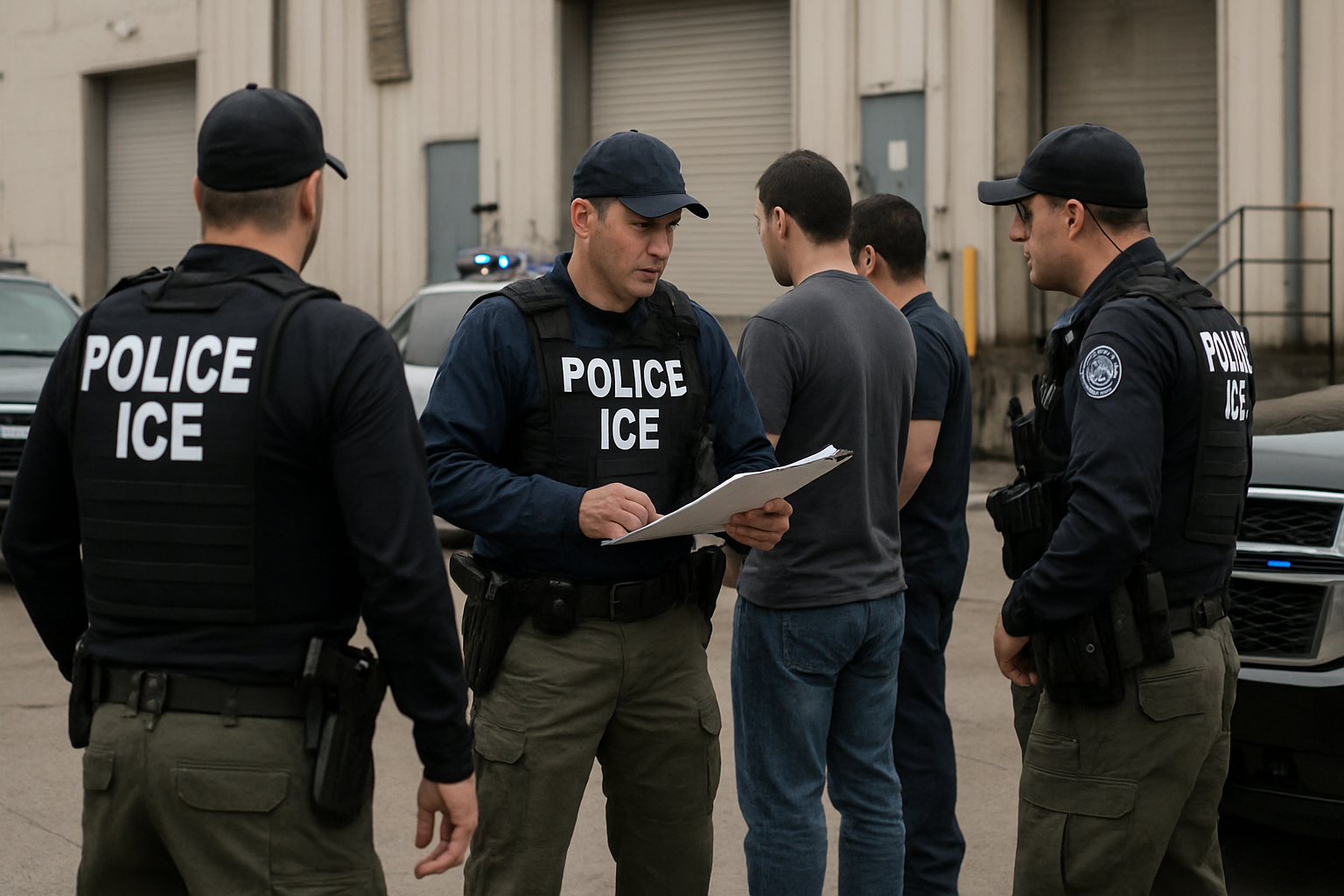
The Trump administration has significantly tightened immigration enforcement measures in February 2026, implementing new visitor visa restrictions while continuing aggressive workplace raids and deportation operations, despite mounting public opposition and international concern.
According to multiple reports from across Latin America and the Caribbean, the administration has moved to restrict B-1 and B-2 visitor visas to curb what officials term "birth tourism," while Immigration and Customs Enforcement (ICE) operations have intensified across the United States, including high-profile workplace raids and public event enforcement.
New Visa Restrictions Target 'Birth Tourism'
The U.S. State Department has directed consular officers to deny visitor visa applications if they believe the applicant's primary purpose is to give birth in the United States to secure automatic citizenship for their child. The policy change, reported by Caribbean news outlets, represents a significant escalation in efforts to prevent what immigration officials characterize as exploitation of birthright citizenship laws.
Under the new guidelines, consular officers are instructed to scrutinize travel intentions more closely and deny applications where birth tourism is suspected as the primary motivation. The policy affects B-1 business visitor and B-2 tourist visa categories, potentially impacting thousands of applications from countries with high birth tourism rates.
Workplace Raids Create Corporate Tensions
Major U.S. corporations, particularly in Minnesota, are facing increasing pressure from employees concerned about ICE enforcement actions at worksites. Target and other Minnesota businesses are being pushed by workers to provide clearer guidance on responding to potential ICE raids and to limit federal agents' access to stores and parking areas.
Employees are demanding that companies establish protocols for ICE encounters and implement measures to protect workers from immigration enforcement actions. The workplace tensions reflect broader concerns about the administration's aggressive enforcement strategy affecting daily business operations and employee safety.
Super Bowl Enforcement Warnings
Mexican consular officials have issued advisories warning Mexican nationals attending Super Bowl LX about potential ICE operations during the high-profile California event. The Mexican consulate specifically advised attendees to "travel responsibly" and remain aware of increased immigration enforcement activity surrounding major public gatherings.
The warnings underscore how immigration enforcement has expanded beyond traditional workplace and residential raids to include major public events, creating a climate of concern among immigrant communities and their supporters.
Deportations Quadruple Under Current Policies
New data from the University of California reveals that deportations have quadrupled during the first nine months of the current Trump administration compared to previous levels. The dramatic increase extends to total detentions by ICE, which have similarly multiplied compared to pre-administration figures.
The acceleration in enforcement actions represents one of the most aggressive immigration crackdowns in recent U.S. history, affecting not only undocumented immigrants but also legal residents and asylum seekers caught in expanded enforcement operations.
Public Opposition Mounts
Recent polling data indicates that two-thirds of Americans believe ICE enforcement has "gone too far," marking a significant shift in public opinion about immigration enforcement methods. The disapproval has increased notably among Democrats and independents, while Republican support remains steady.
This polling shift follows several high-profile incidents, including the fatal shootings of Alex Pretti and Renee Nicole Good by ICE agents in Minneapolis in January 2026, which sparked protests and contributed to a three-day government shutdown. In response, the administration implemented mandatory body cameras for ICE agents in Minneapolis and temporarily withdrew 700 federal enforcement agents from Minnesota operations.
International and Domestic Reactions
The enforcement escalation has drawn extensive international media coverage, with outlets across Europe, Asia, and the Americas highlighting tensions within the U.S. immigration system. The policies have particularly affected relationships with Latin American countries, whose citizens face increased scrutiny under the new visa restrictions.
Congressional Democrats continue to demand accountability measures, including agent identification requirements and restrictions on face coverings during enforcement operations. House Speaker Mike Johnson has scheduled two weeks of ICE reform debates, though significant policy changes appear unlikely given Republican control of both chambers.
Legal and Constitutional Challenges
The administration faces multiple legal challenges to its immigration policies, including civil rights lawsuits over visa suspensions affecting 75 countries and court orders requiring ICE warrants before arrests in some jurisdictions. Federal Judge Ana Reyes blocked the administration's attempt to terminate Temporary Protected Status for approximately 350,000 Haitians, citing discriminatory intent.
These legal battles represent a broader constitutional struggle over immigration enforcement powers and the balance between federal authority and individual rights. The outcomes could significantly impact the scope and methods of future immigration enforcement operations.
Economic and Social Impact
The intensified enforcement has created ripple effects throughout American society and the global economy. Immigrant families are increasingly avoiding essential services, creating public health and safety concerns. Business leaders worry about workforce disruptions and the economic impact of aggressive workplace enforcement.
Agricultural sectors, hospitality industries, and healthcare systems that rely significantly on immigrant labor face particular challenges as enforcement actions create worker shortages and operational uncertainties.
Looking Ahead
Despite some tactical adjustments in Minnesota following public pressure, the administration maintains that its overall enforcement strategy remains unchanged. Officials characterize recent modifications as "smarter law enforcement" rather than a fundamental policy shift toward more moderate approaches.
The February developments suggest that immigration enforcement will continue to be a defining issue of the current administration, with implications extending far beyond immigration policy to affect international relations, domestic politics, and American society broadly. The sustainability of such aggressive enforcement measures in the face of growing public opposition and legal challenges remains an open question as the administration moves forward with its immigration agenda.