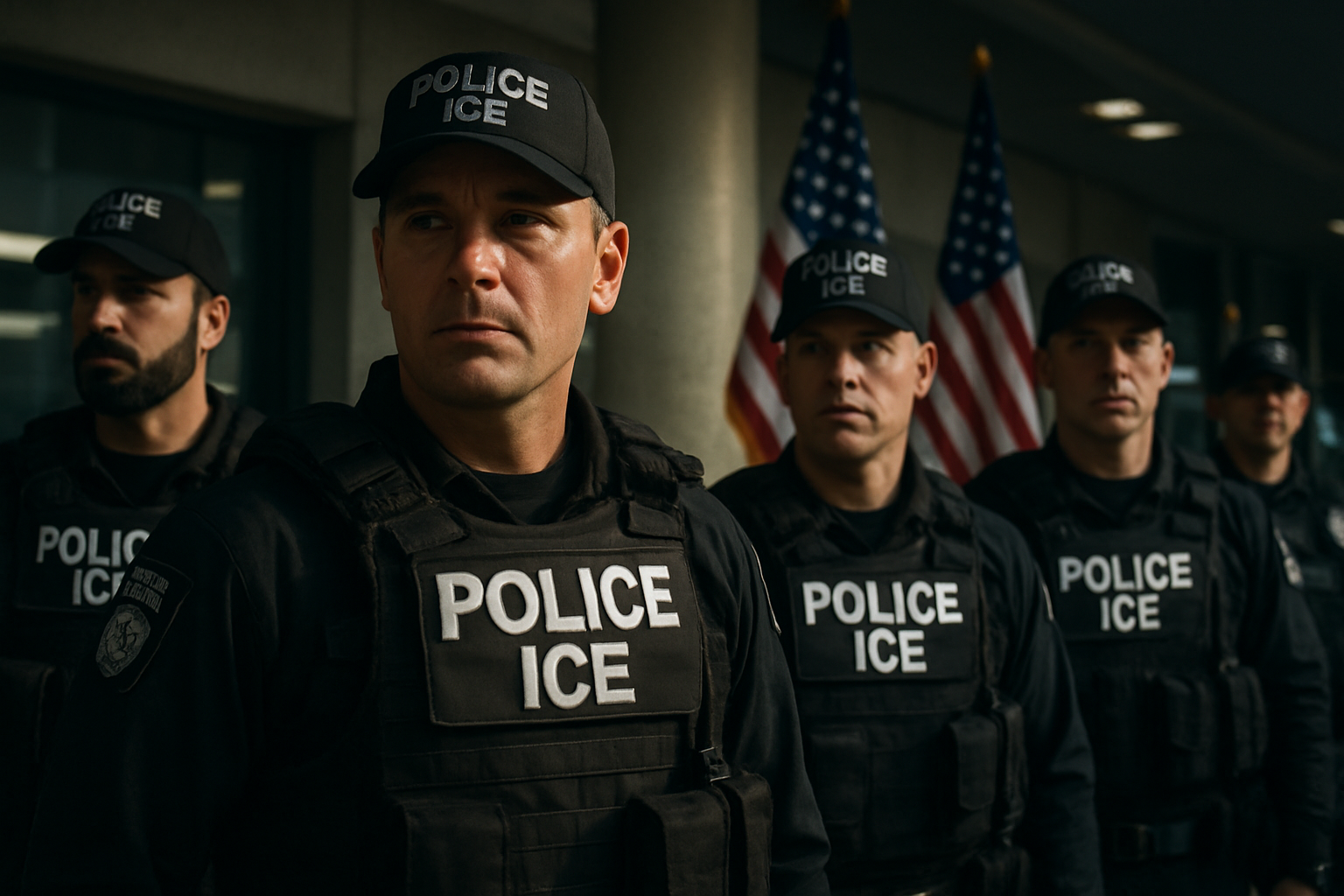
The Trump administration announced Wednesday the withdrawal of 700 federal immigration enforcement agents from Minnesota, marking a significant de-escalation following weeks of aggressive operations that resulted in two fatal shootings and nationwide protests.
White House border czar Tom Homan confirmed the immediate drawdown during a press briefing, reducing the federal immigration presence in Minnesota from approximately 2,700-3,000 agents to roughly 2,000. The decision comes after fatal shootings of two U.S. citizens by ICE agents in January sparked widespread protests and contributed to a three-day partial government shutdown.
"This is smarter law enforcement, not less law enforcement," Homan stated, emphasizing that deportation operations would continue despite the reduced personnel. The announcement represents one of the most significant policy adjustments by the Trump administration since taking office.
Fatal Shootings Spark National Crisis
The policy shift follows the controversial deaths of Alex Pretti and Renee Nicole Good, two U.S. citizens killed by federal immigration agents during enforcement operations in Minneapolis in January 2026. The shootings transformed Minneapolis into what international media described as a "major flashpoint" in Trump's immigration crackdown.
The deaths sparked immediate protests across Minneapolis, with memorial sites featuring candles and flowers appearing throughout the city. Community resistance to the federal operations grew steadily, with thousands participating in demonstrations demanding accountability from immigration enforcement agencies.
"Minneapolis has become a major flashpoint in Trump's immigration crackdown after two fatal shootings in the city by federal agents."
— International media reports
The crisis escalated when Congressional Democrats demanded accountability measures, including mandatory identification badges for federal agents and prohibitions on face coverings during operations. When these demands were not initially met, it contributed to a four-day partial government shutdown that ended February 3, 2026.
Government Response and Accountability Measures
In response to mounting pressure, Department of Homeland Security Secretary Kristi Noem announced mandatory body cameras for all ICE agents operating in Minneapolis, effective February 2, 2026. This policy represents a significant shift toward federal law enforcement accountability and could serve as a precedent for other cities.
House Speaker Mike Johnson successfully navigated the complex politics surrounding the shutdown, securing passage of a $1.2 trillion spending package by a narrow 217-214 vote. However, DHS funding was only extended through February 13, setting up potential future battles over immigration enforcement methods.
The government shutdown resolution included bipartisan support, with 21 Republicans voting against and 21 Democrats supporting the measure. This unusual cross-party dynamic highlighted the contentious nature of current immigration enforcement tactics.
Trump Signals Policy Moderation
In a notable shift in rhetoric, President Trump suggested that immigration enforcement might benefit from what he called a "softer touch." Speaking to reporters, Trump indicated that his administration was considering modifications to its approach following the Minnesota operations.
This represents a significant departure from the administration's typically hardline stance on immigration enforcement. The comment came as multiple sources reported that the administration was reassessing its enforcement strategies in response to the public outcry.
"Man kan måske bruge en lidt blødere tilgang" (One might perhaps use a somewhat softer approach)
— Trump's remarks as reported by Danish media
International Media Coverage and Scrutiny
The Minnesota crisis drew extensive international attention, with media outlets across Europe, Asia, and the Americas covering the developments as a sign of broader tensions within the U.S. immigration system. German media emphasized that the withdrawal was "not a departure from mass deportations," while Hungarian outlets noted that approximately 2,000 agents would remain in the state.
French media highlighted how the operations and subsequent violence had "sparked outrage across the United States," while Swedish reports described the policy adjustment as representing "smarter crime fighting, not less crime fighting," according to Homan's characterization.
Previous High-Profile Cases
The Minnesota controversy builds on other contentious immigration cases that have drawn national attention. In January, the detention of 5-year-old Liam Conejo Ramos and his father sparked additional criticism when Federal Judge Fred Biery ordered their release with a scathing ruling that included a photo of the child in his Spider-Man backpack.
Congressman Joaquin Castro escorted the family from the South Texas Family Residential Centre in Dilley, Texas, back to Minneapolis on February 1, 2026. The case became a symbol of what critics viewed as overly aggressive enforcement tactics targeting families.
Community Impact and Local Response
Despite the announced drawdown, Democratic leaders in Minnesota expressed concern that 2,000 federal agents remaining in the state is still excessive. State officials had called for more substantial reductions in the federal presence, arguing that current levels continue to create fear within immigrant communities.
Local organizations reported ongoing challenges in providing services to immigrant families, with many remaining reluctant to access healthcare, education, and social services due to fears of immigration enforcement. Community leaders emphasized that trust between immigrant populations and local authorities had been significantly damaged by the intensive federal operations.
Broader Immigration Policy Context
The Minnesota situation unfolds against the backdrop of broader Trump administration immigration initiatives, including efforts to terminate Temporary Protected Status for various countries and expanded deportation operations nationwide. The administration has maintained that its overall immigration enforcement strategy remains unchanged despite the tactical adjustments in Minnesota.
Border officials indicated that deportation operations would continue at current levels, with the personnel reduction in Minnesota potentially being offset by deployments to other regions. The administration emphasized that the policy adjustment was about improving cooperation with state and local authorities rather than reducing overall enforcement.
Immigration advocates noted that while the Minnesota withdrawal represents a significant symbolic victory, the broader system of immigration enforcement continues to operate at unprecedented levels across the country.
Looking Forward
The Minnesota episode has raised fundamental questions about the balance between immigration enforcement and community safety, with implications extending far beyond state borders. The mandatory body camera policy could become a model for other jurisdictions, while the international attention has intensified scrutiny of U.S. immigration practices.
As Congress prepares for two weeks of ICE reform debates scheduled by House Speaker Johnson, the Minnesota case will likely serve as a central reference point for discussions about accountability measures and enforcement tactics. The February 13 DHS funding deadline also ensures that immigration policy will remain at the forefront of political debate in coming weeks.
The situation demonstrates how local incidents can rapidly escalate into national crises, forcing policy adjustments that might not otherwise have occurred. Whether the "softer touch" suggested by Trump translates into broader systematic changes remains to be seen, but the Minnesota experience has clearly influenced the administration's approach to immigration enforcement.