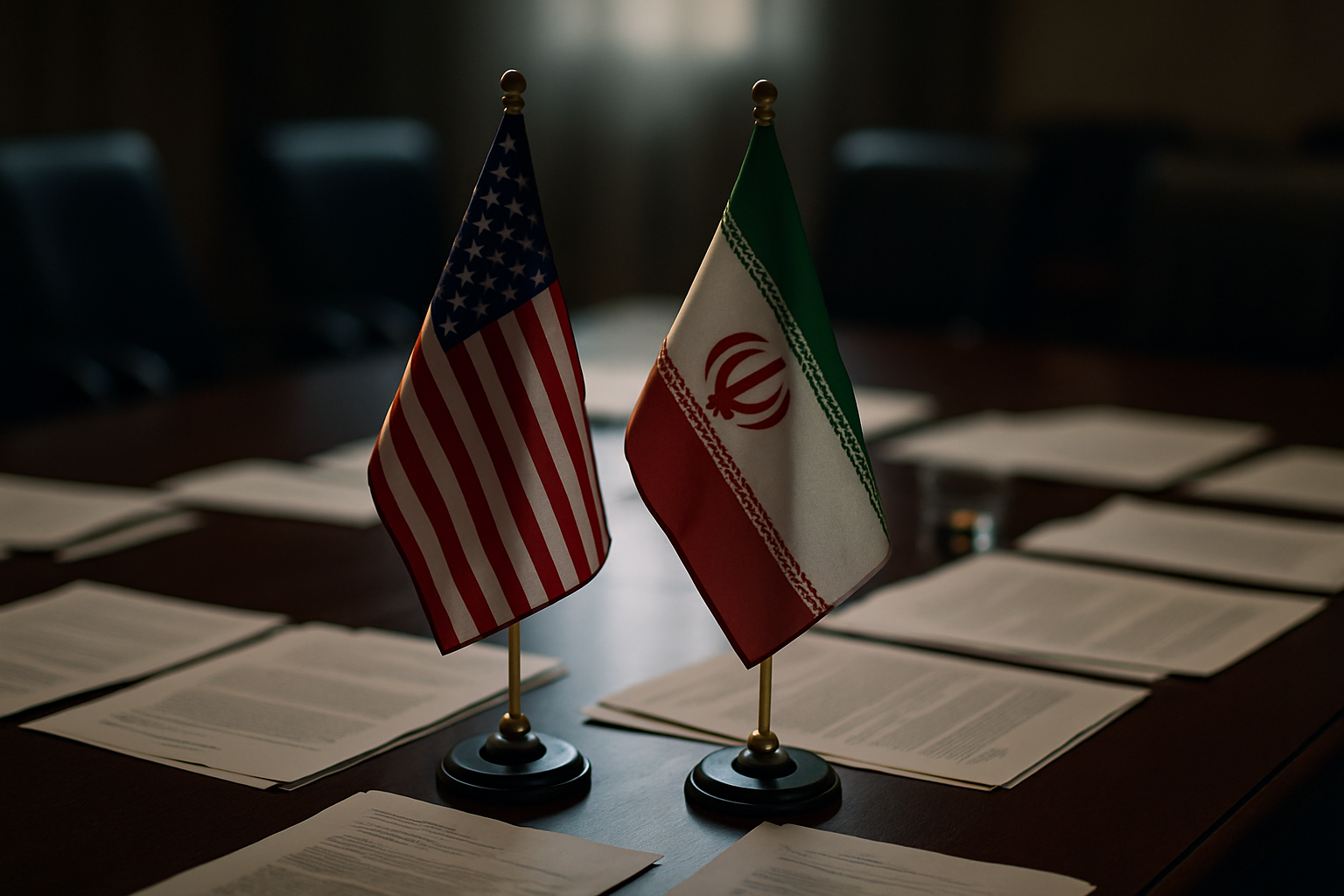
President Donald Trump has signaled renewed hope for reaching a diplomatic agreement with Iran, stating on Saturday that Tehran is "negotiating with the United States" even as both nations maintain military postures that underscore the fragile nature of current relations.
Speaking to Fox News correspondents, Trump expressed cautious optimism about the prospects for dialogue while maintaining his administration's position of strength. "The plan is that (Iran is) talking to us, and we'll see if we can do something. Otherwise, we'll see what happens," the President said, echoing the delicate balance between diplomacy and deterrence that has characterized his approach to Iran since taking office.
Military Posture Maintains Pressure
Trump's diplomatic overtures come against the backdrop of significant U.S. military presence in the region. The President emphasized American naval superiority, noting that the United States has "the largest and most powerful ships in the world" positioned near Iranian waters. This refers to the continued deployment of the USS Abraham Lincoln carrier strike group to the Arabian Sea, maintaining what military analysts describe as a "maximum pressure" posture.
The dual approach of diplomatic engagement while maintaining military readiness reflects lessons learned from previous negotiations with Iran. "The last time they negotiated," Trump noted, referencing the troubled history of the Joint Comprehensive Plan of Action (JCPOA) nuclear deal, which his first administration withdrew from in 2018.
Iranian Response and Regional Warnings
Iran's leadership has responded to American diplomatic overtures with a mixture of cautious engagement and stark warnings about the consequences of military action. Recent statements from Iranian officials suggest a complex dynamic where both nations appear interested in dialogue while preparing for potential conflict.
The timing of Trump's comments is particularly significant given recent escalations in the region. Iran's Supreme Leader Ayatollah Ali Khamenei recently issued direct threats to the United States, warning that any American attack on Iran would trigger a "regional war" in the Middle East. These warnings came as Iran announced naval exercises in the strategically crucial Strait of Hormuz, featuring live-fire drills that serve as both military preparation and diplomatic signaling.
"We hope to reach an agreement with Iran"
— Donald Trump, U.S. President
Historical Context and Stakes
The current diplomatic moment occurs against a backdrop of nearly two years of escalating tensions since Trump's return to the presidency. The relationship between Washington and Tehran has been marked by cycles of sanctions, military posturing, and periodic attempts at engagement that have yet to yield lasting agreements.
Recent developments have added urgency to potential negotiations. International pressure following Iran's handling of domestic protests, including threats of execution against activists like Erfan Soltani, who was recently released on bail after intense U.S. warnings, have highlighted the broader human rights dimensions of U.S.-Iran relations.
The Islamic Revolutionary Guard Corps (IRGC), through spokesperson Ali Mohammad Naeeni, has accused the United States of engaging in "psychological warfare" while claiming Iran maintains "action plans for any hostile scenario." This rhetoric underscores the military preparations both sides are making even as diplomatic channels remain theoretically open.
Regional Implications and Timeline
According to multiple diplomatic sources, including reports from Axios, there is potential for face-to-face meetings as early as the end of next week, possibly in Ankara, Turkey. Such a venue would represent neutral ground where both American and Iranian negotiators could engage without the domestic political pressures that have complicated previous diplomatic efforts.
The regional implications of successful U.S.-Iran negotiations extend far beyond bilateral relations. Any agreement would likely impact ongoing conflicts in Syria, Yemen, and Lebanon, where Iranian proxies have been active. Additionally, successful dialogue could influence broader Middle Eastern dynamics, including relationships with traditional U.S. allies in the Gulf who have expressed interest in regional de-escalation.
Economic Dimensions
Behind the diplomatic and military maneuvering lies the economic reality of sustained U.S. sanctions on Iran's oil sector and financial system. These measures have significantly constrained Iran's economy, creating domestic pressures that may be driving Tehran's apparent willingness to engage in negotiations despite the risks involved.
Energy markets have responded to the diplomatic signals with cautious optimism, though analysts warn that any agreement would likely be limited in scope initially, focusing on specific issues rather than comprehensive normalization of relations.
Challenges Ahead
Despite Trump's expressed hope for a deal, significant obstacles remain. The fundamental issues that have prevented previous agreements persist: Iran's nuclear program, its support for regional proxies, human rights concerns, and the broader question of Iran's role in Middle Eastern geopolitics.
Congressional Republicans have generally supported Trump's maximum pressure approach but remain skeptical of comprehensive agreements with Iran. Any potential deal would likely face significant legislative scrutiny, particularly regarding sanctions relief and verification mechanisms.
The Iranian domestic political landscape also presents challenges. While some officials appear open to negotiations, hardline elements within Iran's political establishment remain opposed to major concessions to the United States, viewing such moves as capitulation to American pressure.
Looking Forward
As both nations navigate this delicate diplomatic moment, the international community watches closely. European allies, who have maintained diplomatic channels with Iran even during periods of U.S. maximum pressure, are reportedly encouraging dialogue while expressing concerns about regional stability.
The success or failure of these potential negotiations could significantly reshape Middle Eastern geopolitics. A successful agreement might provide a model for addressing other regional conflicts, while failure could lead to further escalation and potential military confrontation.
For now, Trump's cautious optimism represents a notable shift in tone, if not yet policy. Whether this diplomatic opening can overcome decades of mistrust and competing regional interests remains to be seen, but the stakes for regional stability could not be higher.