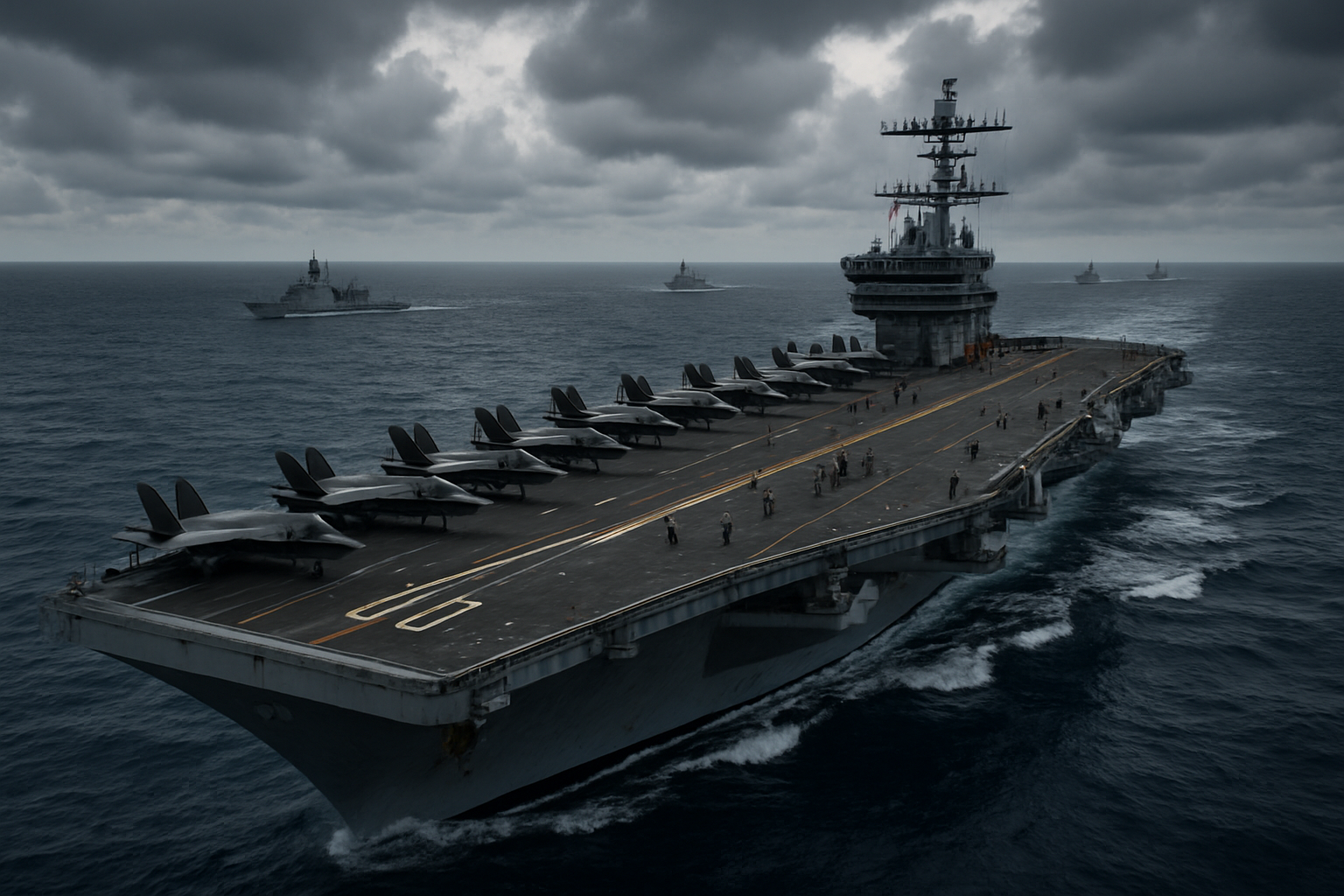
President Donald Trump is weighing potential military strikes against Iran while the United States prepares to deploy a second aircraft carrier strike group to the Middle East, marking a significant escalation in military pressure as diplomatic negotiations continue in parallel tracks.
The Pentagon has begun preparations for the deployment amid what sources describe as Trump's active consideration of military options against Iranian nuclear facilities and military infrastructure. This development comes as the USS Abraham Lincoln carrier strike group maintains its position in the Arabian Sea, approximately 800 kilometers from Iran's coast.
Dual-Track Strategy Under Pressure
The military preparations occur against a backdrop of ongoing nuclear negotiations between the United States and Iran, mediated through Oman. Despite Trump declaring recent talks "very good" with Iran "very eager to make a deal," fundamental disagreements persist over the scope and substance of any potential agreement.
Iranian Foreign Minister Abbas Araghchi has maintained that uranium enrichment remains Iran's "inalienable right," with the country currently enriching at 60% purity - significantly above the 3.67% limit established under the 2015 Joint Comprehensive Plan of Action (JCPOA) and approaching the 90% threshold considered weapons-grade.
"Iran will never abandon uranium enrichment even if war is imposed on us,"
— Abbas Araghchi, Iranian Foreign Minister
The Iranian position creates a fundamental obstacle to diplomatic progress, as Tehran maintains "red lines" excluding ballistic missiles and regional proxy activities from nuclear-only discussions. Meanwhile, US Secretary of State Marco Rubio insists any comprehensive agreement must address Iran's missile capabilities, support for armed groups, and human rights record.
Military Incidents Escalate Tensions
Recent military confrontations have heightened tensions even as diplomats engage. US F-35C fighter jets from the USS Abraham Lincoln shot down an Iranian Shahed-139 drone that aggressively approached the carrier group, while Iranian Revolutionary Guard Corps (IRGC) vessels harassed US-flagged tankers in the Strait of Hormuz - a critical waterway handling 40% of global oil transit.
These incidents have contributed to oil prices rising over $1 per barrel, reflecting market concerns about potential supply disruptions in the Persian Gulf region. Navy Captain Tim Hawkins of CENTCOM confirmed no US casualties in the drone intercept, describing it as a defensive action after the Iranian aircraft continued its approach despite de-escalatory measures.
Regional Coalition Supports Diplomacy
Despite military tensions, an unprecedented regional coalition has emerged supporting diplomatic engagement between Washington and Tehran. Saudi Arabia, the United Arab Emirates, Qatar, and Egypt have all backed the negotiation process - a remarkable consensus among traditionally competing Middle Eastern powers.
Oman has played a crucial mediating role, leveraging its historical neutrality and experience from the 2015 JCPOA negotiations. The sultanate's diplomatic channels have proven essential for maintaining dialogue even as military incidents continue to occur.
Israeli Coordination and Red Lines
President Trump's recent meeting with Israeli Prime Minister Benjamin Netanyahu at the White House has added another dimension to the strategic calculations. Netanyahu emphasized that any agreement with Iran must include "limiting ballistic missiles and ending support for the Iranian axis," referring to Tehran's backing of Hezbollah, Hamas, and the Houthis.
Israeli officials view nuclear-only agreements as insufficient to address what they consider existential security threats from Iran's integrated missile and proxy network. This coordination with Washington reflects concerns that incomplete diplomatic arrangements could leave Israel vulnerable to conventional attacks even if nuclear threats are temporarily constrained.
Domestic Pressures on Both Sides
Iran faces severe internal pressure with over 42,000 protest arrests since 2022 and crushing economic sanctions that have devastated the country's economy. The regime's survival imperative creates incentives for sanctions relief, yet Supreme Leader Ayatollah Ali Khamenei has warned of "regional war" if the United States attacks Iran.
The Trump administration confronts its own political pressures, with Republican hawks viewing diplomatic engagement as potential appeasement while the president seeks a foreign policy victory that demonstrates American strength. This dynamic complicates negotiations as both sides must balance domestic constituencies with international agreements.
Nuclear Program Advancement Raises Stakes
Intelligence assessments suggest Iran possesses sufficient enriched uranium for multiple weapons if weaponized, fundamentally altering regional deterrence calculations. Reports indicate Iran might consider a three-year enrichment halt and transfer of existing stockpiles to Russia as potential concessions, though hardline statements from Iranian officials cast doubt on such compromises.
The advanced centrifuge technology and expanded infrastructure Iran has developed since withdrawing from the JCPOA in 2018 would require unprecedented verification mechanisms far exceeding the complexity of the original agreement.
International Context Complicates Resolution
The Iran crisis unfolds amid broader nuclear governance challenges, including the February 5 expiration of the New START treaty between the United States and Russia - the first time in over 50 years without nuclear arms control between the superpowers. China's expanding nuclear arsenal and global arms control breakdown create urgency for preventing Iranian weapons development.
UN Secretary-General António Guterres has warned that nuclear risks are "higher than at any time in decades," emphasizing the global implications of the US-Iran standoff beyond regional stability concerns.
Military Options Under Active Consideration
The preparation of a second aircraft carrier deployment signals Trump's readiness to escalate military pressure if diplomacy fails. This would represent the largest US naval presence in the Middle East in recent years, providing multiple strike capabilities and defensive coverage for regional allies.
Military planners have reportedly prepared various scenarios ranging from targeted strikes on nuclear facilities to broader campaigns against Iranian military infrastructure and Revolutionary Guard assets. The timing and scope of any potential action would depend on diplomatic progress and Iranian responses to military pressure.
Economic Warfare Continues
Parallel to military preparations, the Trump administration has maintained economic pressure through sweeping sanctions threatening 25% tariffs on countries conducting business with Iran. This "maximum pressure" campaign extends traditional sanctions to third-country trade relationships, creating potential compliance challenges for international partners.
The economic dimension reflects a comprehensive strategy combining military deterrence, diplomatic engagement, and financial coercion to achieve nuclear weapons prevention while maintaining strategic partnerships with regional allies and global economic partners.
Coming Weeks Prove Critical
Both sides have agreed to continue nuclear negotiations "early next week" despite fundamental disagreements on scope and substance. The framework establishment represents progress, but the gap between positions remains substantial on core issues including uranium enrichment, missile capabilities, and regional activities.
Success requires innovative diplomatic solutions bridging decade-old challenges that have prevented agreements since the JCPOA collapse. Failure could accelerate military confrontation with implications for regional stability, global energy markets, and international nuclear governance.
The stakes extend far beyond bilateral US-Iran relations to encompass preventing regional war, maintaining nuclear non-proliferation regimes, and establishing precedents for 21st-century conflict resolution between major powers. The coming weeks will test whether military pressure combined with diplomatic engagement can achieve nuclear weapons prevention or whether the region moves closer to armed conflict with global consequences.