President Trump is actively considering military operations to seize Iranian oil and uranium facilities, including potential ground invasions of strategic installations, as the month-long Middle East crisis reaches unprecedented levels and diplomatic solutions appear exhausted.
The crisis has evolved from nuclear negotiations that showed promising signs in February to what UN Secretary-General António Guterres called "the greatest test of multilateral cooperation in the modern era." With Iran's Strait of Hormuz closure affecting 40% of global oil transit and oil prices surging past $100 per barrel, the conflict has triggered the most severe energy crisis since the 1970s oil shocks.
From Diplomacy to Military Escalation
The transformation has been rapid and dramatic. In February 2026, Geneva talks between Iranian Foreign Minister Abbas Araghchi and US Special Envoy Steve Witkoff achieved what Araghchi called "broad agreement on guiding principles" - the most significant diplomatic progress since the JCPOA collapse in 2018.
"Never abandon uranium enrichment even if war is imposed,"
— Abbas Araghchi, Iranian Foreign Minister
However, fundamental scope disagreements proved insurmountable. Iran excluded ballistic missiles and regional proxy activities as "red lines," demanding nuclear-only talks, while US Secretary Marco Rubio insisted on comprehensive agreements addressing missiles, armed groups, and human rights.
Trump's rhetoric evolved from cautious optimism to explicit regime change advocacy. His declaration that Iranian government overthrow would be "the best thing that could happen" marked a policy shift from nuclear-focused negotiations to comprehensive political transformation objectives.
Operation Epic Fury: Unprecedented Scale
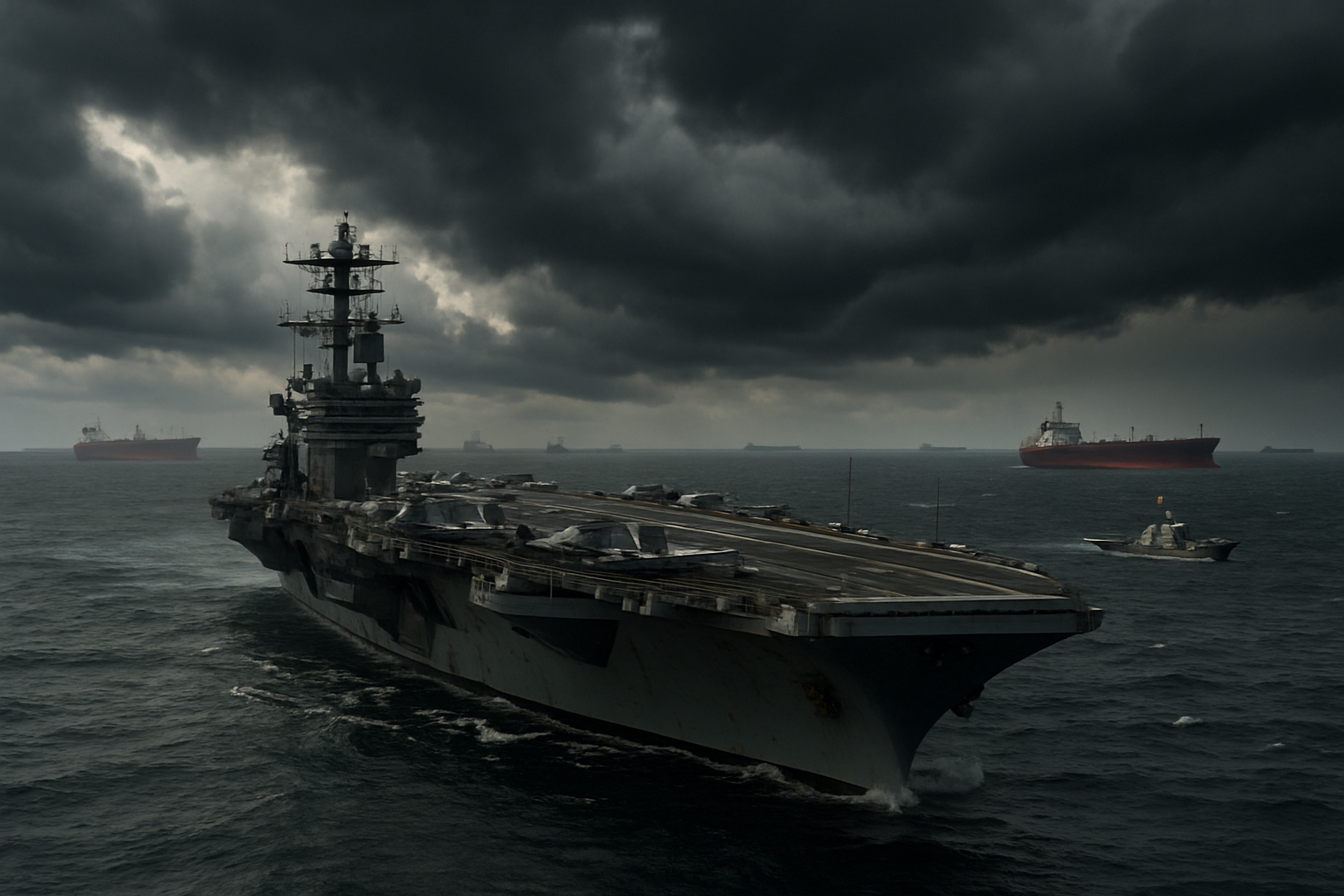
The military campaign, dubbed Operation Epic Fury, represents the largest coordinated US-Israeli operation since the 2003 Iraq invasion. The dual-carrier deployment of USS Gerald R. Ford and USS Abraham Lincoln positions approximately one-third of the active US Navy fleet within 800 kilometers of Iran's coast.
Costs have reached $27 billion, running at $1 billion daily, making it the most expensive military operation in recent memory. Pentagon sources confirm preparations for operations extending through September 2026, far beyond initial 4-6 week timelines.
The conflict claimed its first American casualties, with three service members killed and 150 wounded. The USS Charlotte submarine's sinking of Iranian frigate IRIS Dena off Sri Lanka marked the first enemy vessel destroyed by a US submarine since World War II.
Nuclear Crisis and Succession Drama
The March 1 death of Supreme Leader Ali Khamenei during the initial strikes triggered Iran's first constitutional succession crisis. His son Mojtaba Khamenei's appointment as the new Supreme Leader represents an unprecedented hereditary succession in the Islamic Republic's 47-year history, consolidating hardline military influence under Revolutionary Guard pressure.
Iran continues uranium enrichment at 60% purity - approaching the 90% weapons-grade threshold - with sufficient material for multiple weapons if weaponized. The crisis unfolds amid broader nuclear governance challenges, including the February 2026 expiration of the New START treaty, marking the first time in 50+ years without US-Russia nuclear constraints.
Global Economic Devastation
The conflict's economic impact has been catastrophic. Iran's deployment of 2,000-6,000 naval mines has effectively closed the Strait of Hormuz, the world's most critical energy chokepoint. The International Energy Agency responded with its largest strategic petroleum release in 50-year history - 400 million barrels from 32 countries.

Aviation has suffered COVID-scale disruption, with 18,000+ flights cancelled worldwide. Eight Middle Eastern countries maintain simultaneous airspace closures, creating an "aviation black hole" severing Asia-Europe corridors. Dubai International, the world's busiest airport handling 86 million passengers annually, remains shuttered due to missile damage.
European Territory Under Attack
Iran's Operation True Promise 4 retaliation marked a historic escalation when drones struck RAF Akrotiri in Cyprus - the first attack on European territory since World War II. This prompted an unprecedented naval coalition response, with HMS Dragon joined by Spanish, Italian, French, Dutch, and Greek vessels protecting European approaches.
Regional casualties have mounted across the coalition. The UAE reported one civilian killed in Abu Dhabi, Kuwait suffered 32 injuries from airport strikes, and Qatar intercepted 65 missiles and 12 drones, with eight people injured despite Patriot missile defenses.
Congressional Opposition and Public Skepticism
Domestic support for the military operations has plummeted to historically low levels. Only 25% of Americans support the strikes, described by analysts as "almost unprecedented" unpopularity for early-stage military operations.
"I'm more concerned than ever about boots on the ground,"
— Senator Richard Blumenthal
Bipartisan congressional lawmakers are demanding comprehensive briefings on strategy, costs, and exit plans. Senator Richard Blumenthal has expressed particular concern about potential ground troop deployments, while financial markets serve as what experts call the "ultimate constraint" on conflict escalation.
Humanitarian Crisis and War Crimes Allegations
The Iran Red Crescent reports 787+ civilian casualties from US-Israeli strikes, including a Pentagon-confirmed attack on an elementary school in Minab that killed 165-185 students using what officials called "outdated targeting data." Forty-six Senate Democrats have demanded investigations into potential Geneva Conventions violations.
International evacuations have reached Arab Spring 2011 scales, with Australia alone reporting 115,000 nationals trapped and Germany evacuating 30,000 tourists. The EU activated its ESTIA emergency evacuation plan for the first time in bloc history.
Kharg Island: The Prize Target
Trump's consideration of ground operations focuses heavily on Iran's Kharg Island, which handles 90% of the country's crude oil exports - approximately 1.6 million barrels per day. The island represents Iran's economic lifeline and sits 300 miles northwest of the critical Strait of Hormuz waterway.
Military planners are preparing scenarios for deploying thousands of Marines to seize the oil terminal facilities, though Trump has indicated he deliberately spared oil infrastructure "out of consideration" while warning of immediate reconsideration if Iran continues disrupting shipping.
Alliance Strain and International Opposition
European allies have delivered their most comprehensive rejection of American military leadership since the Iraq War. German Defense Minister Boris Pistorius questioned "what Donald Trump expects a handful of European frigates to do that the powerful US Navy cannot."
France explicitly rejected warship deployments, while Japan and Australia declined to provide naval vessels despite their oil dependence on Middle Eastern supplies. This marks a concrete expression of strategic autonomy versus what European leaders view as American military adventurism.
Nuclear Governance Crisis
The Iran crisis unfolds against the backdrop of broader nuclear governance collapse. The New START treaty's February expiration, combined with China's nuclear expansion and UN warnings that nuclear risks are at their "highest in decades," creates a template-setting moment for 21st-century conflict resolution.
Success in containing the crisis could provide a framework for future nuclear dispute resolution, while failure may accelerate military solutions for decades, encouraging global proliferation and undermining diplomatic credibility worldwide.
The Path Forward
With Trump's demands for "unconditional surrender" and claims of the right to personally choose Iran's next Supreme Leader, diplomatic solutions appear exhausted. Pakistan has emerged as a potential mediator, with Foreign Minister Ishaq Dar hosting quadrilateral talks with Saudi, Turkish, and Egyptian counterparts.
However, Iran's categorical rejection of the Trump administration's 15-point peace proposal, combined with continued military preparations on both sides, suggests the crisis may escalate further before any resolution emerges.
As the conflict enters its most dangerous phase since the Cold War's end, the coming days will determine whether containment is possible or if the Middle East faces its most consequential transformation in decades, with global implications extending far beyond the region's boundaries.