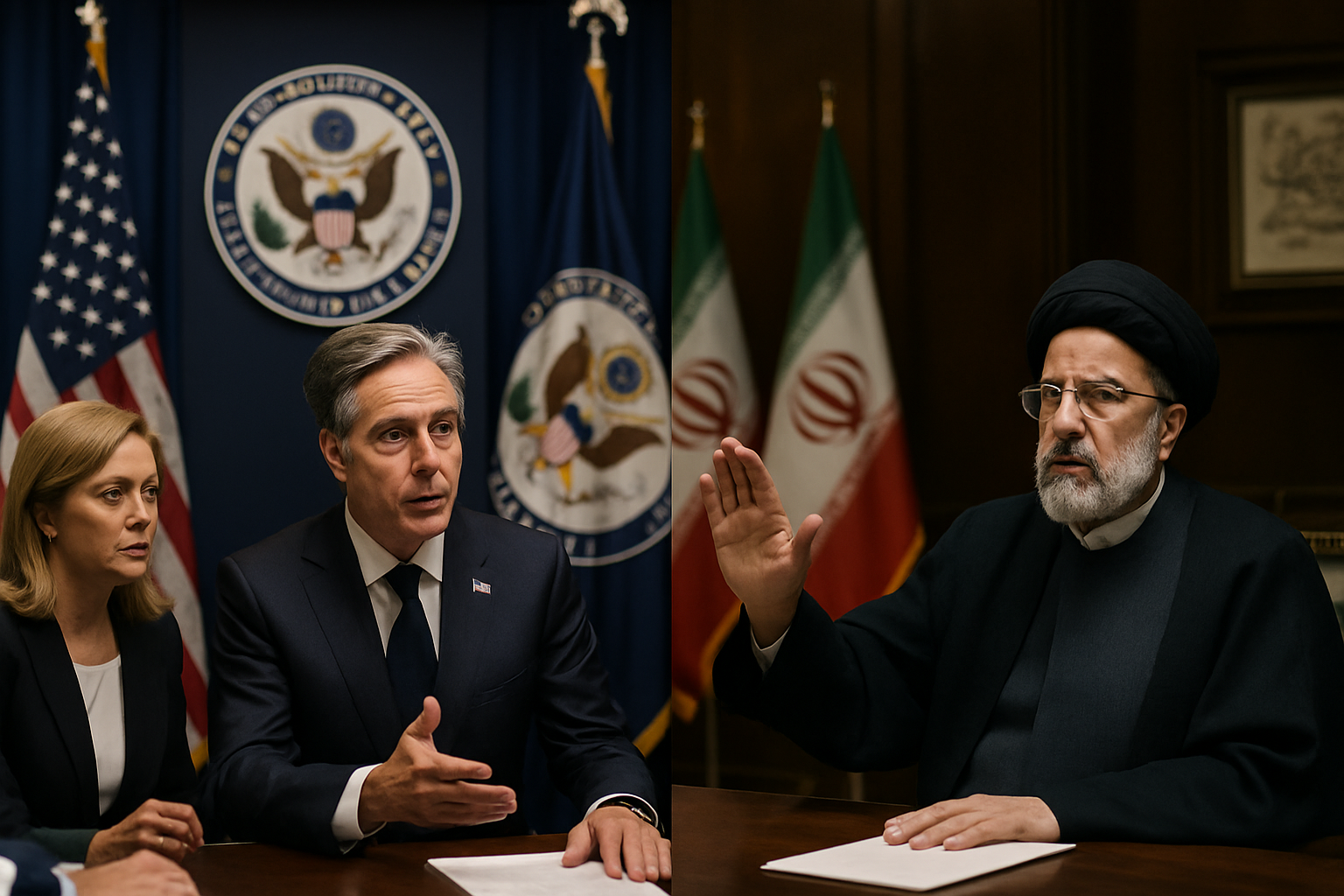
President Donald Trump's claims of ongoing negotiations with Iran are being categorically denied by Tehran, creating a diplomatic standoff as military tensions escalate across the Middle East following weeks of intensive strikes and counter-strikes between US-Israeli forces and Iranian-backed groups.
The conflicting narratives emerged after Trump postponed threatened strikes on Iranian energy infrastructure for five days, announcing what he described as "very good conversations" with Tehran. However, Iranian Parliament Speaker Mohammad Bagher Ghalibaf dismissed these claims as "fake news," while other senior Iranian officials denied any direct diplomatic contact with the United States.
Divergent Claims on Diplomatic Contact
Trump's assertion that Iran "wants to make a deal" stands in stark contrast to statements from Iranian leadership. Speaking from the Sydney Morning Herald's live coverage, sources close to the Iranian government maintain that no formal negotiations are taking place, despite mounting international pressure for de-escalation.
The diplomatic confusion comes after Trump issued his strongest ultimatum yet, threatening Iran with consequences if energy infrastructure attacks weren't halted. According to multiple European sources, Iran responded by warning of "special plans" for Trump and his allies, escalating rhetoric to dangerous new levels.
"We have prepared special events for you tonight, and also for Tel Aviv and other allies of Washington."
— Iranian Fars Agency Statement
Military Escalation Continues
The diplomatic discord unfolds against a backdrop of unprecedented military escalation. Iran launched missiles targeting the remote US-British military base at Diego Garcia in the Indian Ocean—the furthest target Tehran has ever struck, according to intelligence sources cited by The Sunday Times.
This attack represents more than just military posturing; diplomatic sources describe it as a warning message to Europe. The targeting of Diego Garcia, located thousands of miles from Iran, demonstrates Tehran's expanding military reach and willingness to strike Western targets globally.
Meanwhile, Iran has threatened to destroy Middle Eastern water systems in response to Trump's energy infrastructure ultimatum, raising the stakes for millions of civilians across the region. Finnish sources report that the conflict has now entered its fourth week, with both sides threatening critical civilian infrastructure.
Regional Coalition Under Strain
The conflicting claims about negotiations are straining the unprecedented regional coalition that had backed diplomatic efforts. Saudi Arabia, the UAE, Qatar, and Egypt had formed an extraordinary consensus supporting dialogue between Washington and Tehran—a remarkable achievement given the region's complex political dynamics.
Pakistan has emerged as a potential mediator, with army chief Asim Munir using his ties to both Tehran and Trump to boost mediation efforts. Sources confirm that Pakistan, along with Turkey and Egypt, is engaged in "active back-channel diplomacy" involving US Special Envoy Steve Witkoff and Iranian Foreign Minister Abbas Araghchi.
However, Iran's systematic targeting of regional allies is testing these relationships. The attacks on Gulf states that had supported diplomatic initiatives represent a significant escalation that could unravel months of careful coalition-building.
Nuclear Dimensions and Historical Context
The current crisis carries particular gravity given the collapse of previous nuclear negotiations. Earlier diplomatic efforts through Geneva talks had achieved what Iranian officials called "broad agreement on guiding principles"—the most significant progress since the JCPOA collapse in 2018.
These negotiations had addressed Iran's uranium enrichment program, which continues at 60% purity versus the 3.67% limit specified in the original nuclear deal. Intelligence assessments suggest Iran possesses sufficient enriched uranium for multiple weapons if weaponized, approaching the 90% weapons-grade threshold.
The fundamental obstacle that derailed previous talks—Iran's exclusion of ballistic missiles and regional proxy activities as "red lines"—remains unresolved. The US continues to demand comprehensive agreements addressing missiles, armed groups, and human rights, creating the same structural disagreement that has prevented breakthrough attempts for over a decade.
Energy Security and Global Impact
The stakes extend far beyond the Middle East, with global energy security hanging in the balance. Iran's control over the Strait of Hormuz—through which 40% of global oil transit passes—gives Tehran significant leverage over worldwide energy markets.
Oil prices have already risen in response to the escalating tensions, and Iran's threats against water systems and energy infrastructure could trigger humanitarian crises affecting tens of millions of people across the region.
European allies face particular pressure, as evidenced by the widespread travel warnings issued by the UK, France, Germany, and Poland advising against travel to Israel and surrounding areas. The US has authorized the evacuation of non-essential embassy personnel, with Ambassador Huckabee reportedly telling staff to leave "today."
Information Warfare and Credibility
The contradictory claims about negotiations highlight the role of information warfare in modern conflicts. Trump's public statements about diplomatic progress serve multiple purposes: they could be genuine attempts to create momentum for talks, strategic pressure tactics, or efforts to maintain domestic political support by appearing to pursue diplomatic solutions.
Iranian denials, meanwhile, may reflect genuine absence of formal talks or could be strategic positioning to avoid appearing weak domestically while maintaining flexibility for future engagement.
This dynamic creates significant challenges for international mediators and regional allies trying to navigate between conflicting narratives from both sides.
Congressional and International Oversight
The diplomatic confusion is drawing increased scrutiny from Congress, with lawmakers demanding clarity on the administration's strategy and timeline. The disconnect between Trump's optimistic assessments and Iran's categorical denials raises questions about the reliability of intelligence and the effectiveness of current diplomatic channels.
International partners, particularly European allies who have invested heavily in multilateral diplomatic solutions, are calling for transparent communication and coordinated approaches to prevent further escalation.
Looking Ahead: Critical Juncture
The current impasse represents a critical juncture in US-Iran relations. If genuine back-channel communications exist despite public denials, there may still be room for diplomatic maneuvering. However, the gap between public positions and the continued military escalation suggest that any meaningful negotiations would require significant face-saving mechanisms for both sides.
The international community faces a delicate challenge: supporting diplomatic efforts while preparing for the possibility that military tensions could spiral into broader regional conflict. The success or failure of current mediation efforts will likely set precedents for how similar crises are managed in an increasingly multipolar world.
As the situation continues to evolve, the credibility of both American diplomatic assurances and Iranian statements of intent will be tested by actions rather than words. The coming days will be crucial in determining whether diplomacy can prevail over the momentum toward wider military confrontation.