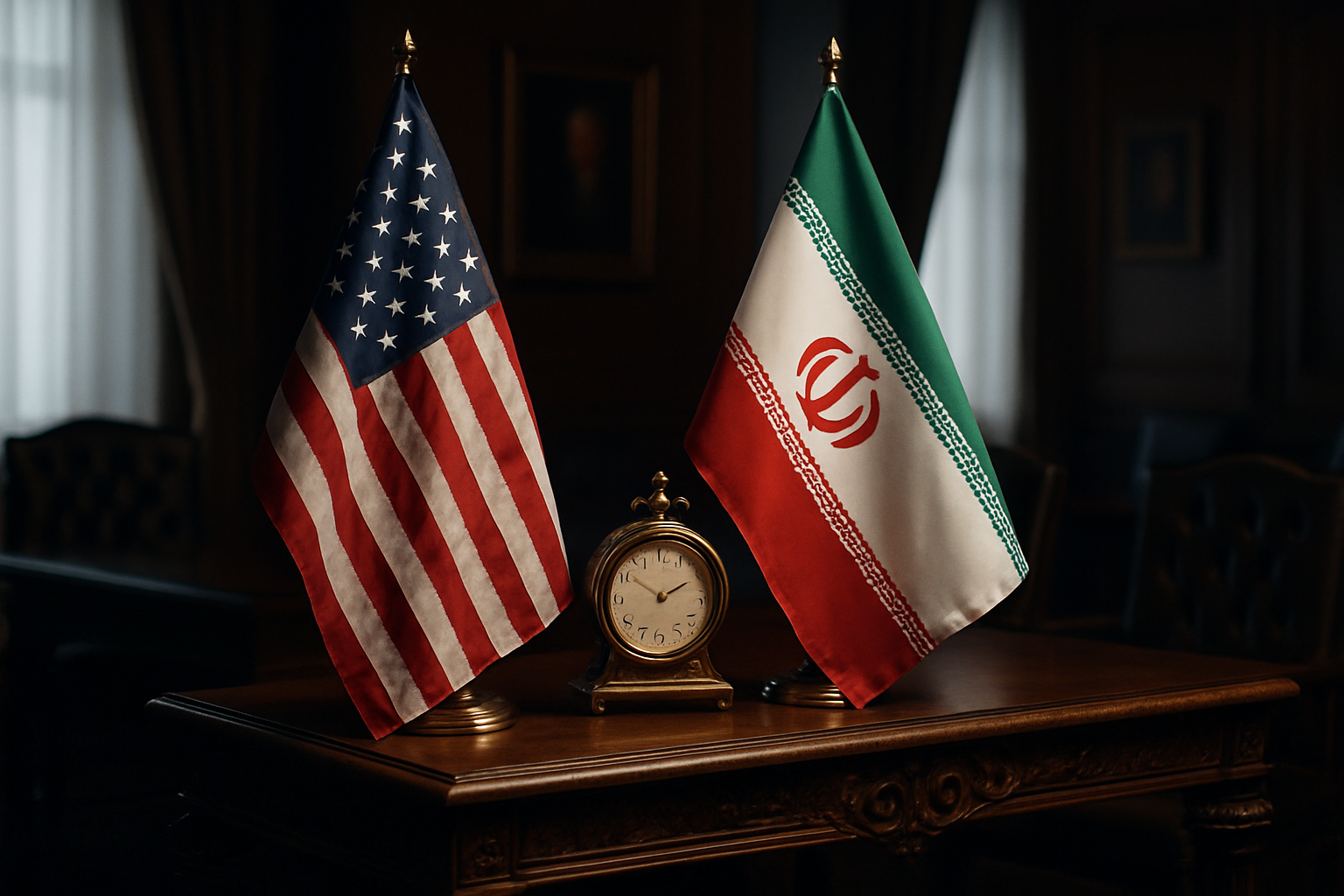
President Donald Trump has set fresh deadlines for reaching a comprehensive agreement with Iran while expressing renewed optimism about nuclear negotiations, following Pakistan's unprecedented diplomatic breakthrough that ended the most dangerous international crisis since the Cold War.
Speaking to reporters on Friday, Trump declared the Iran conflict "very close to ending" while warning that military action could resume if diplomatic talks fail. The president's comments represent a dramatic shift from apocalyptic threats to deal-making optimism, building on Pakistan's historic mediation that achieved a ceasefire just 88 minutes before Trump's previous "whole civilization will die tonight" deadline.
Pakistan's Historic Mediation Success
The breakthrough negotiations center on Pakistan's unprecedented "Islamabad Accord" framework, engineered by Prime Minister Shehbaz Sharif and Field Marshal Asim Munir through an innovative "message relay system." Their diplomatic triumph prevented global catastrophe when they mediated between Vice President JD Vance and Iranian Foreign Minister Abbas Araghchi, achieving the ceasefire that crashed oil prices 20% from $119.50 to below $100 per barrel.
"This represents the most significant middle power diplomatic achievement in decades, demonstrating that innovative solutions are possible even under maximum stakes circumstances."
— Dr. Maria Hendricks, International Crisis Management Institute
China's Foreign Minister Wang Yi provided "full support" for Pakistan's initiative, while Germany noted "positive signs" for continued diplomatic engagement. The framework has emerged as a template for 21st-century conflict resolution when traditional mechanisms fail.
Nuclear Program Remains Core Sticking Point
Despite Trump's optimism, fundamental disagreements persist over Iran's nuclear program. The United States continues demanding a firm commitment that Iran will not seek nuclear weapons development and suspend uranium enrichment. Iran maintains its 60% uranium enrichment levels and refuses to abandon over 400 kilograms of weapons-grade material.
Iranian Foreign Minister Abbas Araghchi's position remains unchanged: "Iran will never abandon enrichment even if war is imposed." This represents the same structural obstacle that prevented breakthroughs following the JCPOA collapse in 2018—Iran's nuclear-only approach versus U.S. comprehensive demands including ballistic missiles, regional proxies, and human rights issues.
Lebanon Crisis Threatens Framework
A critical "Lebanon loophole" continues to endanger the diplomatic process. Israeli Prime Minister Benjamin Netanyahu explicitly excluded Lebanon from the ceasefire agreement, creating an unbridgeable gap that led to Israeli strikes killing over 254 people in a single day during the most recent negotiations. With 1.2 million Lebanese displaced and 26 paramedics killed in systematic medical targeting, Iran threatens withdrawal from talks unless comprehensive enforcement is applied to all fronts.
Vice President Vance acknowledged Iran's "legitimate misunderstanding" about Lebanon's inclusion, but the United States never agreed to include Israeli-Lebanese operations within the ceasefire scope. This fundamental disagreement represents one of the most dangerous threats to the sustainability of Pakistan's mediation framework.
Economic Stakes and Global Impact
The crisis exposed catastrophic vulnerabilities in global energy architecture, with the 21-mile Strait of Hormuz serving as a single-point failure affecting 40% of global oil transit. During the height of tensions, the International Energy Agency deployed a record 400 million barrel strategic reserve release—the largest in 50-year history—while over 18,000 flights were cancelled in COVID-scale aviation disruption.
Consumer relief has already begun following the Pakistani breakthrough. Bangladesh is reviewing fuel rationing affecting 170 million people, Pakistan is considering reversing wartime austerity measures, and European households anticipate heating cost reductions. Qatar has resumed LNG production representing 20% of global exports, while the shipping industry mobilizes over 150 stranded tankers carrying billions in cargo.
Congressional Opposition and Military Costs
Operation Epic Fury reached $11.3 billion in first-week costs alone—the largest Middle East operation since 2003. Congressional opposition reached historic levels with only 25% American support, representing "unprecedented unpopularity" for early-stage military operations. Senator Richard Blumenthal expressed being "more concerned than ever" about potential ground troop deployment.
The Pentagon's timeline extends through September, far beyond initial 4-6 week projections, with financial markets serving as the "ultimate constraint" forcing preference for diplomatic solutions over prolonged military confrontation.
Nuclear Governance Crisis Context
The urgency of negotiations is heightened by the New START treaty's expiration in February 2026—the first 50-plus years without U.S.-Russia nuclear constraints. Iran's approach to 90% weapons-grade uranium threshold creates what UN Secretary-General António Guterres calls the "highest nuclear risks in decades."
This context makes the current negotiations template-setting for 21st-century nuclear diplomacy versus military solutions, with precedent implications extending decades beyond current events. Success could provide a nuclear crisis resolution framework strengthening global non-proliferation norms, while failure might accelerate military approaches encouraging proliferation and undermining diplomatic credibility worldwide.
Regional Coalition Under Maximum Strain
The unprecedented Saudi Arabia-UAE-Qatar-Egypt consensus supporting diplomatic solutions has been preserved despite Iranian attacks on member territories during the crisis. The UAE suffered one fatality in Abu Dhabi, Kuwait reported 32 injured at airports, and Qatar sustained eight wounded despite Patriot missile intercepts of 65 missiles and 12 drones during Iran's "Operation True Promise 4" systematic retaliation.
Egyptian President Abdel Fattah el-Sisi's warnings about "comprehensive chaos" among "sisterly countries" have proven prophetic as diplomatic failures mount, yet the regional coalition maintains extraordinary unity in supporting the Pakistan-mediated process.
International Divisions Over Military Action
NATO allies have shown historic rejection of broader U.S. military demands. British Prime Minister Keir Starmer declared the UK "will not be dragged into Iran war," while France and Germany emphasize diplomatic approaches. Australia and Japan declined to provide naval vessels in the most significant rejection of American military leadership since the Iraq War in 2003.
Only Israeli Prime Minister Netanyahu offers "full support and close coordination" with Washington, highlighting the stark international divisions over Trump's military approach versus diplomatic solutions.
Current Negotiations Status
Back-channel communications continue through Pakistan, Qatar, and Gulf intermediaries despite the collapse of direct talks. Trump's suggestion that negotiations could resume "over the next two days" represents what analysts consider the final diplomatic opening before a return to maximum international crisis.
Iran's comprehensive 10-point proposal addresses Strait of Hormuz protocols, sanctions relief, regional conflicts, and security guarantees—representing the most detailed U.S.-Iran framework since the 2015 nuclear deal. The framework's success or failure will determine whether the temporary achievements convert to lasting peace or the world returns to the most dangerous crisis since the Cold War's end.
Looking Ahead
April 2026 represents a watershed moment determining whether diplomatic innovation ultimately triumphs over military confrontation in reshaping 21st-century international relations. Pakistan's emergence as a crucial mediator demonstrates that middle power capabilities can bridge major adversaries when traditional mechanisms fail.
The stakes extend far beyond bilateral U.S.-Iran relations, affecting territorial sovereignty enforcement, energy security paradigms, nuclear governance credibility, and international law enforcement mechanisms with implications extending decades beyond current events. Success would demonstrate multilateral cooperation's effectiveness in a volatile, interconnected world, while failure could reshape post-World War II international order sustainability for generations.