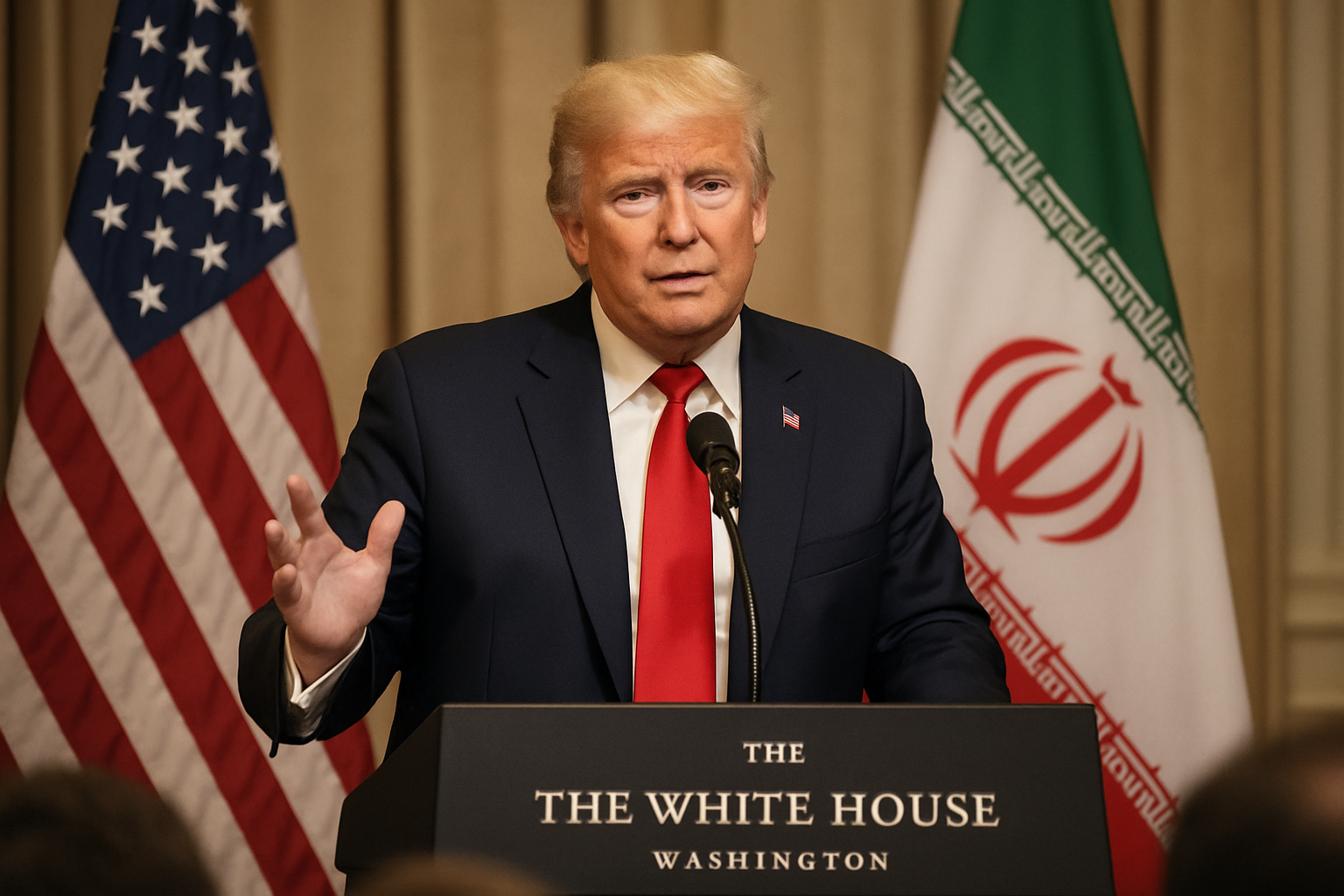
President Donald Trump announced Thursday that Iran has agreed to "almost all" terms of a potential nuclear deal and suggested that a second round of negotiations could commence as early as this weekend, marking the most optimistic assessment from the White House since diplomatic efforts intensified following the historic Pakistan-mediated ceasefire in April.
Speaking from the White House, Trump declared there was a "very big chance we can reach a deal" with Iran, representing a dramatic shift in tone from the apocalyptic threats that nearly led to regional war just weeks ago. The President indicated his willingness to travel to Islamabad if a final agreement could be concluded there, building on Pakistan's unprecedented mediation success.
Iranian Concessions Signal Breakthrough
Multiple international sources confirm Iran has signaled willingness to surrender uranium stockpiles and make substantial nuclear concessions, marking a potential end to the standoff that brought the world closer to catastrophic conflict than the Cuban Missile Crisis. Danish reports indicate Iran has "agreed to hand over nearly everything," while German diplomatic sources suggest a comprehensive peace agreement could be finalized "very soon."
Trump's most significant claim centers on Iran's nuclear materials: "They agreed to give us back the nuclear material," the President stated, referring to Iran's stockpile of over 400 kilograms of uranium enriched to 60% purity - dangerously close to the 90% threshold required for weapons production. Intelligence assessments have consistently warned that Iran possessed sufficient enriched uranium for multiple nuclear weapons if weaponized.
"This is a historic moment. Iran has shown they're serious about stepping back from the brink."
— Senior Administration Official
From Brink of War to Diplomatic Hope
The apparent breakthrough represents a stunning reversal from the crisis that peaked in early April 2026, when Trump's "whole civilization will die tonight" ultimatum brought the world within 88 minutes of potential catastrophe. Pakistan's extraordinary mediation through Prime Minister Shehbaz Sharif and Field Marshal Asim Munir created the "Islamabad Accord" framework that prevented immediate military escalation and opened space for sustained negotiations.
The journey to this moment has been marked by unprecedented diplomatic innovation. Following months of failed talks in Geneva and Oman, where fundamental disagreements over scope - Iran's insistence on nuclear-only discussions versus U.S. demands for comprehensive agreements including ballistic missiles and regional proxies - seemed insurmountable, Pakistan's middle-power diplomacy achieved what traditional great-power mechanisms could not.
Critical Nuclear Developments
Iran's apparent willingness to surrender its uranium stockpiles represents a seismic shift from previous positions. As recently as February, Iranian Foreign Minister Abbas Araghchi declared Iran would "never abandon enrichment even if war is imposed," maintaining uranium enrichment as an "inalienable right." The Islamic Republic has consistently enriched uranium at 60% purity versus the 3.67% limit established under the 2015 Joint Comprehensive Plan of Action (JCPOA).
Dr. Yusri Abu Shadi, a nuclear expert who has tracked Iran's program, confirmed that Iran's current stockpiles make nuclear weapons "easily achievable" if the country chose weaponization. The International Atomic Energy Agency (IAEA) suspended inspections of Iranian facilities in November 2025, creating verification challenges that any new agreement would need to address through unprecedented monitoring mechanisms.
Regional Coalition Preserves Momentum
The potential breakthrough has been supported by an extraordinary Middle Eastern coalition including Saudi Arabia, the United Arab Emirates, Qatar, and Egypt - representing unprecedented regional consensus for diplomatic solutions over military confrontation. This coalition remained remarkably cohesive even as Iranian attacks during the April crisis targeted their territories, with the UAE suffering one death, Kuwait recording 32 injuries, and Qatar intercepting 65 missiles and drones with eight wounded.
The preservation of this regional support, despite direct attacks, demonstrates the profound investment Middle Eastern powers have in preventing broader conflict that could destabilize the Persian Gulf's role in handling 40% of global oil transit. Egypt's President Abdel Fattah al-Sisi specifically warned against "comprehensive chaos" affecting "sisterly countries," but maintained diplomatic backing throughout the crisis.
Weekend Negotiations Framework
Trump's suggestion that new talks could begin "this weekend" represents the most specific timeline provided since the Islamabad Accord established the ceasefire framework. The negotiations would build on Iran's 10-point proposal that covers Strait of Hormuz protocols, sanctions relief, regional conflicts, and security guarantees - the most comprehensive U.S.-Iran framework since the 2015 nuclear deal.
The venue remains significant, with Trump expressing willingness to travel to Islamabad where Pakistan's proven mediation capabilities could facilitate final agreements. The Pakistani "message relay system" that enabled breakthrough communication when direct U.S.-Iran contact seemed impossible has become a template for 21st-century crisis management when traditional diplomatic mechanisms fail.
Verification and Implementation Challenges
Any final agreement would face unprecedented technical challenges. Iran has significantly expanded its nuclear infrastructure since the 2018 JCPOA collapse, developing advanced centrifuge technology and sophisticated facilities that would require monitoring mechanisms far exceeding the original agreement's complexity. The suspension of IAEA inspections adds another layer of verification challenges that negotiators must address.
However, Iranian President Masoud Pezeshkian's declaration that Iran is "open to verification" represents a major policy shift from previous positions, suggesting potential flexibility on confidence-building measures such as a three-year enrichment halt and stockpile transfer to Russia that intelligence sources have identified as possible concessions.
Global Stakes and Strategic Implications
The timing of Trump's announcement carries maximum global significance. The talks occur against the backdrop of the New START treaty's expiration in February 2026 - marking the first time in over 50 years without U.S.-Russia nuclear constraints - and China's nuclear expansion, creating urgent need for successful crisis resolution that could provide a template for 21st-century nuclear diplomacy.
UN Secretary-General António Guterres has called the Iran crisis the "greatest test of multilateral cooperation in the modern era," with nuclear risks at their "highest in decades." Success could strengthen non-proliferation norms globally and demonstrate diplomatic innovation's effectiveness when military confrontation seemed inevitable.
Failure, conversely, could accelerate military solutions that reshape Middle Eastern geopolitics for decades, encourage nuclear proliferation elsewhere, and undermine diplomatic credibility for territorial and security disputes worldwide.
Economic Relief and Market Response
The optimistic diplomatic signals have already begun affecting global markets and energy security calculations. The April ceasefire crashed oil prices by 20% from $119.50 per barrel to below $100 - the steepest decline in six years - as the Strait of Hormuz partially reopened under Iranian coordination protocols.
Consumer relief is anticipated across Bangladesh, which has been reviewing fuel rationing affecting 170 million people, Pakistan considering reversing wartime austerity measures, and European households facing reduced energy costs. The aviation industry, which cancelled over 18,000 flights during the crisis peak, has begun planning Middle East route resumptions despite expectations of months-long normalization timelines.
Persistent Fundamental Challenges
Despite the breakthrough momentum, fundamental disagreements that have prevented successful negotiations for over a decade remain largely unchanged. Iran continues to maintain ballistic missiles and regional proxy activities as "red lines" excluded from nuclear discussions, while the United States insists comprehensive agreements must address missiles, armed groups, and human rights concerns.
Israeli coordination with the Trump administration has emphasized that nuclear-only frameworks are viewed as insufficient for existential security threats from Iran's integrated missile and proxy network, including Hezbollah, Hamas, and the Houthis. Prime Minister Benjamin Netanyahu has consistently demanded that any agreement include "limiting ballistic missiles and ending Iranian axis support."
Domestic Pressures on Both Sides
The negotiations occur under severe domestic pressures for both governments. Iran faces over 42,000 arrests since 2022 protest movements, with Nobel laureate Narges Mohammadi receiving additional prison sentences during recent talks. The regime has consistently prioritized nuclear capabilities over economic relief despite survival-level sanctions pressure.
Trump administration officials balance Republican congressional pressure viewing engagement as appeasement against foreign policy achievement needs. The dramatic reversal from military threats to diplomatic optimism represents one of the most significant policy shifts in modern presidential history.
Looking Toward Weekend Talks
As the world watches for weekend negotiations to materialize, the stakes encompass far more than bilateral U.S.-Iran relations. The talks represent a critical juncture determining whether innovative compromise solutions can bridge longstanding disagreements or whether core positions prove insurmountable despite breakthrough momentum.
Success would prevent regional war with global consequences, provide a diplomatic template for nuclear crisis resolution, and strengthen international law enforcement mechanisms. The framework could influence approaches to territorial sovereignty, energy security paradigms, and conflict resolution for decades beyond current events.
Pakistan's emergence as a crucial mediator demonstrates middle-power diplomacy's effectiveness in bridging major adversaries when traditional great-power mechanisms fail. The success in converting a temporary ceasefire pause into lasting stability framework could determine whether diplomatic credibility is strengthened versus military escalation preferences in future international crises.
Trump's weekend timeline creates immediate pressure for breakthrough versus continued uncertainty. With the world having come closer to catastrophic conflict than any time since the Cuban Missile Crisis, the coming days will determine whether April 2026 marks a watershed moment in 21st-century international relations or represents another pause before returning to the most dangerous crisis since the Cold War's end.