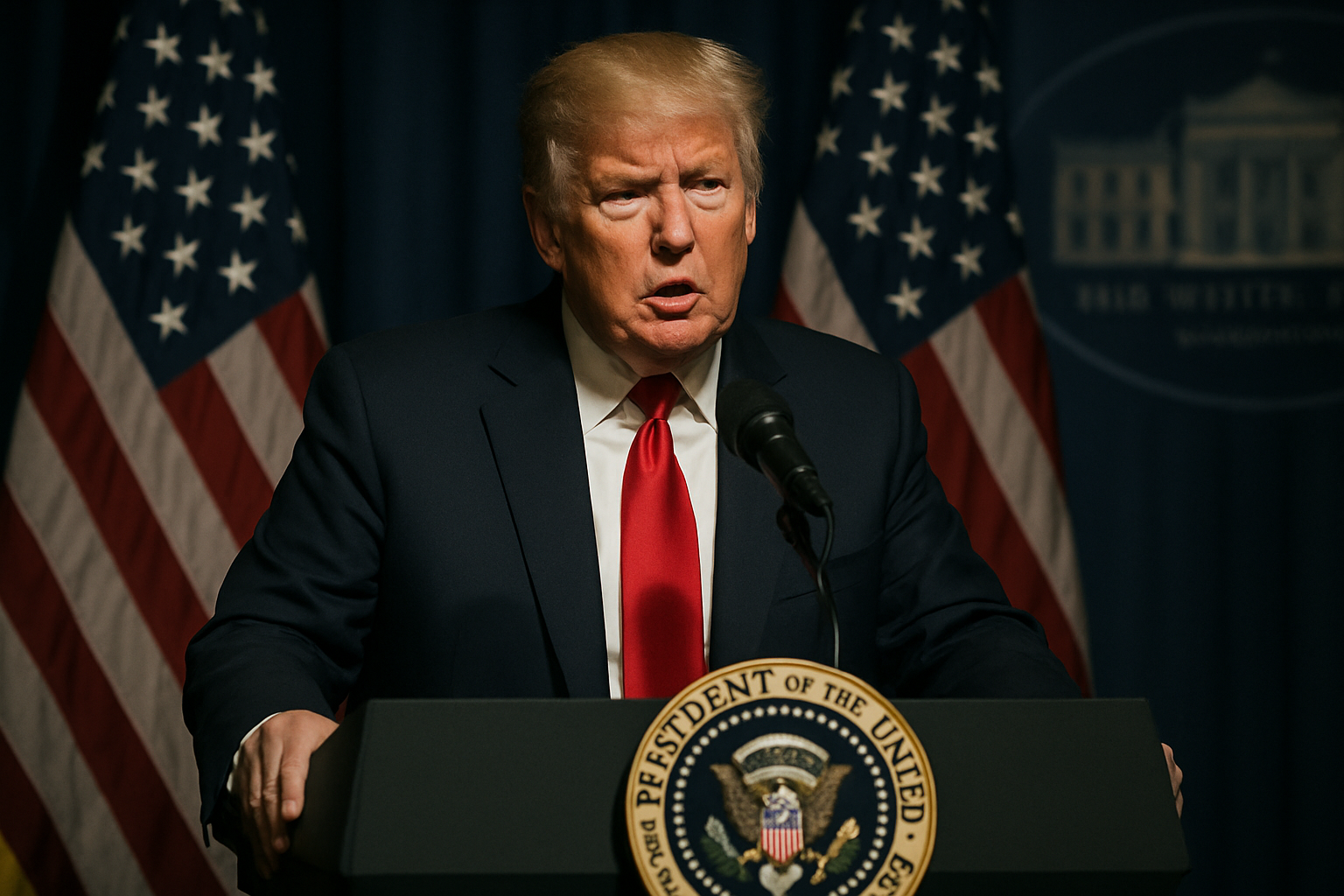
President Donald Trump delivered his most explicit ultimatum to Iran on Thursday, setting a 10-15 day deadline for a "meaningful" nuclear agreement and warning that "really bad things" will happen if no deal is reached, as unprecedented military preparations reach critical decision points.
Speaking at the inaugural meeting of his Board of Peace in Washington, Trump declared that Iran must reach a nuclear agreement within the specified timeframe or face severe consequences. "We may have to take it a step further or we may not. You'll be finding out over the next probably 10 days," the President warned, according to multiple international sources including Reuters and major European outlets.
Pentagon Briefing Confirms Weekend Strike Readiness
The ultimatum comes as Pentagon officials have briefed the White House that U.S. military forces could be ready for strikes against Iran as early as this weekend. Multiple international sources, including CNN, CBS News, and European media outlets, confirm that Trump has yet to make a final authorization decision despite having the military capability for immediate action.
The dual-carrier deployment of USS Gerald R. Ford and USS Abraham Lincoln represents approximately one-third of the active U.S. Navy fleet concentrated 800 kilometers from Iran's coast - the largest American naval presence in the Middle East since the 2003 Iraq invasion. Military scenarios prepared by Pentagon planners range from targeted nuclear facility strikes to broader Revolutionary Guard infrastructure campaigns, with expectations of "weeks-long operations" and Iranian retaliation cycles.
Nuclear Crisis Reaches Critical Juncture
Iran continues enriching uranium at 60% purity - significantly above the 3.67% limit established in the 2015 Joint Comprehensive Plan of Action (JCPOA) and approaching the 90% weapons-grade threshold. Intelligence assessments confirm Iran possesses sufficient enriched uranium for multiple nuclear weapons if weaponized, creating urgent pressure for diplomatic resolution.
Despite the military buildup, Iranian Foreign Minister Abbas Araghchi announced "broad agreement on guiding principles" during recent Geneva talks - the most significant diplomatic breakthrough since the JCPOA collapse in 2018. However, fundamental disagreements persist over the scope of any potential agreement.
"We will never abandon uranium enrichment even if war is imposed on us."
— Abbas Araghchi, Iranian Foreign Minister
Fundamental Scope Disagreement Remains
The core obstacle preventing breakthrough remains unchanged from decade-old diplomatic challenges. Iran maintains that ballistic missiles and regional proxy activities are "red lines" that must be excluded from nuclear-only talks. Meanwhile, U.S. Secretary of State Marco Rubio insists any comprehensive agreement must address missiles, armed groups, and human rights issues.
This structural disagreement has prevented successful negotiations since the original JCPOA collapsed in 2018, despite multiple diplomatic attempts and changing administrations on both sides.
Regional Coalition Provides Unprecedented Support
In a remarkable development, Saudi Arabia, the UAE, Qatar, and Egypt are backing the diplomatic process - representing extraordinary Middle Eastern consensus for preventing military confrontation. The regional coalition reflects shared concerns about energy security, given that the Persian Gulf handles approximately 40% of global oil transit.
Oman has leveraged its historical role as neutral mediator, drawing on its successful facilitation of the original 2015 JCPOA negotiations. The sultanate's mediation has proven essential for maintaining structured dialogue despite deep trust deficits between Washington and Tehran.
Israeli Coordination Emphasizes Comprehensive Requirements
Trump's meetings with Israeli Prime Minister Benjamin Netanyahu have established clear Israeli red lines requiring any agreement to include "limiting ballistic missiles and ending Iranian axis support." Israeli officials view nuclear-only frameworks as insufficient for addressing existential security threats from Iran's integrated missile and proxy network, including Hezbollah, Hamas, and the Houthis.
The coordination reflects broader regional security architecture concerns, where allies seek comprehensive solutions addressing the full spectrum of Iranian capabilities rather than compartmentalized nuclear-only agreements.
Military Incidents Continue Amid Diplomacy
Military tensions persist alongside diplomatic efforts, with recent incidents including an F-35C fighter jet from USS Abraham Lincoln shooting down an Iranian Shahed-139 drone, and Islamic Revolutionary Guard Corps (IRGC) vessels harassing U.S.-flagged tankers in the Strait of Hormuz. Oil prices have risen over $1 per barrel on these tensions, demonstrating the global economic stakes involved.
These incidents illustrate the volatile security environment in which negotiations are occurring, with both sides maintaining military readiness while exploring diplomatic solutions.
Domestic Pressures Shape Both Sides
Iran faces severe domestic challenges, with over 42,000 protest arrests since 2022 and continued economic pressure from international sanctions. Despite these pressures, the regime appears to prioritize maintaining nuclear capabilities over securing economic relief through sanctions removal.
The Trump administration must balance Republican hawk pressure, which views engagement as potential appeasement, against the need for a foreign policy victory that avoids military escalation risks. This domestic political calculus influences the timing and nature of diplomatic initiatives.
International Nuclear Governance Crisis
The Iran crisis unfolds against a broader nuclear governance breakdown. The New START treaty between the U.S. and Russia expired on February 5, marking the first time in over 50 years without nuclear constraints between the superpowers. China's nuclear expansion and UN Secretary-General António Guterres' warning that nuclear risks are at their "highest in decades" add urgency to preventing Iranian weapons development.
Success in resolving the Iran nuclear crisis could provide a template for 21st-century nuclear crisis resolution, while failure might accelerate military solutions and undermine diplomatic credibility for addressing proliferation challenges globally.
Verification Challenges Unprecedented
Any potential agreement would face verification challenges far exceeding the original JCPOA's complexity. Iran's nuclear infrastructure has significantly expanded since 2018, featuring advanced centrifuge technology, sophisticated facilities, and dispersed capabilities that would require unprecedented monitoring mechanisms.
The technical obstacles remain substantial even if political disagreements over scope could be resolved, requiring innovative approaches to rebuilding trust between historically antagonistic parties.
Weekend Decision Point Approaches
As Trump's deadline approaches, the coming weekend represents a critical decision point for the administration. White House discussions continue weighing escalation risks against military and political consequences, with stakes including regional war prevention, global energy stability, and nuclear governance credibility.
The unprecedented military buildup demonstrates both deterrence commitment and strike readiness, while Trump's most explicit regime change comments - calling Iranian government overthrow "the best thing that could happen" - signal potential expansion beyond nuclear-focused negotiations to broader political transformation objectives.
Global Stakes and Template-Setting Moment
The Iran crisis represents a template-setting moment for diplomacy versus military confrontation in the multipolar era. Success could prevent regional war, provide a nuclear crisis resolution model, and strengthen non-proliferation norms globally. Failure might accelerate military solutions, reshape Middle Eastern geopolitics for decades, encourage proliferation elsewhere, and undermine diplomatic credibility for territorial and security disputes worldwide.
As the 10-15 day deadline approaches, the international community watches closely whether innovative diplomatic solutions can bridge longstanding disagreements or whether the gravitational pull toward military confrontation will prove too strong to resist. The outcome will influence international approaches to conflict resolution far beyond the current administration and establish precedents for 21st-century nuclear crisis management.