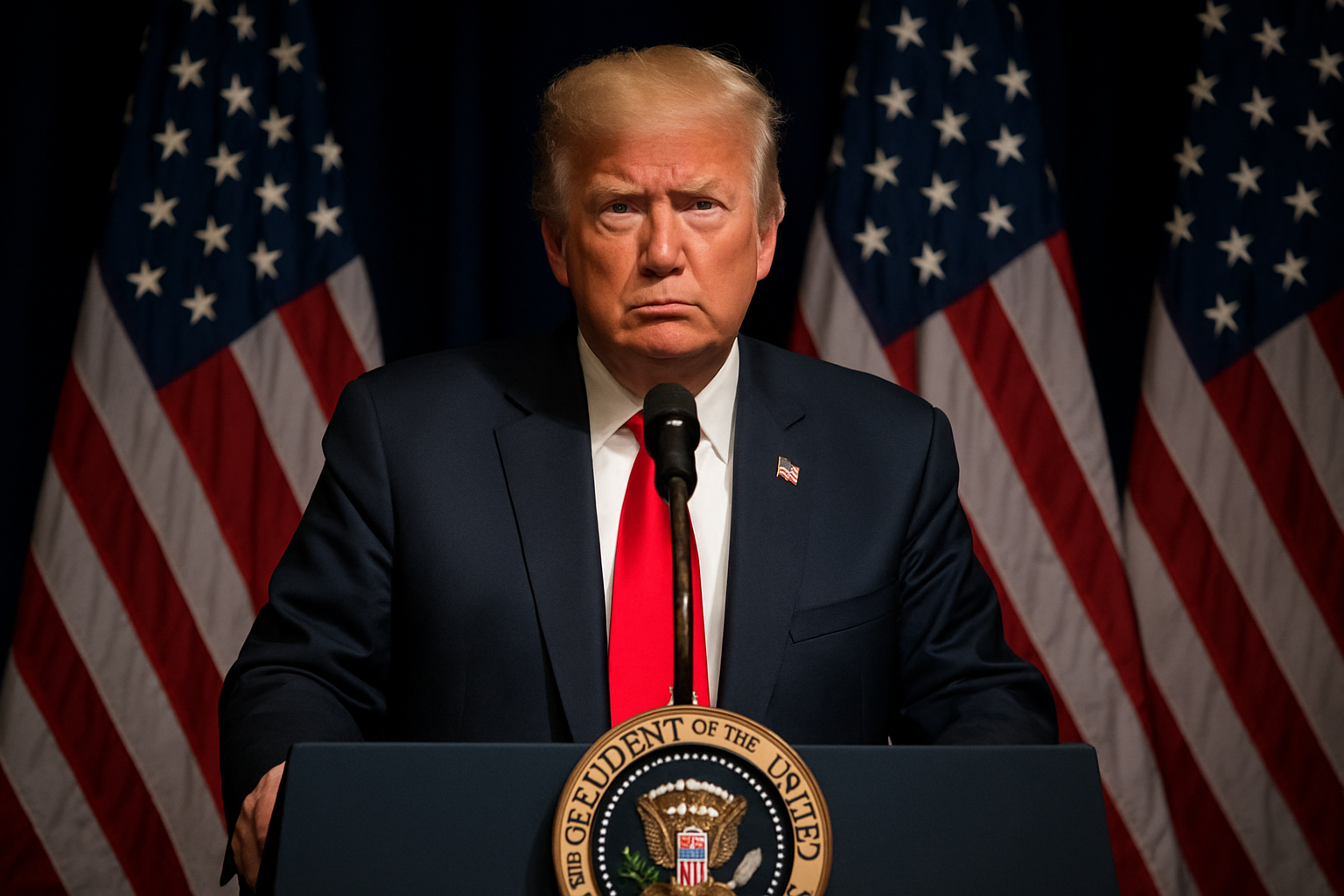
President Donald Trump declared Iran nuclear negotiations are "very close" to success on Friday, expressing the most optimistic assessment since the Pakistan-mediated Islamabad Accord prevented global catastrophe in April, as multiple international sources report discussions of a potential $20 billion framework deal.
Speaking to reporters, Trump indicated Iran has agreed to surrender significant nuclear material, building on the unprecedented diplomatic breakthrough achieved when Pakistani Prime Minister Shehbaz Sharif and Field Marshal Asim Munir mediated a ceasefire just 88 minutes before Trump's "whole civilization will die" deadline on April 8.
Potential $20 Billion Framework Emerges
According to reports from multiple international outlets, the United States and Iran are discussing a comprehensive three-page plan that would see Washington unfreeze $20 billion in Iranian assets in exchange for Iran's enriched uranium stockpiles. The framework represents a dramatic evolution from earlier positions where the U.S. was only prepared to release $6 billion for humanitarian purchases.
Trump claimed "They agreed to give us back the nuclear material," referring to Iran's stockpile of over 400 kilograms of uranium enriched to 60% purity—approaching the 90% weapons-grade threshold. This represents sufficient material for multiple nuclear weapons if weaponized, according to nuclear experts.
"We're very close. There's a very big chance we can reach a deal."
— President Donald Trump
Pakistan's Historic Mediation Success
The current optimism builds on Pakistan's unprecedented diplomatic achievement in April, when the country's innovative "message relay system" prevented what many described as the most dangerous international crisis since the Cuban Missile Crisis. The breakthrough came after Trump had issued an ultimatum that brought the world within 88 minutes of potential catastrophic conflict.
The resulting ceasefire crashed oil prices by 20% from $119.50 to $100 per barrel—the steepest decline in six years—and ended a global aviation crisis that had cancelled over 18,000 flights. The Strait of Hormuz, through which 40% of global oil transits, was partially reopened under Iranian coordination.
International support for Pakistan's mediation has been remarkable, with China's Foreign Minister Wang Yi offering "full support" and Germany noting "positive signs." The approach demonstrated how middle-power diplomacy can bridge major adversaries when traditional great power mechanisms fail.
Nuclear Diplomacy Window of Opportunity
The current talks represent a critical window for nuclear diplomacy, particularly given that Iran continues to enrich uranium at 60% purity—far beyond the 3.67% limit established in the 2015 Joint Comprehensive Plan of Action (JCPOA). International atomic energy experts confirm Iran possesses sufficient enriched uranium to produce multiple weapons if it chooses to weaponize.
The diplomatic opportunity has gained urgency following the February 2026 expiration of the New START treaty between the United States and Russia—the first time in over 50 years that the world's two largest nuclear powers have operated without nuclear constraints. Combined with China's nuclear expansion and Iran's advancing program, the current negotiations take on template-setting significance for 21st-century nuclear governance.
Fundamental Challenges Persist
Despite the optimistic tone from Trump, fundamental disagreements that have plagued U.S.-Iran relations for decades remain unchanged. Iran maintains that its ballistic missiles and regional proxy activities are "red lines" that must be excluded from nuclear-only talks. Meanwhile, the U.S., led by Secretary of State Marco Rubio, continues to demand comprehensive agreements that include missiles, armed groups, and human rights concerns.
This same structural disagreement prevented breakthrough attempts throughout the previous diplomatic efforts, including the Geneva talks that collapsed in February despite achieving "broad agreement on guiding principles"—the most significant progress since the JCPOA's collapse in 2018.
Regional Coalition Maintains Support
Remarkably, an unprecedented regional coalition of Saudi Arabia, the United Arab Emirates, Qatar, and Egypt continues to back the diplomatic process despite the tensions and periodic Iranian attacks during the April crisis. This extraordinary Middle Eastern consensus for preventing military confrontation has provided crucial support for negotiations.
The regional investment in diplomatic solutions reflects the massive economic stakes involved. The Persian Gulf handles 40% of global oil transit, making regional stability essential for worldwide energy security.
Israeli Coordination and Security Concerns
Israeli Prime Minister Benjamin Netanyahu's coordination with the Trump administration has emphasized comprehensive security requirements that go beyond nuclear issues. Israel's position maintains that any agreement must include "limiting ballistic missiles and ending Iranian axis support," as nuclear-only frameworks are viewed as insufficient for addressing existential security threats from Iran's integrated missile and proxy network, including Hezbollah, Hamas, and the Houthis.
The Lebanon Complication
A critical complication remains Netanyahu's explicit exclusion of Lebanon from the April ceasefire framework, creating what analysts describe as a dangerous loophole. Israeli strikes have killed over 250 people in single-day bombardments, displacing 1.2 million Lebanese. Iran has threatened withdrawal from negotiations unless comprehensive enforcement covers all fronts.
Vice President JD Vance has acknowledged Iranian "legitimate misunderstanding" regarding Lebanon's inclusion, though U.S. officials maintain they never agreed to include Lebanon operations in the ceasefire scope.
Economic and Strategic Implications
The potential success of these negotiations carries massive global implications. Beyond preventing regional war that could destabilize energy markets worldwide, success would provide a diplomatic template for nuclear crisis resolution in the 21st century and strengthen non-proliferation norms globally.
Conversely, failure could accelerate military solutions that might reshape Middle Eastern geopolitics for decades, encourage nuclear proliferation elsewhere, and undermine diplomatic credibility for resolving territorial and security disputes worldwide.
Consumer relief has already begun following the April ceasefire, with Bangladesh reviewing fuel rationing affecting 170 million people, Pakistan considering reversing wartime austerity measures, and European households experiencing cost reductions. Qatar has resumed LNG production representing 20% of global exports, while the shipping industry mobilizes over 150 stranded tankers carrying billions in cargo.
The Path Forward
As negotiations continue through back-channel communications facilitated by Pakistan, Qatar, and other Gulf intermediaries, the coming days represent a critical juncture for international relations. The framework provides what may be the most comprehensive U.S.-Iran diplomatic opportunity since 2015, with stakes that extend far beyond bilateral relations.
Trump's suggestion that he might travel to Islamabad if a deal is finalized there underscores the potential historic significance of the moment. Pakistan's emergence as a crucial mediator demonstrates the effectiveness of innovative diplomatic approaches when traditional mechanisms fail.
The success or failure of converting this temporary diplomatic breakthrough into a lasting peace framework will determine whether April 2026 represents a watershed moment in 21st-century international relations or a pause before the world returns to one of its most dangerous post-Cold War crises.