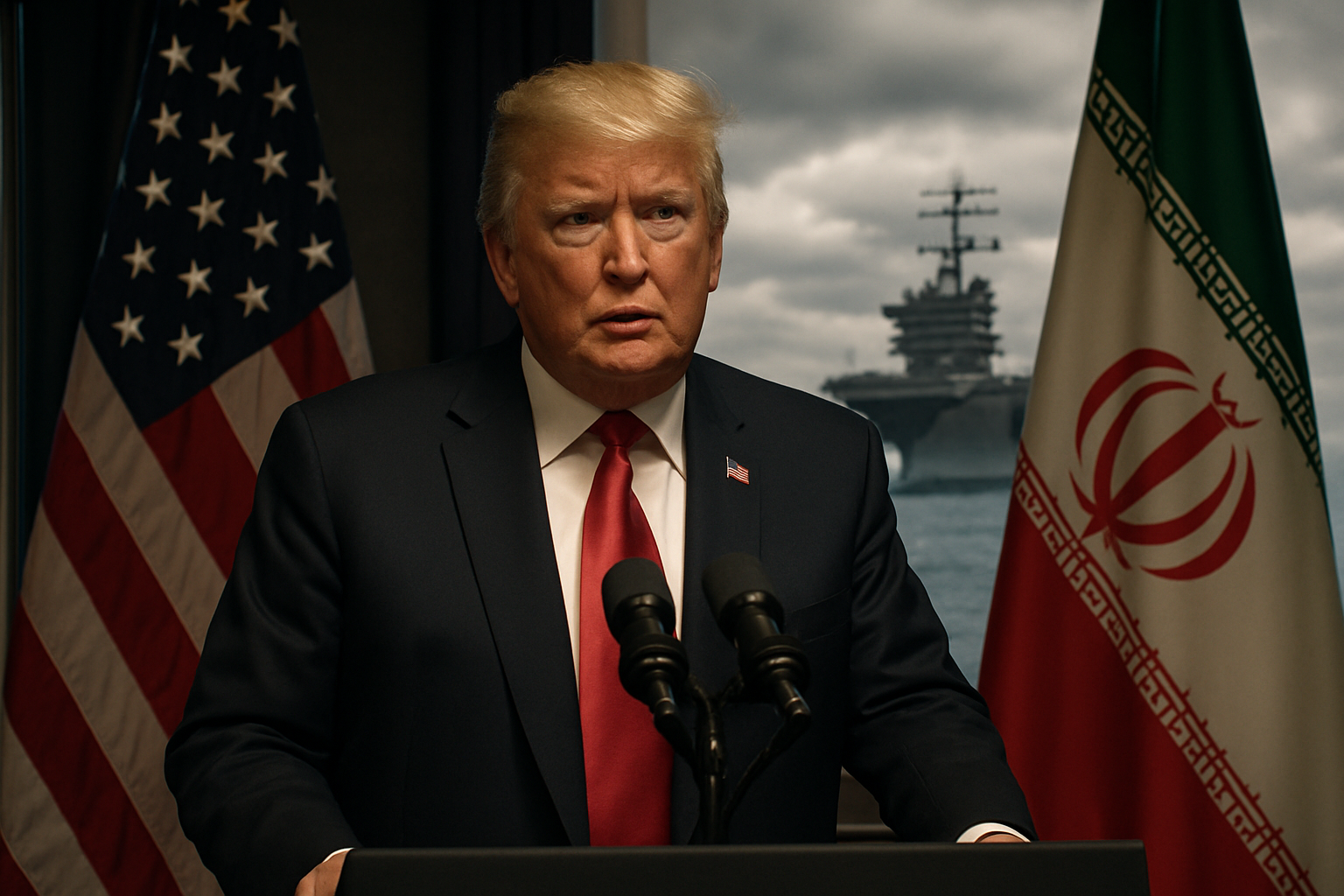
President Donald Trump announced Tuesday he is considering sending a second aircraft carrier to the Middle East while simultaneously expressing optimism that nuclear negotiations with Iran represent a genuine breakthrough, describing the talks as "different this time" with Iran showing unprecedented willingness to reach an agreement.
The dual-track approach of military deterrence coupled with diplomatic engagement marks a critical juncture in U.S.-Iran relations, with Trump suggesting that Iran is "very eager to make a deal" following productive negotiations in Muscat, Oman. The comments come as both nations have agreed to continue nuclear talks despite fundamental disagreements over the scope and substance of any potential agreement.
Military Posturing Amid Diplomatic Progress
Speaking to Israeli media ahead of his meeting with Prime Minister Benjamin Netanyahu, Trump revealed he is "considering" deploying a second aircraft carrier to join the USS Abraham Lincoln already positioned in the Arabian Sea. The potential deployment demonstrates the administration's commitment to maintaining maximum pressure even as diplomatic channels remain open.
"Either we reach a deal or we're going to have to do something very tough," Trump warned in interviews with Israeli outlets, emphasizing that the United States possesses overwhelming military superiority in the region. The comments reflect the administration's strategy of negotiating from a position of strength while keeping military options on the table.
Military tensions have escalated in recent days despite the diplomatic opening. A U.S. F-35C fighter jet from the USS Abraham Lincoln shot down an Iranian Shahed-139 drone that aggressively approached the carrier in the Arabian Sea, approximately 800 kilometers from Iran's coast. The same day, Islamic Revolutionary Guard Corps vessels harassed a U.S.-flagged tanker in the strategically vital Strait of Hormuz, through which 40% of global oil transit flows.
Nuclear Talks Framework Established
The breakthrough in U.S.-Iran nuclear negotiations represents the most significant diplomatic engagement since the collapse of the Joint Comprehensive Plan of Action (JCPOA) in 2018. Iranian Foreign Minister Abbas Araghchi described the atmosphere in Oman as "positive," while maintaining Iran's "red lines" that exclude ballistic missiles and regional proxy activities from nuclear-only discussions.
Oman's Sultan Haitham bin Tariq has emerged as a crucial mediator, leveraging the sultanate's historical role in the original 2015 JCPOA negotiations. The venue change from Istanbul to Muscat at Iran's request proved essential for enabling structured dialogue focused exclusively on nuclear issues, avoiding the broader regional security concerns that have complicated previous diplomatic efforts.
"Iran is very eager to make a deal. The talks were very good."
— President Donald Trump
The nuclear crisis has intensified significantly since the JCPOA's collapse. Iran is currently enriching uranium at 60% purity, far exceeding the treaty's 3.67% limit and approaching the 90% threshold required for weapons-grade material. Intelligence sources suggest Iran may consider a three-year enrichment halt and the transfer of existing stockpiles to Russia as potential concessions in exchange for sanctions relief.
Scope Disagreement Remains Central Challenge
Despite the diplomatic momentum, fundamental disagreements persist over the scope of any potential agreement. Iran insists on compartmentalized nuclear-only talks, explicitly excluding its ballistic missile program and support for regional proxy groups including Hezbollah, Hamas, and the Houthis. Iranian officials have declared these issues "red lines" that cannot be part of nuclear negotiations.
Conversely, U.S. Secretary of State Marco Rubio maintains that any comprehensive agreement must address Iran's "missiles, armed groups, and treatment of their own people." This integrated approach reflects longstanding American concerns that a nuclear-only deal would leave Iran's broader regional threat matrix unaddressed, potentially failing to provide lasting security for U.S. allies, particularly Israel.
The scope disagreement mirrors challenges that have plagued U.S.-Iran diplomacy for over a decade. Previous diplomatic efforts since 2018 have foundered on similar divisions between Iran's preference for nuclear-focused negotiations and American demands for comprehensive solutions addressing all dimensions of Iran's regional activities.
Unprecedented Regional Coalition Support
A remarkable development in the current diplomatic process is the unprecedented support from regional powers traditionally opposed to Iranian influence. Saudi Arabia, the United Arab Emirates, Qatar, and Egypt have all endorsed the negotiation framework, representing an unusual Middle Eastern consensus for preventing military confrontation through diplomacy.
This regional coalition reflects practical concerns about the economic and security implications of military escalation. The Persian Gulf handles 40% of global oil transit, making regional stability a critical priority for energy markets worldwide. Oil prices have already risen over $1 per barrel following recent military incidents, demonstrating market sensitivity to Middle East tensions.
The Arab states' support for diplomacy also represents a strategic calculation that managed Iranian nuclear capabilities present fewer risks than unconstrained weapons development or regional military confrontation. This consensus provides crucial backing for sustained diplomatic engagement, even as regional powers maintain their own security concerns about Iranian activities.
Netanyahu Meeting Adds Israeli Dimension
Trump's comments about Iran being "different this time" came on the eve of his critical meeting with Israeli Prime Minister Netanyahu, scheduled to coordinate Iran strategy and discuss Israeli security requirements. Netanyahu has emphasized that "all negotiations must include limiting ballistic missiles and ending support for the Iranian axis," reflecting Israel's view that nuclear-only agreements remain insufficient for addressing existential threats.
The Israeli position complicates the diplomatic equation, as Jerusalem views Iran's ballistic missile arsenal and proxy network as equally threatening as nuclear weapons development. Netanyahu's government has made clear that any agreement failing to address these broader threats would be inadequate from Israel's security perspective.
Trump's statement that nuclear talks are "different this time" suggests potential American flexibility in addressing Israeli concerns while maintaining negotiating momentum with Iran. The challenge will be crafting innovative diplomatic solutions that bridge the fundamental scope disagreements that have historically prevented breakthrough agreements.
Domestic Pressures Shape Negotiating Positions
Both Iran and the United States face significant domestic pressures that influence their negotiating positions. Iran confronts severe economic sanctions that have contributed to widespread domestic unrest, with over 42,000 protest arrests documented since 2022. The regime faces a survival imperative to achieve sanctions relief while maintaining its regional influence and nuclear capabilities.
The Trump administration must balance Republican congressional pressure that views engagement with Iran as appeasement against the potential for a major foreign policy victory. Conservative critics argue that Iran cannot be trusted to honor agreements, while supporters emphasize that diplomatic solutions remain preferable to military confrontation with its unpredictable consequences.
These domestic dynamics create both incentives and constraints for negotiators. Iran's economic crisis provides leverage for U.S. pressure tactics, while America's desire for diplomatic achievement creates opportunities for Iranian concessions. However, both sides must also consider domestic political sustainability of any agreement over time.
Verification Challenges Exceed JCPOA Complexity
Any new nuclear agreement will face unprecedented verification challenges that far exceed those of the original JCPOA. Iran's nuclear program has advanced significantly since 2018, with sophisticated centrifuge technology, expanded enrichment infrastructure, and accumulated technical knowledge that cannot be easily reversed or monitored.
Current Iranian capabilities include advanced centrifuges that can produce highly enriched uranium more quickly and efficiently than the equipment available during the JCPOA period. The technical complexity of verifying restrictions on modern Iranian nuclear infrastructure would require verification mechanisms that go far beyond those established in the original agreement.
International nuclear experts emphasize that rebuilding trust and establishing credible monitoring systems would take years to implement fully. The challenge is compounded by Iran's temporary suspension of international inspections and reduced cooperation with the International Atomic Energy Agency since the JCPOA's collapse.
International Context Heightens Stakes
The Iran nuclear negotiations occur against a backdrop of unprecedented international nuclear challenges that heighten the stakes for success or failure. The New START treaty between the United States and Russia expired February 5, creating the first period in over 50 years without bilateral nuclear constraints between the superpowers. China's nuclear arsenal expansion further complicates the global nuclear governance landscape.
UN Secretary-General António Guterres has warned that nuclear weapon use risks are "higher than at any time in decades," creating urgency for diplomatic solutions to proliferation challenges. Success in Iran nuclear diplomacy could provide a template for managing similar challenges with other nations, while failure might accelerate military solutions that destabilize the broader international system.
The timing also coincides with ongoing Ukraine-Russia-U.S. peace negotiations in Abu Dhabi, demonstrating the administration's multi-front diplomatic approach to resolving major international conflicts through innovative negotiating formats rather than traditional multilateral frameworks.
Maximum Pressure Continues Alongside Engagement
Despite diplomatic progress, the Trump administration continues implementing economic pressure tactics designed to maintain leverage in negotiations. The administration has signed executive orders threatening 25% tariffs on countries conducting business with Iran, creating potential economic costs for nations maintaining commercial relationships with Tehran.
This dual-track approach of engagement backed by maximum pressure reflects the administration's belief that Iran will only make meaningful concessions when facing severe economic and military pressure. Critics argue that imposing new sanctions while pursuing diplomacy undermines trust-building necessary for successful negotiations.
The sanctions regime has contributed to Iran's economic crisis, with currency devaluation, reduced oil exports, and limited access to international financial systems creating regime survival pressures. However, Iran has also demonstrated resilience and adaptability in managing sanctions impacts while maintaining its nuclear program advancement.
Looking Ahead: Critical Weeks for Diplomacy
The coming weeks will prove decisive for determining whether the current diplomatic opening represents a genuine breakthrough or another false start in U.S.-Iran nuclear diplomacy. Both sides have agreed to continue negotiations, with framework discussions providing a foundation for addressing substantive disagreements on scope and verification mechanisms.
Success requires innovative diplomatic solutions that bridge decade-old challenges while addressing legitimate security concerns of all parties. The international community is closely monitoring developments, recognizing that outcomes will influence approaches to nuclear proliferation, regional security arrangements, and conflict resolution mechanisms far beyond the Middle East.
Trump's suggestion that talks are "different this time" reflects optimism based on Iranian flexibility and regional support that was absent in previous diplomatic efforts. However, fundamental positions remain unchanged, requiring breakthrough compromises on issues that have prevented agreements for over a decade.
The stakes could hardly be higher: success could prevent a regional war that would reshape Middle Eastern geopolitics for decades, while failure might accelerate toward military confrontation with global implications for energy security, nuclear governance, and international stability. As Trump considers deploying additional military assets while expressing diplomatic optimism, the dual-track approach faces its most critical test in the Middle East's most consequential nuclear crisis.