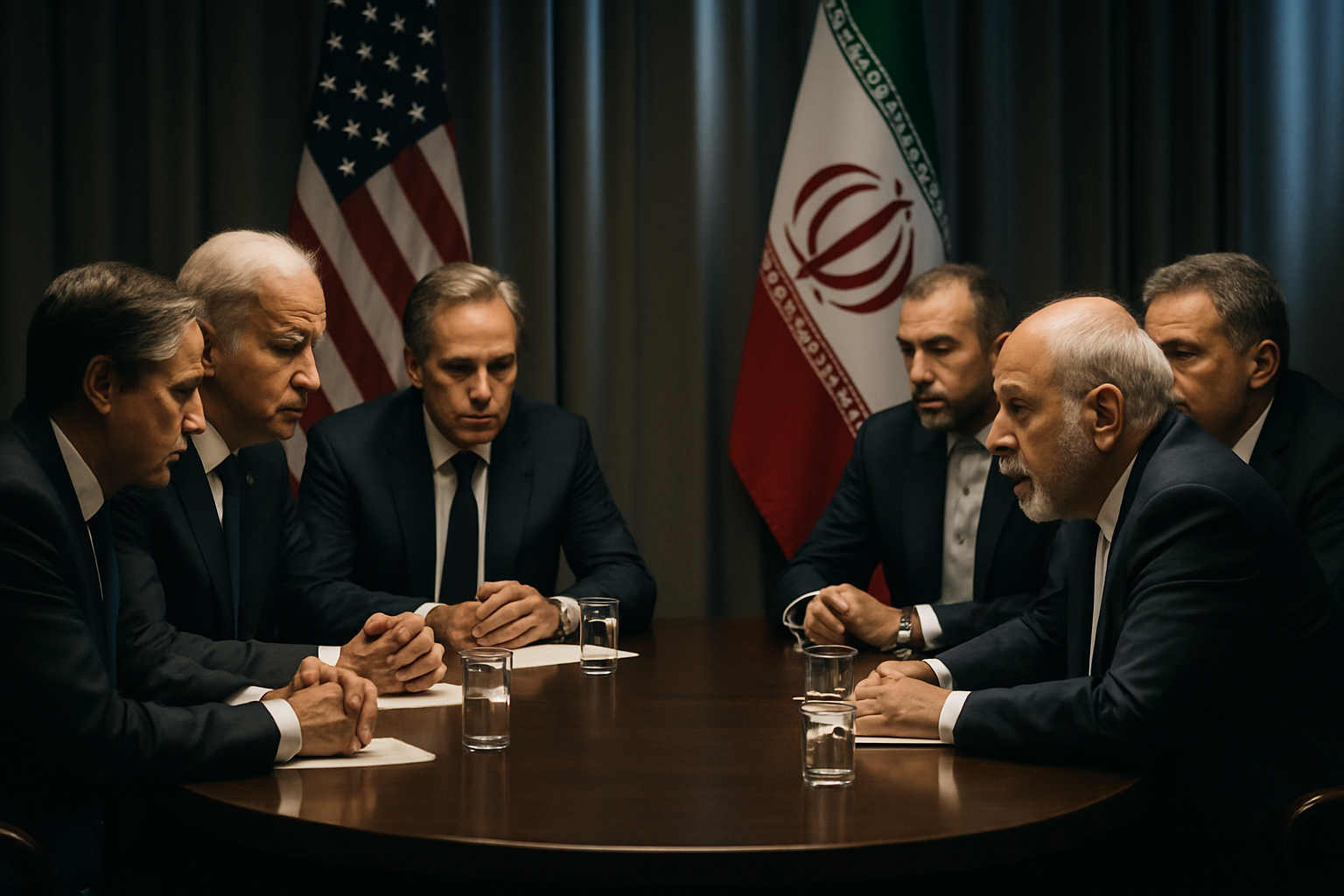
The Trump administration continues high-stakes nuclear negotiations with Iran as Tehran evaluates new US proposals while tensions remain elevated across the region, marking the latest chapter in a months-long diplomatic effort that has oscillated between breakthrough moments and dangerous escalation.
According to multiple international sources, Iran's supreme national security council announced Saturday that the Islamic Republic is currently assessing "new proposals" received from the United States as part of ongoing diplomatic contacts. The development comes amid a complex backdrop of military positioning and diplomatic maneuvering that has characterized US-Iran relations throughout 2026.
Current State of Negotiations
Iranian officials, including Deputy Foreign Minister Saeed Khatibzadeh, have indicated that no specific date has been set for the next round of formal negotiations between Iran and the US. This cautious approach reflects the delicate nature of the diplomatic process, which has seen multiple rounds of talks since February 2026, including significant sessions in Oman, Geneva, and most recently in Islamabad under Pakistani mediation.
The negotiations have been marked by what Norwegian media describe as "very good talks" between the two sides, with Trump reportedly expressing optimism about Iran's willingness to engage constructively. However, fundamental disagreements persist over the scope and terms of any potential agreement.
"We are evaluating new proposals from the United States within the framework of our ongoing contacts,"
— Iranian National Security Council Statement
Iran's Position and Red Lines
Greek sources reveal that Iran maintains firm positions on several key issues. Iranian officials have declared they "will not make the slightest concession" on what they consider core sovereignty issues, including their ballistic missile program and regional proxy relationships.
Throughout the diplomatic process, Iran has consistently maintained that uranium enrichment represents an "inalienable right" under international law. Currently enriching uranium at 60% purity—significantly above the 3.67% limit established under the 2015 Joint Comprehensive Plan of Action (JCPOA)—Iran possesses sufficient material for multiple nuclear weapons if weaponized, according to intelligence assessments.
The Iranian position excludes ballistic missiles and regional proxy activities as "red lines" that cannot be part of nuclear-focused discussions. This stance directly conflicts with US demands for a comprehensive agreement that addresses what Secretary of State Marco Rubio terms the full spectrum of Iranian threats, including missiles, armed groups, and human rights concerns.
Military Tensions and Strategic Context
The diplomatic efforts unfold against a backdrop of unprecedented military tensions in the Persian Gulf region. The Strait of Hormuz, through which approximately 40% of global oil transit passes, has become a focal point of confrontation between Iranian Revolutionary Guard forces and US naval assets.
Recent military incidents have included the shooting down of Iranian Shahed-139 drones by US F-35C fighter aircraft operating from USS Abraham Lincoln, as well as reported harassment of US-flagged tankers by IRGC vessels in international waters. These incidents have contributed to oil price volatility, with Brent crude experiencing significant fluctuations based on the perceived likelihood of diplomatic success or military escalation.
The Trump administration has maintained substantial naval presence in the region, including dual-carrier deployments that represent the largest US Middle East naval presence in years. This military positioning serves both as diplomatic leverage and preparation for potential military scenarios should negotiations fail.
Regional Coalition Dynamics
One of the most significant aspects of the current diplomatic process has been the unprecedented regional coalition supporting peaceful resolution. Saudi Arabia, the United Arab Emirates, Qatar, and Egypt have all endorsed continued diplomatic engagement—a remarkable consensus among Middle Eastern powers traditionally divided on Iranian issues.
This regional backing reflects shared concerns about the economic and security implications of military confrontation. The Persian Gulf states, heavily dependent on energy exports and maritime commerce, have substantial interests in preventing conflict escalation that could disrupt global supply chains and energy markets.
Pakistan has emerged as a crucial mediator, with Prime Minister Shehbaz Sharif and Field Marshal Asim Munir playing unprecedented roles in facilitating communication between Washington and Tehran. The innovative "message relay system" developed by Pakistani officials has proved essential when direct US-Iran communication channels have been strained.
Nuclear Program Technical Status
Intelligence assessments confirm that Iran currently maintains advanced nuclear infrastructure far beyond its pre-2018 capabilities. The country operates sophisticated centrifuge cascades capable of producing weapons-grade uranium, with current stockpiles already sufficient for multiple nuclear devices if the decision to weaponize were made.
International Atomic Energy Agency (IAEA) inspections have been suspended since November 2025, creating verification challenges that would need to be addressed in any renewed agreement. The technical complexity of monitoring Iran's current nuclear infrastructure far exceeds what was required under the original JCPOA framework.
Reports suggest Iranian willingness to consider confidence-building measures, including potential three-year enrichment halts and stockpile transfers to third countries such as Russia. However, Iranian officials have simultaneously declared they will "never abandon enrichment even if war is imposed," indicating the limits of potential concessions.
Economic Stakes and Global Impact
The economic dimensions of the crisis extend far beyond the immediate region. Previous escalations in 2026 have demonstrated the global economy's vulnerability to Persian Gulf instability, with oil prices reaching $119.50 per barrel Brent during peak tensions before diplomatic breakthroughs brought temporary relief.
The International Energy Agency has implemented the largest strategic petroleum reserve release in 50 years—400 million barrels—to buffer against supply disruptions. Consumer impacts have been felt globally, with fuel rationing affecting 170 million people in Bangladesh and wartime austerity measures implemented in Pakistan.
Aviation industries worldwide have faced unprecedented disruptions, with over 18,000 flights cancelled during previous crisis periods, creating COVID-scale impacts on international travel and commerce. Shipping companies have suspended Persian Gulf operations during tension peaks, stranding vessels worth billions in cargo.
Historical Context and Diplomatic Evolution
The current diplomatic engagement represents the most sustained US-Iran nuclear talks since the 2018 collapse of the JCPOA under the first Trump administration. Previous rounds have achieved what Iranian Foreign Minister Abbas Araghchi described as "broad agreement on guiding principles"—the most significant progress in nearly eight years.
However, the fundamental scope disagreement that prevented previous breakthroughs remains unchanged. Iran's insistence on nuclear-only discussions contrasts sharply with US demands for comprehensive agreements addressing missiles, proxy relationships, and human rights—the same structural obstacle that has prevented diplomatic success for over a decade.
The negotiations have evolved through multiple venues, from early talks in Muscat, Oman, to Geneva sessions mediated by Switzerland, and most recently to Islamabad under Pakistani facilitation. This venue evolution signals growing international investment in diplomatic solutions as alternatives to military confrontation.
International Nuclear Governance Crisis
The US-Iran nuclear crisis unfolds within a broader context of deteriorating global nuclear governance. The New START treaty between the United States and Russia expired in February 2026, marking the first time in over 50 years without nuclear constraints between the world's largest arsenals.
China's rapid nuclear expansion and Iran's advancement toward weapons-grade capabilities have prompted UN Secretary-General António Guterres to warn that nuclear risks are "the highest in decades." Success in the current diplomatic process could provide a template for 21st-century nuclear crisis resolution, while failure might accelerate military solutions that could reshape global security architecture.
Congressional and Domestic Pressures
The Trump administration faces significant domestic political pressures affecting negotiating positions. Congressional opposition to potential military action has reached historic levels, with polls showing only 25% American support for military operations—described as "unprecedented unpopularity" for early-stage military commitments.
Republican hawks within Trump's own party view diplomatic engagement with skepticism, preferring maximum pressure campaigns through sanctions and military deterrence. This internal tension requires the administration to balance foreign policy achievement aspirations against party pressure for tougher stances.
Similarly, Iran faces severe domestic pressures, with over 42,000 arrests since 2022 protests and economic sanctions creating regime survival imperatives. However, Iranian leadership appears to prioritize nuclear capabilities over economic relief, complicating incentive structures for diplomatic compromise.
Israeli Coordination and Security Concerns
Israeli coordination with the Trump administration represents a critical factor in negotiation dynamics. Prime Minister Benjamin Netanyahu has repeatedly emphasized that any agreement must include "limiting ballistic missiles and ending support for the Iranian axis"—referring to proxy relationships with Hezbollah, Hamas, and Houthis.
Israeli officials view nuclear-only frameworks as insufficient for addressing existential security threats from Iran's integrated missile and proxy network. This position aligns with broader US concerns about comprehensive threat assessment but conflicts with Iranian red lines excluding these issues from nuclear discussions.
The coordination reflects decades-long Israeli investment in preventing Iranian nuclear weapons development through diplomatic, intelligence, and military means. Israeli strategic thinking emphasizes that incomplete agreements addressing only nuclear issues while ignoring delivery systems and regional proxies would provide inadequate security guarantees.
Verification Challenges and Technical Obstacles
Any potential agreement would face unprecedented verification challenges given Iran's advanced nuclear infrastructure. The country's sophisticated centrifuge technology, dispersed facilities, and 60% enrichment capabilities require monitoring mechanisms far exceeding original JCPOA complexity.
Former IAEA inspector Dr. Yusri Abu Shadi has confirmed that Iran's current 400kg+ enriched uranium stockpile makes nuclear weapons "easily achievable" if weaponization decisions were made. This technical reality creates urgent timelines for diplomatic resolution while highlighting the stakes of negotiation failure.
Rebuilding verification mechanisms would require years of implementation, involving extensive inspector training, equipment installation, and trust-building measures between historically antagonistic parties. The technical obstacles remain substantial even if political breakthroughs were achieved on scope disagreements.
Looking Ahead: Critical Junctures
The current phase of US-Iran nuclear diplomacy represents a critical juncture with multiple potential outcomes. Iranian evaluation of new US proposals could lead to renewed formal negotiations, potentially building on previous framework agreements to address substantive disagreements that have prevented breakthrough for over a decade.
However, the fundamental scope disagreement—Iran's nuclear-only approach versus US comprehensive demands—remains unresolved. Success would require innovative compromise solutions bridging positions that have proven incompatible through multiple diplomatic attempts since the JCPOA collapse.
The stakes extend far beyond bilateral US-Iran relations. Success could prevent regional war destabilizing global energy markets, provide diplomatic templates for nuclear crisis resolution, and strengthen non-proliferation norms worldwide. Failure might accelerate military solutions with implications extending decades beyond current events, potentially encouraging nuclear proliferation globally and undermining diplomatic credibility for international disputes.
Strategic Implications
The current diplomatic engagement represents a template-setting moment for 21st-century international relations. As traditional great power mechanisms face multipolar challenges, middle power mediation—exemplified by Pakistan's success—demonstrates innovative approaches to crisis management when conventional diplomacy reaches impasses.
The outcome will influence international approaches to territorial sovereignty enforcement, nuclear governance credibility, and conflict resolution preferences for decades. Success would strengthen diplomatic solutions over military confrontation, while failure could accelerate trends toward military solutions that reshape Middle Eastern geopolitics with global implications.
As Iran continues evaluating new US proposals and both sides navigate complex domestic and regional pressures, the coming weeks will determine whether innovative diplomatic solutions can bridge longstanding disagreements or whether the world faces a return to the most dangerous international crisis since the Cold War's end.