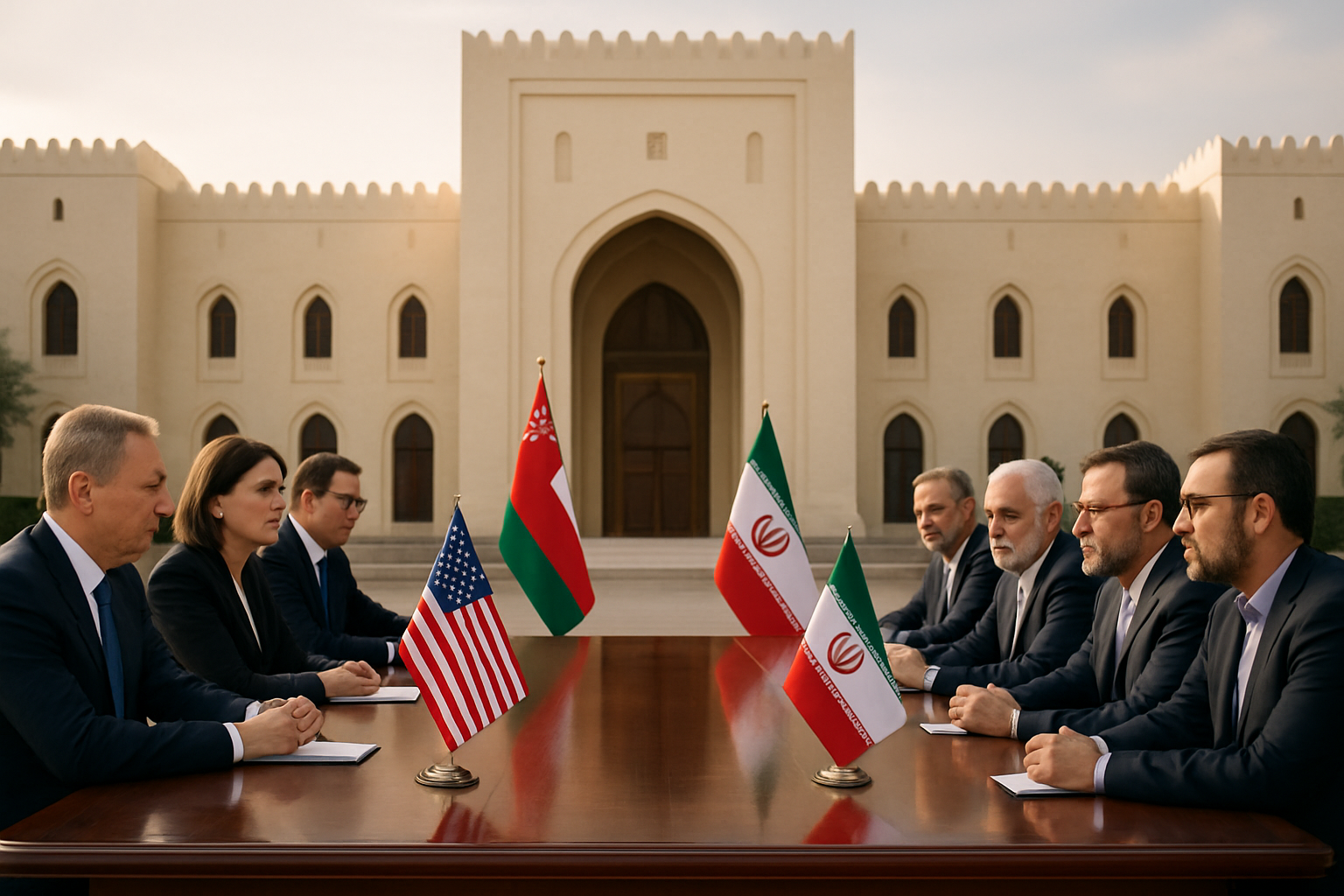
President Donald Trump declared Friday's nuclear negotiations with Iran "very good" while maintaining that military options remain on the table, as both nations agreed to continue talks early next week through Omani mediation in the most significant diplomatic engagement since the JCPOA collapse in 2018.
Speaking to reporters aboard Air Force One while traveling to Mar-a-Lago, Trump characterized the indirect dialogue held in Muscat as highly productive, stating that Iran "appears very eager to make a deal" following what he described as constructive discussions mediated by Omani officials.
The talks, which concluded Friday evening after a full day of negotiations, represent the first major US-Iran diplomatic contact since the Trump administration joined Israel's bombing campaign against Iranian nuclear facilities in June 2025. Iranian Foreign Ministry spokesman Esmail Baghaei confirmed that both delegations "presented their views and demands" and agreed to "continue negotiations" after consulting with their respective capitals.
Fundamental Disagreements Persist
Despite the positive rhetoric, significant obstacles remain to any comprehensive agreement. Regional diplomatic sources told Reuters that Iran explicitly rejected US demands to halt uranium enrichment on its territory during the Oman discussions, though Tehran indicated flexibility on enrichment levels and potential international oversight mechanisms.
Iran has maintained firm "red lines" excluding ballistic missile programs and regional proxy activities from nuclear-focused talks, demanding compartmentalized discussions limited to atomic issues only. US Secretary of State Marco Rubio, however, insists any comprehensive solution must address Iran's missile capabilities, support for armed groups, and what he terms "treatment of their own people."
"Iran rejected US demands to stop uranium enrichment on its territory during negotiations held in Oman. The source said Tehran is willing to discuss enrichment levels and potential oversight mechanisms."
— Regional Diplomatic Source, Reuters
The scope disagreement represents perhaps the most significant challenge to future progress, with Iran seeking nuclear-only negotiations while the US maintains that regional security threats require integrated solutions addressing all dimensions of Iranian activities.
Oman's Critical Mediation Role
The venue change from Istanbul to Muscat at Iran's specific request proved crucial for substantive engagement. Oman's Sultan Haitham bin Tariq leveraged the sultanate's historical role as a neutral mediator, drawing on the successful precedent of facilitating the 2015 JCPOA negotiations.
Iranian officials emphasized that limiting talks to nuclear issues through Omani intermediaries created the necessary framework for meaningful dialogue without broader agenda complications that have historically derailed US-Iran negotiations.
The Omani mediation model has gained unprecedented regional support, with Saudi Arabia, UAE, Qatar, and Egypt all backing the diplomatic process—a remarkable consensus among typically opposing Middle Eastern powers reflecting shared concerns about potential military confrontation's impact on energy markets and maritime security.
Military Tensions Alongside Diplomacy
The talks proceeded against a backdrop of significant military tensions that underscore the high stakes involved. A US F-35C fighter jet from the USS Abraham Lincoln aircraft carrier shot down an Iranian Shahed-139 drone in the Arabian Sea approximately 800 kilometers from Iran's coast after what military officials described as an "aggressive approach" toward the carrier group.
The same day, Islamic Revolutionary Guard Corps vessels harassed the US-flagged tanker Stena Imperative in the Strait of Hormuz, leading to a $1+ per barrel rise in oil prices as markets absorbed news of the incidents occurring alongside diplomatic initiatives.
Trump has maintained what officials describe as a "dual-track approach" of engagement backed by military deterrence, with the USS Abraham Lincoln carrier strike group positioned in the Arabian Sea serving both as diplomatic leverage and operational readiness for potential military action if negotiations fail.
Nuclear Status and Potential Concessions
Iran currently enriches uranium at 60% purity—significantly above the 3.67% limit established in the original JCPOA and approaching the 90% weapons-grade threshold. Intelligence estimates suggest Iran possesses enough enriched uranium for multiple weapons if weaponized, though Tehran maintains its nuclear program remains peaceful.
Regional diplomatic sources indicated Iran may consider major nuclear concessions, including a potential three-year uranium enrichment halt and transferring existing stockpiles to a third country, likely Russia. Such measures would represent significant Iranian flexibility from previous negotiating positions.
However, Iran faces severe domestic pressure that may be driving its willingness to negotiate, with over 42,000 protest-related arrests documented by human rights organizations and economic sanctions creating what analysts describe as a "regime survival imperative" for sanctions relief.
International Context and Strategic Implications
The talks occur within a complex global diplomatic landscape that includes ongoing Ukraine-Russia-US trilateral peace negotiations in Abu Dhabi, the recent expiration of the New START nuclear treaty between the US and Russia, and rising tensions with China over nuclear expansion.
Success could provide a rare diplomatic template for conflict resolution through sustained engagement, while failure may accelerate military solutions that could destabilize the Persian Gulf region through which 40% of global oil transits daily.
Israeli officials have expressed concerns about incomplete agreements that fail to address what they consider existential threats from Iranian missile programs and proxy support networks throughout the region.
Economic Pressure and Diplomatic Leverage
The Trump administration has maintained maximum economic pressure alongside diplomatic engagement, with new tariffs imposed on countries trading with Iran immediately following Friday's talks. The executive order potentially targeting Iranian energy exports represents the dual approach of negotiation backed by economic coercion.
Iran's economy faces mounting challenges from international sanctions, with energy exports severely constrained and domestic unrest creating additional pressure for the government to achieve sanctions relief through diplomatic means.
Next Steps and Critical Challenges
Both sides confirmed that negotiations will resume "early next week" with continued Omani facilitation, though specific dates and venues remain under discussion. The US delegation, led by Special Envoy Steve Witkoff, expects concrete Iranian nuclear concessions in the next round, while Iran maintains its position on excluding missile and proxy issues from discussions.
The fundamental challenge remains bridging the gap between Iran's demand for nuclear-only talks and US insistence on comprehensive agreements addressing regional security concerns. European allies have expressed cautious support for renewed dialogue while emphasizing that any agreement must include robust verification mechanisms.
The talks represent the most significant US-Iran diplomatic opportunity since the JCPOA collapse, but success will require innovative compromise solutions addressing challenges that have persisted for over a decade. With both nations maintaining military readiness while pursuing diplomatic solutions, the coming weeks will prove critical for determining whether this diplomatic opening can produce a sustainable framework for regional security or represents another false start in the long-running nuclear crisis.
"We had very good talks about Iran, and it seems that Iran is very keen to make a deal. We'll see what happens, but I think they want to make a deal."
— President Donald Trump, Air Force One