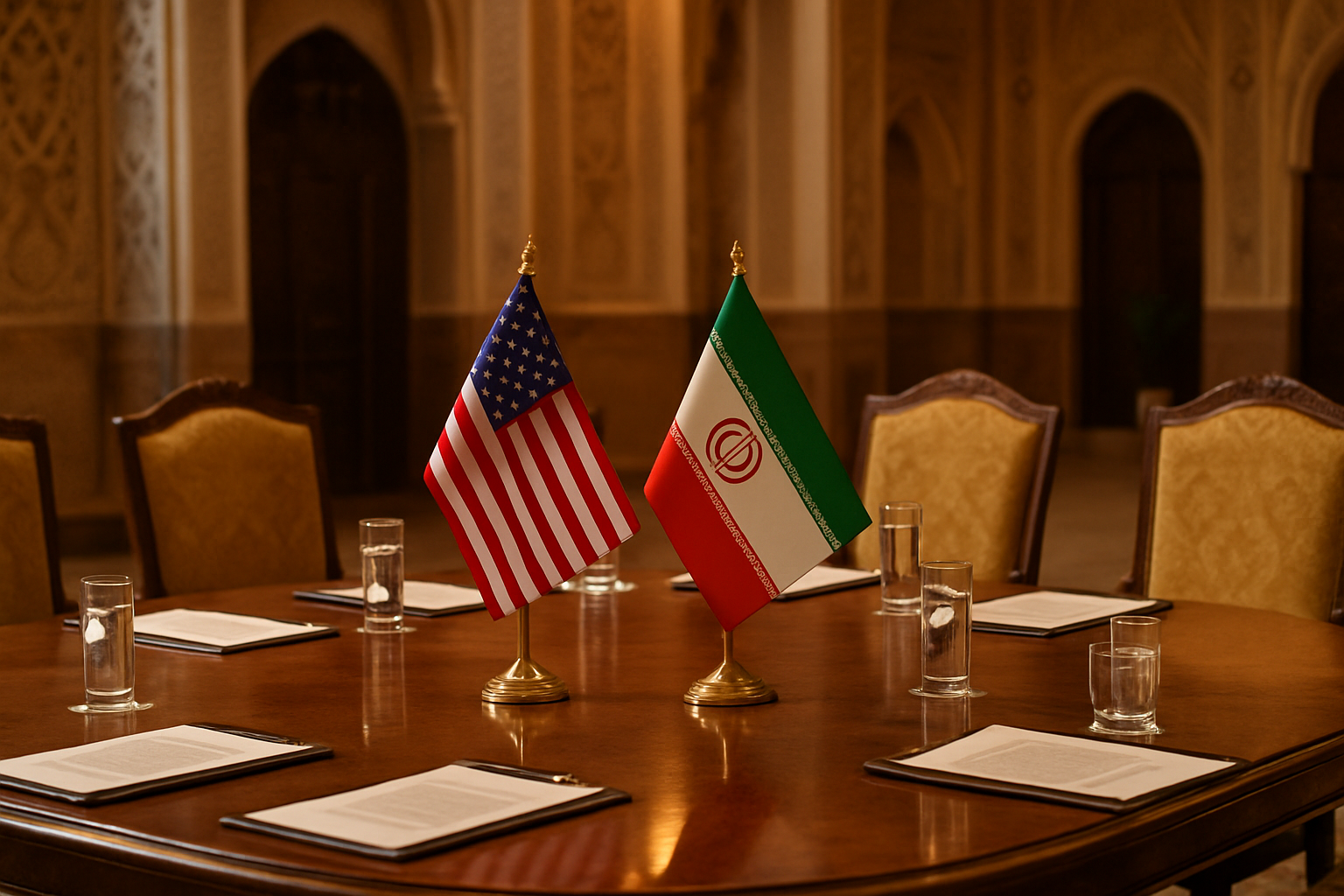
President Donald Trump declared US-Iran nuclear negotiations "very good" following Friday's mediated talks in Oman, though fundamental disagreements persist over Tehran's nuclear enrichment program and ballistic missile capabilities as both sides prepare for a crucial second round early next week.
The historic face-to-face negotiations between Iranian Foreign Minister Abbas Araghchi and US Special Envoy Steve Witkoff in Muscat marked the most significant diplomatic engagement since the collapse of the Joint Comprehensive Plan of Action (JCPOA) in 2018, with Oman providing neutral mediation after Iran specifically requested the venue change from Turkey.
"We had very good talks with Iran," Trump told reporters, expressing optimism that Tehran "very much wants to make a deal." The talks concluded after six hours of intensive discussions, with both sides agreeing to continue negotiations despite failing to reach concrete agreements on core issues.
Core Sticking Points Remain Unresolved
Iran's Foreign Minister Araghchi characterized the talks as having a "positive atmosphere" while drawing firm red lines around Tehran's positions. Iranian negotiators refused to commit to ending uranium enrichment and explicitly excluded ballistic missile capabilities from discussions, maintaining these as non-negotiable "red lines."
US officials reportedly pressed for tangible Iranian concessions on nuclear issues, with sources indicating Washington wants Tehran to demonstrate flexibility on enrichment levels before the next meeting. Iran currently enriches uranium at 60% purity, significantly higher than the 3.67% limit established under the original JCPOA and approaching the 90% threshold needed for weapons-grade material.
"Iran says nuclear talks are off to a good start but draws the line at missile and proxy issues"
— Australian media assessment of Iranian position
The scope disagreement represents perhaps the biggest obstacle to progress. While Iran insists on nuclear-only discussions, the Trump administration maintains that any comprehensive agreement must address Iran's ballistic missile program and support for regional proxy groups.
Omani Mediation Proves Crucial
The choice of Oman as mediator proved strategically important, given the Gulf sultanate's historical role in facilitating the original 2015 JCPOA negotiations. The venue change from Istanbul to Muscat came at Iran's specific request to limit discussions exclusively to nuclear issues, excluding what Tehran considers broader security matters.
Sultan Haitham bin Tariq's government provided discrete facilitation, allowing both sides to engage in substantive dialogue away from public scrutiny. The neutral setting enabled extensive discussions on potential frameworks for managing the nuclear crisis while both delegations maintained their core positions.
Pressure Campaign Continues Amid Diplomacy
Even as diplomatic talks proceeded, the Trump administration maintained economic pressure on Iran. In a move that drew criticism for potentially undermining negotiations, Washington imposed new tariffs on countries trading with Iran and signed an executive order targeting Iranian energy exports.
The timing of these sanctions, announced hours after talks concluded, highlighted the administration's dual-track approach of diplomacy backed by maximum pressure. Oil markets responded nervously to the escalating economic pressure, with prices fluctuating amid uncertainty over Iran's energy exports.
Regional Powers Back Diplomatic Process
An unprecedented coalition of Middle Eastern powers—including Saudi Arabia, the UAE, Qatar, and Egypt—has expressed support for the diplomatic process, reflecting regional concern about potential military confrontation. This broad consensus represents a significant shift from previous nuclear negotiations, where regional actors often worked at cross-purposes.
The regional backing provides crucial diplomatic cover for both Washington and Tehran to continue negotiations despite domestic political pressures in both countries. Gulf states, in particular, have emphasized the importance of preventing military escalation that could disrupt regional energy markets and maritime security.
Military Tensions Persist During Talks
The negotiations proceeded against a backdrop of continued military tensions. Recent incidents include the US military shooting down an Iranian Shahed-139 drone that approached the USS Abraham Lincoln in the Arabian Sea, and Iranian Revolutionary Guard Corps vessels harassing a US-flagged tanker in the Strait of Hormuz.
These incidents underscore the delicate balance both sides must maintain between military deterrence and diplomatic engagement. The presence of the USS Abraham Lincoln carrier group in regional waters serves as a reminder of US military capabilities while negotiations seek peaceful resolution of the nuclear crisis.
Next Round Faces Higher Stakes
With the next round of talks scheduled for early next week, both sides face mounting pressure to demonstrate concrete progress. US officials have indicated they expect Iran to arrive at the next meeting with tangible nuclear concessions, while Iranian negotiators insist on maintaining their fundamental positions on enrichment and missile programs.
The talks occur within a complex international context, including the recent expiration of the New START nuclear treaty between the US and Russia, ongoing Ukraine peace negotiations, and China's expanding nuclear capabilities. Success in Iran negotiations could provide a diplomatic model for addressing other nuclear challenges, while failure might accelerate toward military solutions.
International Community Watches Closely
European allies, while not directly involved in the Oman talks, have expressed cautious support for renewed US-Iran dialogue. The potential for breakthrough comes as international arms control frameworks face unprecedented challenges, with traditional treaty structures under strain from emerging nuclear powers and evolving military technologies.
Israeli officials, meanwhile, have emphasized concerns that any agreement must comprehensively address Iran's missile capabilities and regional proxy support to be meaningful for regional security. The challenge for negotiators is crafting a framework that addresses these broader security concerns while remaining acceptable to Iranian negotiators who insist on nuclear-only discussions.
As both delegations prepare for the crucial next round, the international community awaits signs of whether diplomatic engagement can produce the breakthrough needed to prevent what many observers fear could escalate into regional military confrontation with global implications.