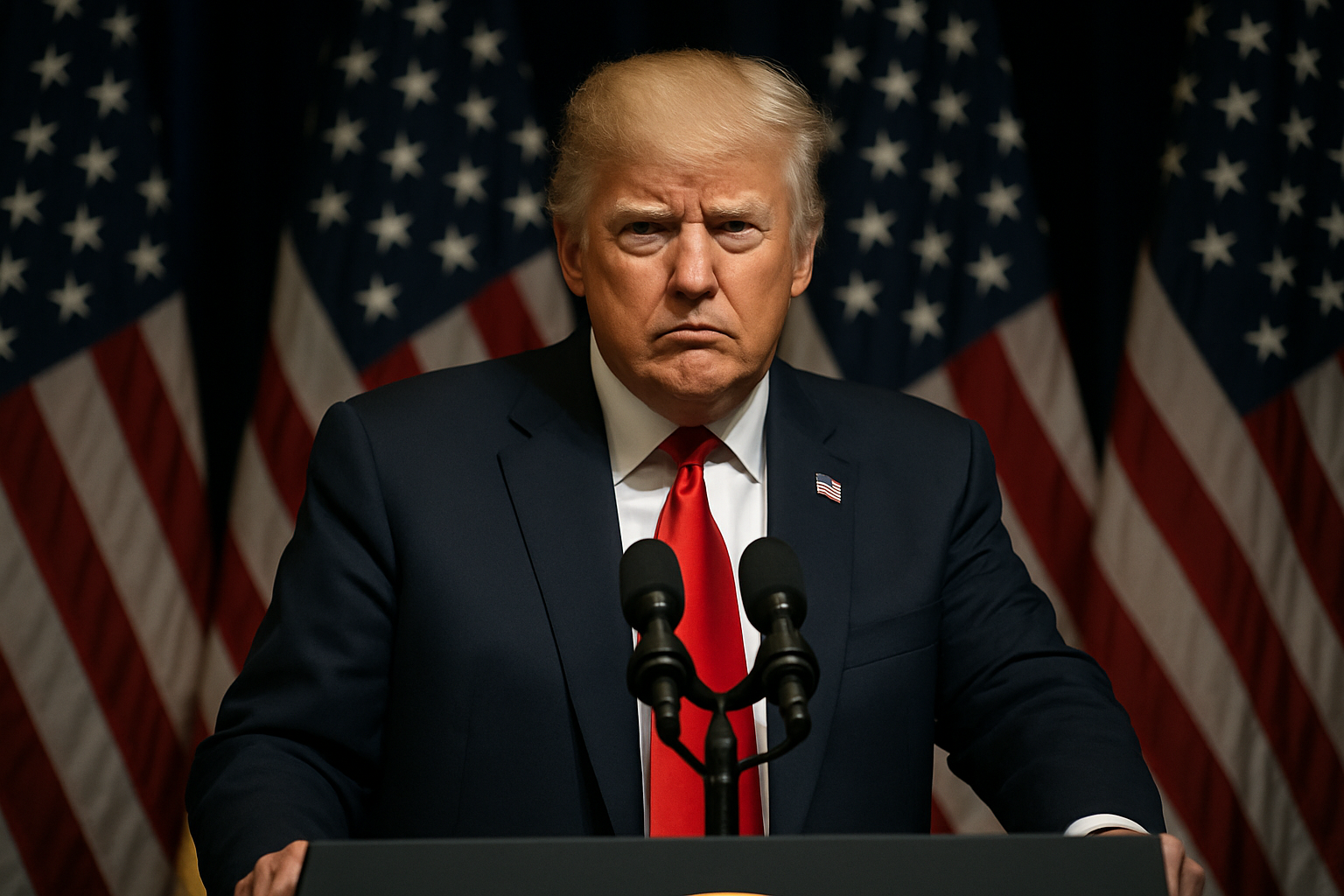
President Donald Trump's Iran policy has become characterized by rapidly shifting timelines, contradictory statements, and a strategic evolution from nuclear-focused diplomacy to comprehensive regime change objectives, creating uncertainty about American intentions during one of the most dangerous international crises since the Cold War.
From the promising Geneva nuclear talks in February 2026 to the launch of "Operation Epic Fury" - the largest U.S.-Israeli military operation since the 2003 Iraq invasion - Trump's approach to Iran has demonstrated a pattern of policy inconsistencies that have confused allies and adversaries alike. The administration's messaging has ranged from declaring nuclear deals "within reach" to demanding Iran's "unconditional surrender" within the span of weeks.
The Diplomatic Opening and Its Collapse
In early February 2026, Trump administration officials engaged in unprecedented nuclear negotiations with Iran through Omani mediation. Foreign Minister Abbas Araghchi announced a "broad agreement on guiding principles" - the most significant diplomatic progress since the Joint Comprehensive Plan of Action (JCPOA) collapsed in 2018. Switzerland joined as a mediating partner, signaling international support for a diplomatic solution.
However, fundamental scope disagreements proved insurmountable. Iran maintained that ballistic missiles and regional proxy activities were "red lines" excluded from nuclear-only talks, while Secretary of State Marco Rubio insisted on comprehensive agreements addressing missiles, armed groups, and human rights. This structural disagreement had prevented breakthrough attempts for over a decade.
"Iran will never abandon uranium enrichment even if war is imposed"
— Abbas Araghchi, Iranian Foreign Minister
Military Buildup and Contradictory Signals
Even as diplomatic talks progressed, Trump authorized an unprecedented military buildup in the Middle East. The deployment of the USS Gerald R. Ford and USS Abraham Lincoln created the largest U.S. naval presence in the region since 2003, representing approximately one-third of the active U.S. Navy fleet positioned just 800 kilometers from Iran's coast.
This dual-track approach of diplomacy backed by military pressure initially appeared strategic. However, Trump's public statements became increasingly contradictory. While confirming talks were "very good" and Iran was "very eager to make a deal," he simultaneously issued a historic 10-day ultimatum warning that "bad things will happen" if no agreement was reached.
Evolution Toward Regime Change
Perhaps the most significant shift in Trump's Iran policy was the evolution from nuclear-focused negotiations to explicit regime change advocacy. The president's comments escalated from seeking diplomatic solutions to declaring that Iranian government overthrow would be "the best thing that could happen."
This policy transformation reached its peak during Operation Epic Fury when Trump directly addressed the Iranian people, urging them to "take back their country" and claiming the right to personally choose Iran's next Supreme Leader. Such direct assertions of American control over Iranian internal affairs represented the most explicit intervention advocacy since the 1979 Islamic Revolution.
Timeline Inconsistencies and War Duration
The Trump administration's statements about potential military operations have shown remarkable inconsistencies. Initial Pentagon briefings suggested "potentially weeks-long operations," while Trump at various times predicted conflicts lasting "4-5 weeks," "8 weeks," or stated operations were "almost completed" and simultaneously "had not yet begun."
During the actual military campaign, these contradictions became even more pronounced. On the same day, administration officials claimed objectives were "almost completed" while also stating "the operation has only just begun." Trump would declare the war "almost over" in the morning, then warn of striking Iran "20 times harder" by evening.
Congressional and International Concerns
The shifting nature of Trump's Iran policy has drawn criticism from both domestic and international observers. Senator Richard Blumenthal expressed being "more concerned than ever" about the potential deployment of ground troops, while noting the administration's inability to provide clear strategic objectives or exit plans.
International allies have also struggled with the administration's approach. British Prime Minister Keir Starmer's refusal to support Operation Epic Fury led to an unprecedented public diplomatic crisis, with Trump declaring the U.S.-UK relationship was "obviously not what it was."
Nuclear Diplomacy in Crisis
The collapse of nuclear negotiations despite achieving framework agreements highlights the complexity of modern nuclear diplomacy. Iran continued enriching uranium at 60% purity - approaching the 90% weapons-grade threshold - possessing sufficient material for multiple weapons if weaponized. The fundamental disagreement over scope, with Iran demanding nuclear-only talks while the U.S. insisted on comprehensive agreements, proved unbridgeable.
This failure occurred against the broader context of global nuclear governance crisis. The New START treaty with Russia expired in February 2026, marking the first time in over 50 years without U.S.-Russia nuclear constraints, while China expanded its nuclear arsenal and UN Secretary-General António Guterres warned of nuclear risks at their "highest level in decades."
Regional Coalition Strain
Trump's shifting Iran strategy severely strained the unprecedented regional coalition of Saudi Arabia, UAE, Qatar, and Egypt that had backed diplomatic processes. These Gulf states, which control 40% of global oil transit through the Persian Gulf, found themselves caught between supporting U.S. policy and managing Iranian retaliation that directly targeted their territories.
Egyptian President Abdel Fattah el-Sisi condemned Iranian attacks on "sisterly Arab countries," warning of "comprehensive chaos." The coalition that had represented extraordinary Middle Eastern consensus for preventing military confrontation was fractured by the rapid escalation from diplomacy to warfare.
Economic and Humanitarian Consequences
The policy inconsistencies have had severe real-world consequences. Oil prices surged over 10% past $80 per barrel as Iran closed the Strait of Hormuz, affecting global energy markets. Over 18,000 flights were cancelled worldwide - the most extensive aviation disruption since COVID-19 - as eight Middle Eastern countries simultaneously closed their airspace.
Humanitarian costs have been significant, with Iran's Red Crescent reporting over 787 civilian casualties from U.S.-Israeli strikes, including a devastating attack on the Minab elementary school that killed 53-85 students and staff, drawing international condemnation for potential Geneva Conventions violations.
Strategic Implications
Trump's Iran policy represents what analysts call a "template-setting moment" for 21st-century international relations. The rapid transition from diplomatic breakthrough to military confrontation demonstrates the fragility of crisis management in the multipolar era. Success in containing the conflict could provide a framework for future nuclear crisis resolution, while failure may accelerate military solutions and undermine diplomatic credibility globally.
The approach combines traditional military deterrence with direct leader-to-leader diplomacy, bypassing multilateral frameworks. However, the inconsistent messaging and shifting timelines have created uncertainty about American strategic objectives and reliability as a negotiating partner.
Looking Forward
As the Iran crisis enters its second week, Trump's demand for "unconditional surrender" appears to eliminate possibilities for diplomatic resolution. The administration's evolution from nuclear-focused negotiations to comprehensive regime change objectives represents a fundamental shift that may reshape Middle Eastern geopolitics for decades.
Congressional scrutiny intensifies as lawmakers demand answers about strategy, costs, and potential ground troop deployments. With public support for the conflict at an "almost unprecedented" low of just 25%, domestic political pressures may ultimately constrain the administration's options more than international diplomacy.
The Trump administration's Iran policy will likely be remembered as a case study in how shifting timelines and contradictory messaging can undermine strategic objectives, even when backed by overwhelming military superiority. Whether this approach ultimately succeeds in achieving American goals or becomes a cautionary tale about the limits of unilateral action remains to be seen.