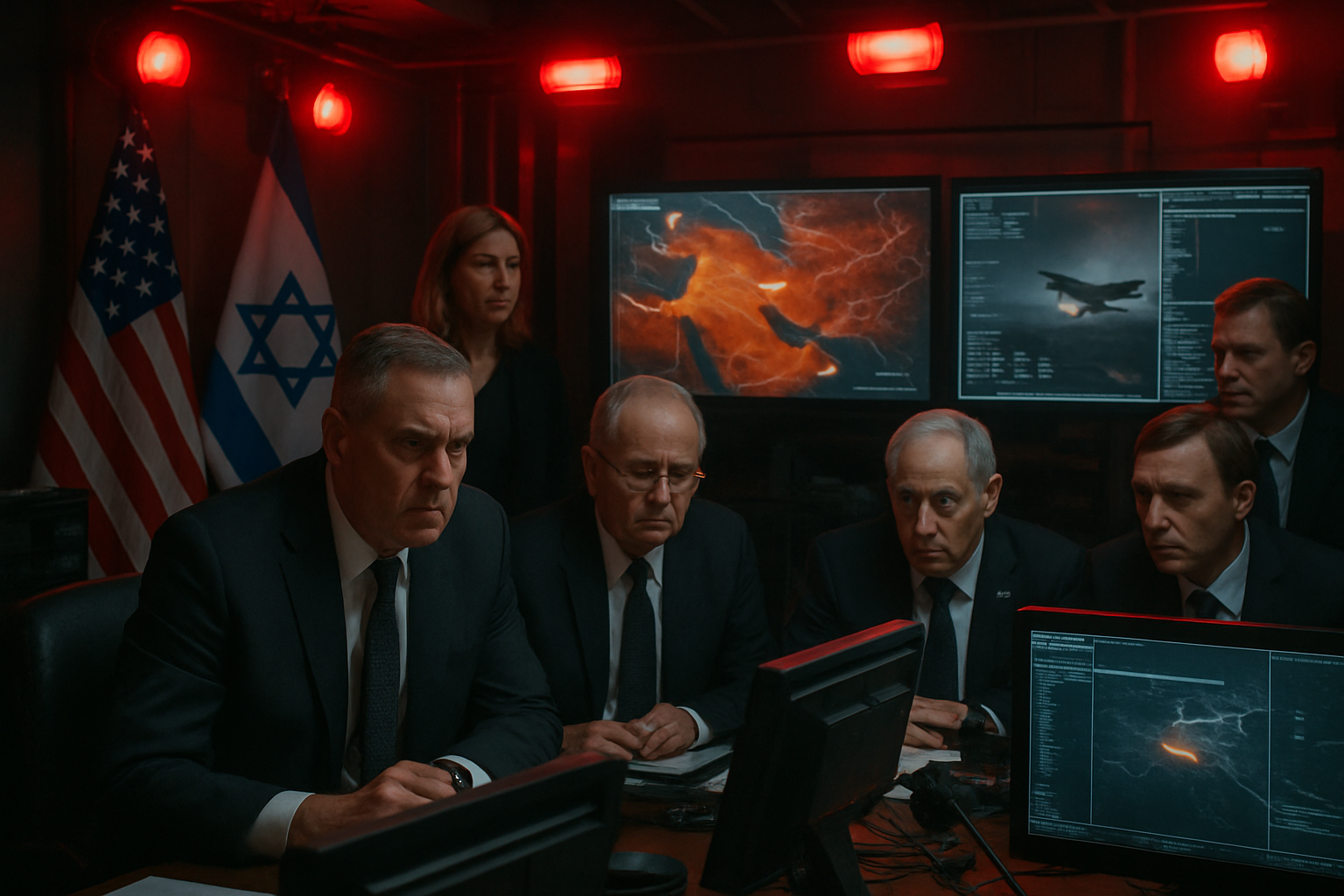
President Donald Trump issued his most explosive ultimatum yet against Iran on Tuesday morning, warning that "a whole civilization will die tonight, never to be brought back again" as his 8 PM Eastern deadline approaches for Tehran to reopen the strategically vital Strait of Hormuz or face catastrophic consequences.
The unprecedented threat came as US and Israeli forces launched coordinated strikes across Iran, targeting critical infrastructure including bridges, railways, and the key oil facility on Kharg Island. The attacks marked a dramatic escalation in what has become the most dangerous international crisis since the Cold War, with global implications for energy security, aviation, and diplomatic relations.
The Final Hours Before Catastrophe
Trump's warning, posted on his Truth Social platform, represented the culmination of months of failed diplomatic negotiations and escalating military tensions. "I don't want that to happen, but it probably will," the President wrote, describing the moment as "one of the most important" in world history.
The ultimatum follows earlier statements in which Trump threatened that Iran would be "living in hell" if it failed to comply with US demands to fully reopen the Strait of Hormuz, which Iran has effectively blockaded with an estimated 2,000 to 6,000 naval mines, cutting off 40% of global oil transit.
"A whole civilization will die tonight, never to be brought back again. I don't want that to happen, but it probably will... we will find out tonight."
— President Donald Trump
Coordinated US-Israeli Military Operations
As Trump's deadline loomed, US and Israeli forces dramatically intensified their military campaign against Iranian infrastructure. Reports confirmed strikes on two major bridges and a train station, while the US targeted military installations on Kharg Island for the second time since the conflict began.
Israeli Defense Minister confirmed that a "large number" of railway tracks and bridges had been destroyed in Tuesday's operations, marking a shift toward targeting civilian infrastructure alongside military assets. The coordinated attacks represent the largest US-Israeli operation since 2003, with costs already exceeding $11.3 billion in the first week alone.
The dual-carrier deployment of USS Gerald Ford and USS Abraham Lincoln, representing approximately one-third of the active US Navy fleet, continues to maintain unprecedented pressure 800 kilometers from Iran's coast.
Iran's Defiant Response
Despite the mounting pressure and infrastructure damage, Iran showed no signs of capitulating to Trump's demands. Senior Iranian officials urged young people to form "human chains" to protect power plants and other critical facilities, while the Revolutionary Guard maintained that "no red lines remain" in their systematic retaliation.
Foreign Minister Abbas Araghchi dismissed Trump's threats as "baseless" coming from a "delusional US president," while Iran's parliamentary speaker warned that the region would "burn" if attacks continued. Tehran has categorically rejected any temporary ceasefire proposals, demanding instead a permanent end to hostilities and complete withdrawal of US forces from the region.
Global Crisis Reaches Historic Proportions
The Iran crisis has triggered the most comprehensive global disruption since the COVID-19 pandemic, with over 18,000 flights cancelled worldwide as eight Middle Eastern countries maintain simultaneous airspace closures. Dubai International Airport, the world's busiest with 86 million annual passengers, remains completely shut down due to missile damage.
Oil prices have surged past $119 per barrel for Brent crude, heading toward $200, as the International Energy Agency authorized the largest strategic reserve release in its 50-year history—400 million barrels from 32 countries. Natural gas prices have spiked 24% in Europe and 78% in the United States.

European Territory Attacked for First Time Since WWII
In a historic escalation, Iranian drones struck RAF Akrotiri in Cyprus, marking the first attack on European territory since World War II. The assault prompted an unprecedented naval coalition response, with HMS Dragon joined by Spanish, Italian, French, Dutch, and Greek vessels in a multinational effort to protect European interests.
The European Union activated its ESTIA crisis mechanism for the first time in the bloc's history, demonstrating how the Middle Eastern conflict has expanded far beyond its original boundaries to threaten continental European security.
Congressional Opposition Mounts
The conflict has generated historically unprecedented opposition in Congress, with only 25% of Americans supporting the military action—described by analysts as "almost unprecedented" unpopularity for early-stage operations. Senator Chris Murphy stated that Trump has "lost control" of the Iran war and appears "unsettled and disorganized."
Senator Richard Blumenthal expressed being "more concerned than ever" about potential ground troop deployment, while the Pentagon has extended operations projections through September, far beyond the initial 4-6 week timeline.
Nuclear Diplomacy's Complete Collapse
The current crisis emerged from the complete breakdown of nuclear negotiations despite achieving what was described as "broad agreement on guiding principles" in Geneva—the most progress since the JCPOA collapse in 2018. The fundamental disagreement remained unchanged: Iran excluded ballistic missiles and regional proxies as "red lines" for nuclear-only talks, while the US demanded comprehensive agreements including missiles, armed groups, and human rights issues.
Iran continues uranium enrichment at 60% purity, approaching the 90% weapons-grade threshold, with an estimated 400+ kilograms of enriched uranium—sufficient for multiple weapons if weaponized. The crisis occurs amid the broader nuclear governance breakdown following the New START treaty's expiration in February 2026, marking the first time in 50+ years without US-Russia nuclear constraints.
Hereditary Succession Crisis
Following the confirmed death of Supreme Leader Ali Khamenei on March 1, Iran faces its first hereditary succession in the Islamic Republic's 47-year history. Mojtaba Khamenei, the former leader's son, has been appointed as the new Supreme Leader, consolidating Revolutionary Guard military control in an unprecedented shift from clerical leadership.
Trump has explicitly rejected the succession, claiming the right to personally choose Iran's next leader—the most direct assertion of American control over Iranian internal affairs since 1979.
Humanitarian Crisis and War Crimes Concerns
The Iran Red Crescent reports over 787 civilian casualties from US-Israeli strikes, including a devastating elementary school attack that killed between 165-185 students. The Pentagon has confirmed responsibility for the school strike, citing "outdated targeting data," leading to calls for Geneva Conventions investigations.
International evacuations are underway on a scale comparable to the Arab Spring of 2011, with Australia reporting 115,000 nationals trapped and Germany evacuating 30,000 citizens from the region.
Template-Setting Historical Moment
UN Secretary-General António Guterres has described the crisis as the "greatest test of multilateral cooperation in crisis management in the modern era." The rapid transition from diplomatic breakthrough to military confrontation demonstrates the fragility of crisis management mechanisms in the multipolar era.
The outcome of Tuesday's 8 PM deadline will determine whether this crisis provides a framework for 21st-century nuclear dispute resolution or accelerates military solutions for decades to come, potentially reshaping international approaches to territorial and nuclear disputes worldwide.
Regional Coalition Under Severe Strain
The unprecedented consensus among Saudi Arabia, UAE, Qatar, and Egypt that initially supported diplomatic solutions has been severely strained by Iranian retaliation targeting their territories directly. Egypt's President Sisi condemned attacks on "sisterly Arab countries," warning of "comprehensive chaos" spreading throughout the region.
The UAE has reported one civilian death in Abu Dhabi, Kuwait has seen 32 injured in airport strikes, and Qatar intercepted 65 missiles and 12 drones using Patriot systems, with 8 people injured by falling debris.
The Stakes Could Not Be Higher
As Tuesday evening approaches, the world watches what could be the most consequential moment in international relations since the end of the Cold War. The crisis simultaneously tests regional war prevention, global energy security, nuclear governance credibility, and international law enforcement mechanisms that have underpinned the post-WWII order.
Success in containing the escalation could provide a template for managing nuclear crises in the 21st century. Failure may accelerate the use of military solutions over diplomatic ones for decades, encourage nuclear proliferation globally, and undermine the credibility of diplomatic approaches to international disputes worldwide.
With Trump's "whole civilization" ultimatum and Iran's absolute refusal to capitulate, Tuesday night represents a potential point of no return for Middle East stability and global security architecture that has maintained relative peace for nearly eight decades.