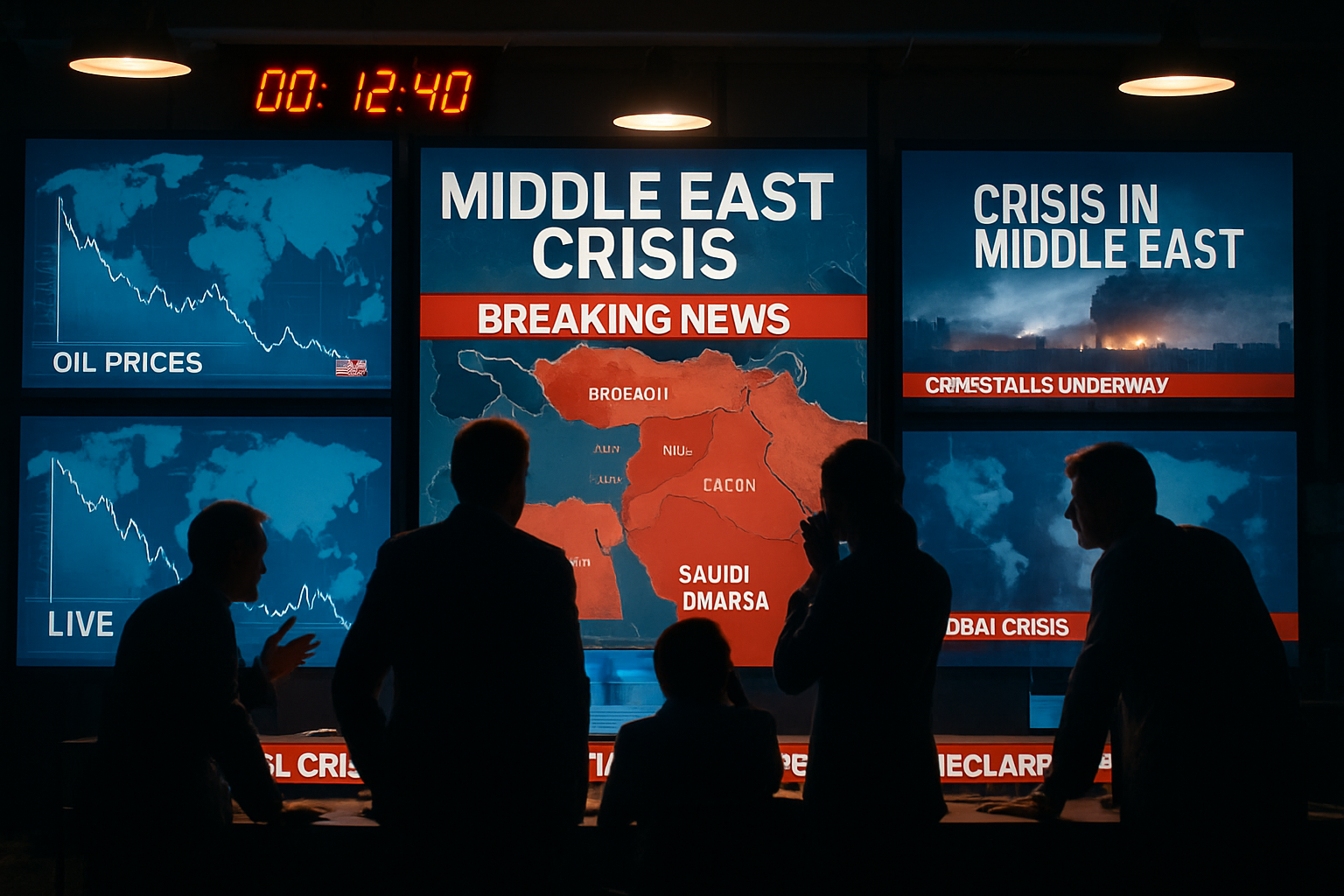
As President Donald Trump's 8 PM Eastern deadline rapidly approaches, the United States stands on the precipice of potentially devastating military action against Iran after the president threatened that "a whole civilization will die tonight" if Tehran fails to reopen the Strait of Hormuz. Pakistan has emerged as a crucial mediator, requesting a two-week extension to allow diplomatic efforts to continue, while global leaders condemn Trump's apocalyptic rhetoric against Iran's civilian population.
The escalation represents the most dangerous international crisis since the Cold War, with Trump issuing unprecedented threats against Iranian infrastructure while Iran maintains its defiant closure of the strategic waterway that carries 40% of global oil transit. The president's incendiary social media posts have drawn sharp condemnation from world leaders, with Pope Leo XIV calling the threats "truly unacceptable" and violating international law.
Pakistan's Last-Minute Diplomatic Push
Pakistani Prime Minister Shehbaz Sharif made an urgent appeal on social media platform X, stating: "Diplomatic efforts for peaceful settlement of the ongoing war in the Middle East are progressing steadily, strongly and powerfully with the potential to lead to substantive results in the near future. To allow diplomacy to run its course, I earnestly request President Trump to extend the deadline for two weeks."
The White House confirmed that Trump is aware of Pakistan's proposal, with press secretary Karoline Leavitt stating that "the President has been made aware of the proposal, and a response will come." Pakistani officials have positioned themselves as crucial intermediaries in what may be the final diplomatic window before catastrophic escalation.
"Pakistan, in all sincerity, requests the Iranian brothers to open Strait of Hormuz for a corresponding period of two weeks as a goodwill gesture."
— Prime Minister Shehbaz Sharif, Pakistan
Trump's Apocalyptic Ultimatum
The president's threats have reached unprecedented levels, with his latest Truth Social post declaring: "A whole civilization will die tonight, never to be brought back again. I don't want that to happen, but it probably will." This follows earlier statements threatening to destroy "every bridge and power plant in Iran" if the Strait of Hormuz remains closed.
The rhetoric has alarmed international observers and domestic critics alike. Democratic leaders in the House of Representatives issued a joint statement calling on Republicans to "put patriotic duty over party loyalty and stop this madness," while Senate Democratic leader Chuck Schumer described Trump as "an extremely sick person."
Military analysts note that Trump has repeatedly extended previous deadlines, having pushed back threatened strikes on at least three previous occasions. However, the intensity of his current rhetoric suggests a potential point of no return as global pressure mounts on all sides.
Iran's Defiant Response
Iranian officials have categorically rejected any temporary measures to reopen the Strait of Hormuz, maintaining what they describe as strategic leverage in the conflict. Foreign Minister Abbas Araghchi dismissed Trump's threats as emanating from a "delusional US president," while Iran's top military command declared that "no red lines remain" in their systematic retaliation against US and Israeli targets.
In a remarkable show of solidarity, millions of Iranians have reportedly formed human chains around power plants and critical infrastructure across the country. State media claims over 14 million people registered for these protective formations, though independent verification of these numbers remains impossible due to communication restrictions.
Iran's Parliament Speaker Mohammad Bagher Ghalibaf, considered by some as the country's de facto leader following Supreme Leader Ali Khamenei's death in March, along with President Masoud Pezeshkian, have both declared their willingness to sacrifice their lives to defend Iran.
Global Crisis Reaches Unprecedented Scale
The Iran crisis has triggered the most comprehensive global disruption since the COVID-19 pandemic. Over 18,000 flights have been cancelled worldwide as eight Middle Eastern countries maintain simultaneous airspace closures, effectively severing critical Asia-Europe air corridors. Dubai International Airport, the world's busiest with 86 million annual passengers, remains shuttered due to missile damage.
Oil markets continue their volatile surge, with Brent crude reaching $119 per barrel and heading toward potential $200 levels. The International Energy Agency has authorized the largest strategic petroleum reserve release in its 50-year history, releasing 400 million barrels from 32 countries in an attempt to stabilize global energy markets.
The economic disruption extends far beyond energy, with major shipping companies Maersk and MSC suspending operations in the Persian Gulf, leaving over 150 tankers stranded with billions of dollars in cargo. Qatar has halted LNG production, affecting approximately 20% of global exports and threatening European energy supplies.
Operation Epic Fury: Historic Military Deployment
The US military operation, dubbed "Operation Epic Fury," represents the largest American Middle Eastern deployment since the 2003 Iraq invasion. The dual-carrier deployment of the USS Gerald R. Ford and USS Abraham Lincoln concentrates approximately one-third of the active US Navy fleet within 800 kilometers of Iran's coast.
Pentagon officials confirm the operation has cost $11.3 billion in its first week alone, with daily expenditures running at $1 billion. The conflict has already claimed its first American casualties since 2003, with 3 service members confirmed killed and 150 wounded, including 8 in critical condition.
In a historic first since World War II, the US submarine USS Charlotte successfully sank an Iranian frigate, the IRIS Dena, off the coast of Sri Lanka, killing over 80 crew members and expanding the conflict beyond traditional Middle Eastern boundaries into the Indian Ocean.
European Territory Attacked for First Time Since WWII
The crisis reached European shores when Iranian drones struck RAF Akrotiri in Cyprus, marking the first attack on European territory since World War II. The unprecedented assault prompted an immediate naval coalition response, with HMS Dragon joined by Spanish, Italian, French, Dutch, and Greek vessels in the eastern Mediterranean.
The European Union activated its Emergency Travel Information and Authorisation (ESTIA) crisis mechanism for the first time in the bloc's history, facilitating mass evacuations from Cyprus. The attack fundamentally altered the crisis from a regional Middle Eastern conflict to a European security concern with global implications.
Nuclear Diplomacy's Complete Collapse
The current military crisis emerged from the complete breakdown of nuclear negotiations, despite earlier breakthroughs in Geneva talks that achieved what experts called "broad agreement on guiding principles" – the most progress since the 2018 JCPOA collapse.
The fundamental disagreement proved insurmountable: Iran insisted on nuclear-only discussions while excluding ballistic missiles and regional proxy groups as "red lines," while the US demanded comprehensive agreements addressing missiles, armed groups, and human rights violations.
Iran continues uranium enrichment at 60% purity with over 400 kilograms of weapons-grade material – sufficient for multiple nuclear weapons if weaponized. The crisis occurs amid the broader collapse of nuclear governance frameworks, with the New START treaty between the US and Russia having expired in February 2026, creating the first 50-year gap without US-Russian nuclear constraints.
Congressional Opposition Reaches Historic Levels
Domestic opposition to the Iran operation has reached what analysts describe as "almost unprecedented" levels for the early stages of military action, with only 25% of Americans supporting continued operations. Senator Richard Blumenthal expressed being "more concerned than ever" about potential ground troop deployments, while bipartisan lawmakers demand comprehensive strategy briefings on costs and objectives.
Pentagon projections indicate operations could extend through September 2026, far beyond the administration's initial 4-6 week timeline. Congress faces demands for over $200 billion in emergency military appropriations, with financial markets emerging as what economists term the "ultimate constraint" on prolonged military action.
Humanitarian Crisis of Historic Proportions
The humanitarian toll continues mounting, with the Iranian Red Crescent reporting over 787 civilian casualties from US-Israeli strikes. The Pentagon has confirmed responsibility for devastating attacks on civilian infrastructure, including an elementary school strike that killed between 165-185 students in what officials acknowledged as "outdated targeting data."
International evacuations have reached Arab Spring-scale proportions, with Australia reporting 115,000 citizens trapped and Germany evacuating 30,000 nationals. Multiple countries have issued "extremely uncertain security" warnings, triggering the largest coordinated international evacuation since 2011.
Regional Coalition Under Severe Strain
The unprecedented coalition of Saudi Arabia, UAE, Qatar, and Egypt that initially supported diplomatic solutions has come under severe pressure as Iranian retaliation targets member territories. Egypt's President Abdel Fattah el-Sisi condemned attacks on "sisterly Arab countries," warning of "comprehensive chaos" spreading throughout the region.
Iranian "Operation True Promise 4" has systematically targeted coalition partners: the UAE suffered 1 civilian death in Abu Dhabi with Dubai International Airport shuttered, Kuwait reported 32 injuries from airport strikes, and Qatar intercepted 65 missiles and 12 drones with Patriot systems, resulting in 8 injuries from debris.
Iran's New Hereditary Leadership
The crisis has been complicated by Iran's first hereditary succession in the Islamic Republic's 47-year history. Following Supreme Leader Ali Khamenei's death on March 1, his son Mojtaba Khamenei has assumed leadership, representing an unprecedented shift from clerical to military governance under Revolutionary Guard influence.
Trump has explicitly rejected this succession, claiming the right to "personally choose Iran's next leader" in what represents the most direct assertion of American control over Iranian affairs since the 1979 revolution. This demand for regime change has effectively eliminated diplomatic solutions beyond Iran's complete capitulation.
Global Implications and Historical Significance
UN Secretary-General António Guterres has described the crisis as the "greatest test of multilateral cooperation and crisis management in the modern era." The rapid transition from diplomatic breakthrough to military confrontation demonstrates the fragility of crisis management mechanisms in the multipolar era.
Success in containing the crisis could provide a framework for 21st-century nuclear dispute resolution, while failure may accelerate military solutions for decades, encouraging proliferation globally and undermining diplomatic credibility worldwide. The stakes include regional war prevention, global energy security, nuclear governance credibility, and international law enforcement of post-WWII order principles.
As Trump's deadline approaches, the world watches whether Pakistan's mediation efforts can provide a final diplomatic window or if the most dangerous international crisis since the Cold War will escalate beyond the point of no return. The implications extend far beyond the current administration, potentially reshaping international approaches to territorial and nuclear disputes for generations to come.