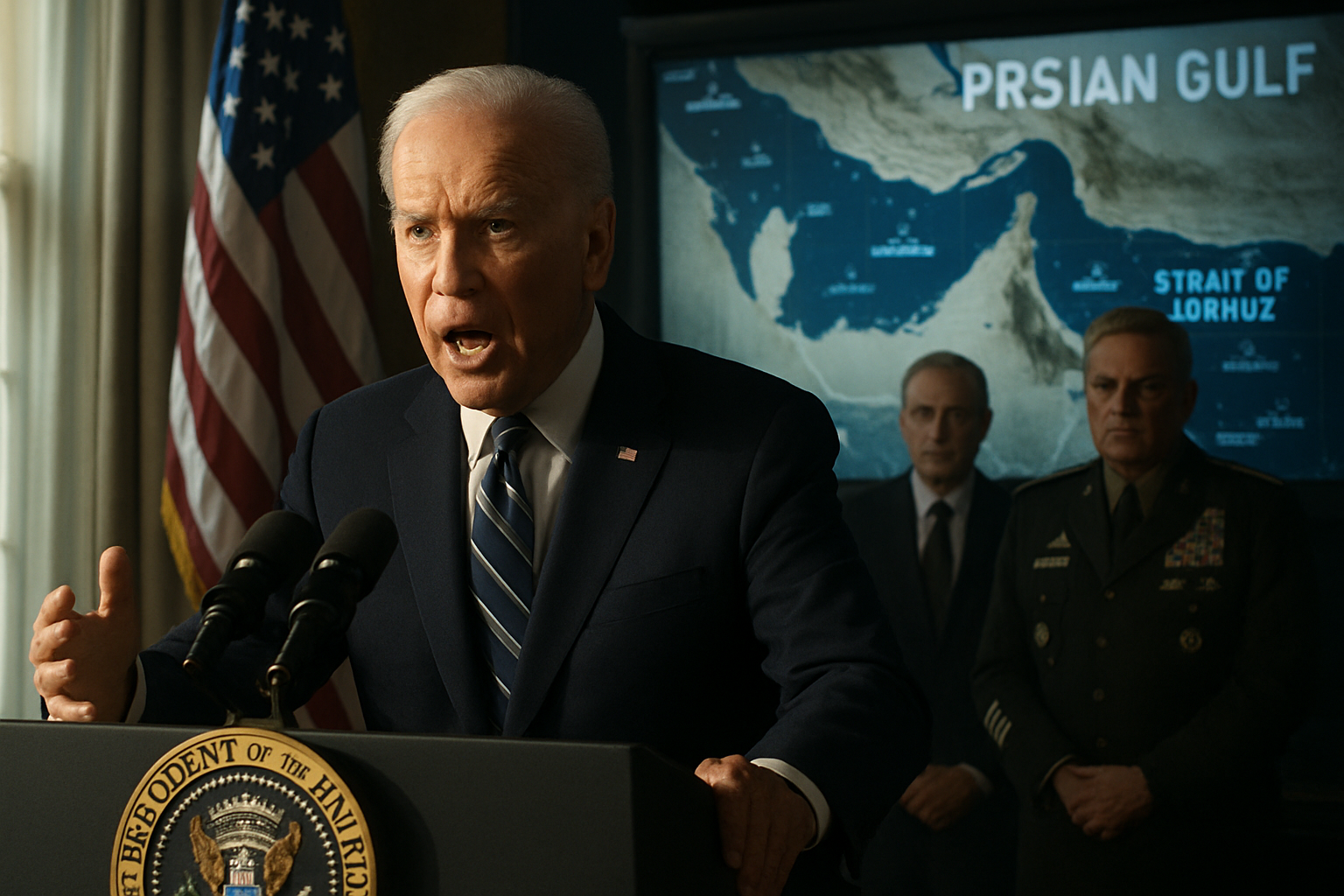
President Donald Trump has issued his most explosive ultimatum yet to Iran, demanding the immediate reopening of the Strait of Hormuz by Tuesday evening or face systematic strikes on Iranian power plants and critical infrastructure.
The ultimatum, delivered through multiple channels including an expletive-filled social media post, represents a dramatic escalation in the ongoing Middle East crisis that has already disrupted global energy markets and aviation networks worldwide.
Tuesday 8 PM Deadline Confirmed
Speaking to the Wall Street Journal on Sunday, Trump clarified his deadline for Iran: "If they don't do something by Tuesday evening, they won't have any power plants and they won't have any bridges standing." The president later posted on social media without mentioning Iran directly: "Tuesday, 8:00 P.M. Eastern Time!"
Multiple international sources confirm this represents the most explicit threat against Iranian civilian infrastructure since tensions began escalating. The deadline comes as Iran has effectively closed the Strait of Hormuz, through which 40% of global seaborne oil transits, using naval mines and military harassment of commercial vessels.
"Open the F****n Strait, you crazy b******s, or you'll be living in Hell – JUST WATCH!"
— President Donald Trump, Easter Sunday social media post
Explosive Easter Sunday Message
Trump's Easter Sunday social media outburst shocked international observers with its unprecedented vulgarity and directness. The post continued: "If they don't do something by Tuesday evening, they won't have any power plants and they won't have any bridges standing." The message concluded with "Praise be to Allah," an unusual religious reference that drew criticism from lawmakers across the political spectrum.
The timing of the explosive message on Christianity's holiest day sparked immediate backlash. Senator Chris Blumenthal called it "deeply inappropriate," while several Republican allies privately expressed concern about the president's increasingly volatile rhetoric.
Global Energy Crisis Deepens
The Iranian closure of the Strait of Hormuz has created the most severe global energy crisis since the 1970s oil shocks. Oil prices have surged past $110 per barrel, with Brent crude reaching highs not seen since the early days of the Ukraine conflict. The International Energy Agency announced its largest strategic petroleum reserve release in 50 years, deploying 400 million barrels from 32 countries.
Natural gas prices have exploded by 24% in Europe and 78% in the United States as supply chains face unprecedented disruption. Major shipping companies including Maersk and MSC have suspended operations in the Persian Gulf, leaving over 150 tankers stranded with billions of dollars in cargo.
Diplomatic Efforts Collapse
The ultimatum comes after the complete breakdown of nuclear negotiations that had shown promise just weeks ago. Despite achieving what Iranian Foreign Minister Abbas Araghchi called "broad agreement on guiding principles" during Geneva talks, fundamental disagreements over scope proved insurmountable.
Iran had consistently excluded ballistic missiles and regional proxy forces as "red lines" from nuclear-only discussions, while the United States demanded comprehensive agreements addressing missiles, armed groups, and human rights. The structural disagreement that has prevented breakthrough for over a decade ultimately doomed the latest diplomatic effort.
Iran's Defiant Response
Iran has shown no signs of backing down from Trump's ultimatum. Parliamentary Speaker Mohammad Bagher Ghalibaf responded defiantly: "You won't get anything by committing war crimes. The entire region will burn because you insist on following Netanyahu's orders."
Iranian military commanders have warned that any attacks on Iranian infrastructure would trigger "ferocious" retaliation across the region. The Revolutionary Guard has declared that "no red lines remain" and systematically targeted facilities in neighboring countries, including the UAE, Kuwait, and Qatar.
Unprecedented Military Buildup
The Trump administration has deployed the largest U.S. naval presence in the Middle East since the 2003 Iraq invasion, with the USS Gerald R. Ford and USS Abraham Lincoln carrier strike groups representing approximately one-third of the active U.S. Navy fleet concentrated 800 kilometers from Iran's coast.
Pentagon sources confirm that military planners have prepared scenarios ranging from targeted strikes on nuclear facilities to comprehensive campaigns against Revolutionary Guard infrastructure. Intelligence assessments suggest operations could last "weeks" with inevitable Iranian retaliation cycles.
International Alarm and Evacuations
The escalating crisis has prompted massive international evacuations reminiscent of the 2011 Arab Spring. Over 18,000 flights have been cancelled worldwide—the most severe aviation disruption since COVID-19—as eight Middle Eastern countries have simultaneously closed their airspace.
The United States has authorized the evacuation of non-essential embassy personnel from Israel, with Ambassador Mike Huckabee advising staff wanting to leave to "do so today." Similar evacuation orders have been issued by Sweden, Serbia, and multiple European nations citing "extremely uncertain security situations."
Economic Shockwaves
Financial markets are reeling from the crisis, with Pakistan's main stock index suffering its largest single-day decline in history at -8.97%. South Korea's KOSPI fell 12%, triggering circuit breakers as the Korean won hit 17-year lows.
Supply chains for automotive, electronics, and textile industries face severe disruption due to the Gulf's role as a critical trade hub beyond energy. Qatar has halted LNG production at major facilities, threatening approximately 20% of global exports and raising fears of European energy shortages.
Congressional Opposition Mounts
Bipartisan opposition is emerging in Congress, with lawmakers demanding answers about strategy, costs, and the potential deployment of ground troops. Only 25% of Americans support the current military operations, representing what experts call "almost unprecedented" unpopularity for early-stage military action.
Senator Chris Murphy accused Trump of having "lost control" of the Iran situation, describing the president as appearing "unsettled and disorganized." The Pentagon has requested over $200 billion in emergency funding as operations are projected to continue through September, well beyond initial 4-6 week timelines.
Regional Consequences
The crisis has severely strained the unprecedented regional coalition that initially supported diplomatic efforts. Saudi Arabia, the UAE, Qatar, and Egypt had formed extraordinary Middle Eastern consensus backing negotiations, but Iranian attacks on their territories have fractured this unity.
Egyptian President Abdel Fattah el-Sisi condemned attacks on "sisterly countries," warning of "comprehensive chaos" if the conflict continues to spread. The targeting of civilian infrastructure in coalition partner nations represents a significant escalation that could reshape regional alliances for decades.
Nuclear Proliferation Fears
Intelligence assessments confirm Iran possesses over 400 kilograms of uranium enriched to 60% purity—sufficient material for multiple nuclear weapons if weaponized. Former IAEA inspector Dr. Yusri Abu Shadi describes nuclear weapons capability as "easily achievable" given current stockpiles.
The crisis unfolds against the broader context of global nuclear governance breakdown, with the New START treaty having expired in February 2026—the first time in over 50 years without U.S.-Russia nuclear constraints. UN Secretary-General António Guterres has called this "the greatest test of multilateral cooperation in the modern era."
Tuesday's Critical Decision Point
As Tuesday's 8 PM Eastern deadline approaches, the world watches what many analysts describe as the most dangerous international crisis since the Cold War. The outcome will determine whether the situation remains a contained regional confrontation or escalates into a broader conflict with global implications.
The stakes extend far beyond the immediate Middle East, affecting global energy security, nuclear governance credibility, and the post-World War II international order. Success in containing the crisis could provide a framework for 21st-century nuclear dispute resolution, while failure may accelerate military solutions that reshape geopolitics for decades.
With oil markets on edge, aviation networks paralyzed, and diplomatic channels exhausted, Tuesday evening represents a watershed moment that will define international conflict resolution approaches for years to come. The world now waits to see whether Trump will follow through on his most explosive ultimatum yet, or if Iran will blink first in this high-stakes confrontation over one of the world's most critical shipping lanes.