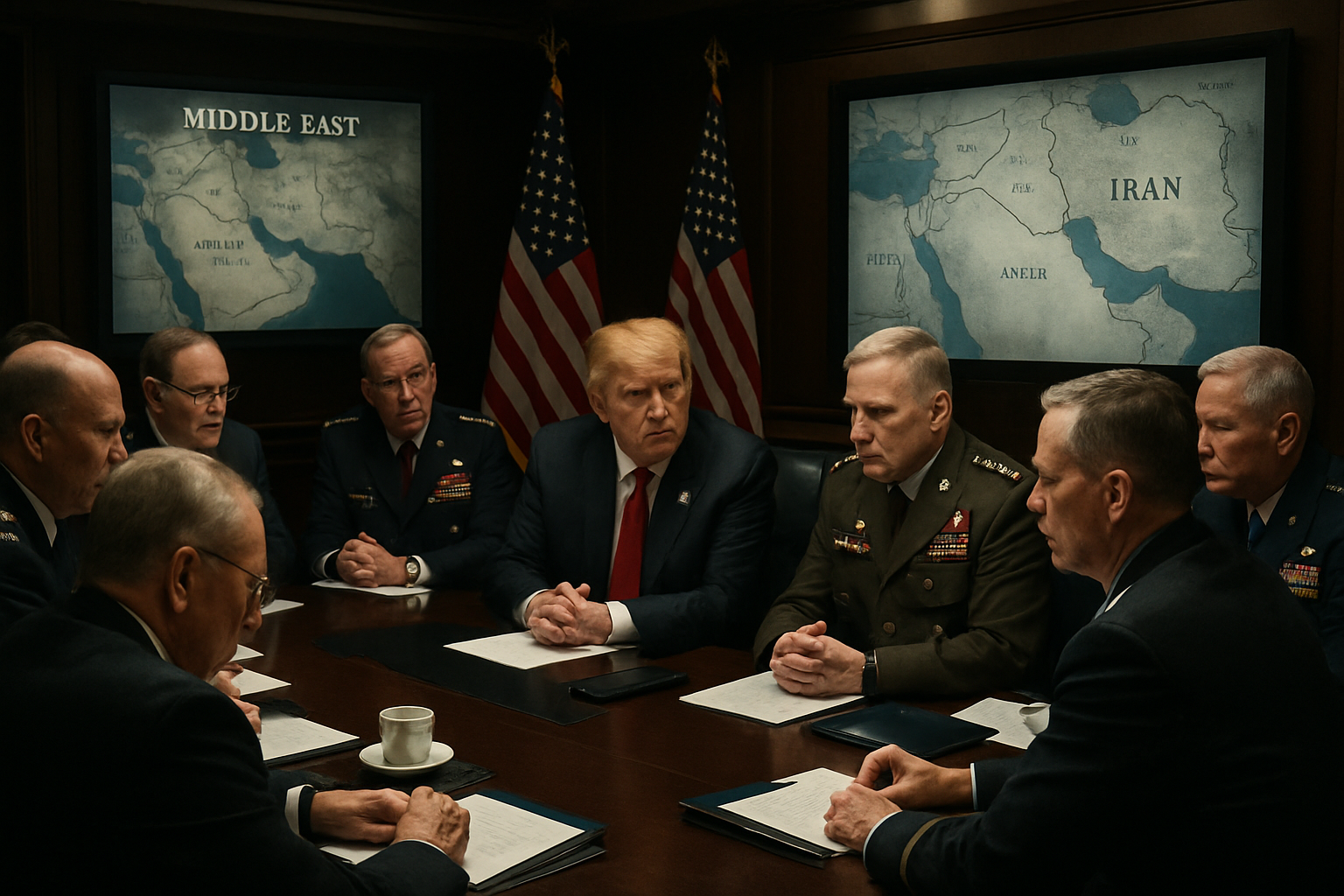
The Trump administration faces unprecedented congressional resistance and growing international condemnation as its military campaign against Iran enters its fifth day, with lawmakers demanding immediate action to limit presidential war powers without legislative approval.
Senate Democrats and an increasing number of Republicans are preparing to vote on emergency resolutions that would force an end to military operations in Iran, marking one of the most significant constitutional challenges to presidential war powers since the Vietnam era. The crisis has exposed deep fractures within the Republican Party and strained America's international relationships at a critical moment.
Congressional Pushback Intensifies
According to multiple international sources, the U.S. Senate is expected to vote Wednesday on a resolution introduced by Democratic Senator Tim Kaine that would compel President Trump to seek congressional authorization for continued military action in Iran. The measure, while unlikely to pass due to Republican majorities in both chambers, represents a historic bipartisan challenge to executive war powers.
The constitutional crisis deepened as multiple senators from Trump's own party expressed grave concerns about the administration's decision to launch "Operation Epic Fury" - the largest U.S. military operation in the Middle East since the 2003 Iraq invasion - without consulting Congress. Sources indicate that even some traditionally loyal Republican lawmakers are questioning the legal basis for the campaign.
"We were not properly briefed, and this administration has overstepped its constitutional authority," one senior Republican senator, speaking on condition of anonymity, told reporters. "The Founders never intended for one person to have the power to unilaterally launch wars of this magnitude."
International Condemnation Mounts
The military action has triggered sharp criticism from key international partners, with several NATO allies questioning the legitimacy of the operation. German officials have described the strikes as potentially violating international law, while French President Emmanuel Macron called for an immediate ceasefire and return to diplomatic negotiations.
The criticism is particularly stinging given that diplomatic progress had been achieved just weeks before the military escalation. Iranian Foreign Minister Abbas Araghchi had announced a "broad agreement on guiding principles" during Geneva talks in February, representing the most significant diplomatic breakthrough since the collapse of the Iran nuclear deal in 2018.
European Union officials expressed frustration that promising diplomatic channels were abandoned for military action. "We had framework agreements that could have led to a peaceful resolution," a senior EU diplomat said. "This rush to war has undermined years of careful diplomacy."
The Trump Base Shows Cracks
Perhaps most significantly, the Iran military campaign has exposed divisions within Trump's traditional support base. High-profile conservative media figures, including Tucker Carlson, Megyn Kelly, and Matt Walsh, have openly criticized the war, marking a rare break with the administration among typically loyal voices.
Australian media reports indicate that these critics represent "the sharpest criticism Trump has faced in the early days of the Iran war," coming from "once-loyal media figures far more accustomed to singing his praises." The White House has been playing defense on social media and in interviews as it attempts to maintain support among its core constituency.
A Reuters/Ipsos poll reveals telling numbers: only 25% of Americans support the military strikes, with 43% disapproving and 29% uncertain. Most striking, 56% believe Trump is too willing to use military force, including 23% of Republicans - suggesting potential electoral consequences.
"This war is dividing Trump's MAGA coalition in ways we haven't seen before,"
— Political analyst quoted in German media reports
Constitutional and Legal Challenges
The legal questions surrounding the Iran operation have intensified as lawmakers and constitutional scholars argue that the administration lacks proper authorization for sustained military action. The War Powers Resolution of 1973 requires congressional approval for military operations lasting more than 60 days, but critics argue that the scale and scope of "Operation Epic Fury" required immediate legislative consultation.
Senator Kaine's resolution specifically targets the administration's failure to seek congressional authorization before launching what Pentagon officials describe as potentially "weeks-long operations." The measure would force Trump to withdraw U.S. forces from combat operations unless Congress explicitly authorizes continued action.
Constitutional law experts note that this represents a critical test of the balance of powers between the executive and legislative branches. "This is about more than Iran," said one scholar. "This is about whether we still have a constitutional system of checks and balances when it comes to war powers."
Military and Strategic Concerns
The operation has created significant military complications across the Middle East region. Iran's retaliatory strikes, dubbed "Operation True Promise 4" by the Islamic Revolutionary Guard Corps, have targeted U.S. allies and installations across the Gulf region, resulting in civilian casualties in the UAE, Kuwait, Qatar, and other nations.
The conflict has severely disrupted global energy markets and aviation networks. Oil prices have surged past $80 per barrel, while over 18,000 flights have been cancelled worldwide as multiple Middle Eastern countries closed their airspace. The economic ramifications extend far beyond the immediate region.
Military analysts express concern about the escalating nature of the conflict. "We're seeing a cycle of retaliation that could draw in the entire region," warned one former Pentagon official. "The administration appears to have no clear exit strategy."
Diplomatic Collapse and Missed Opportunities
The timing of the military action has drawn particular criticism given recent diplomatic progress. Just weeks before the strikes, negotiations in Geneva had achieved what Iranian officials called "broad agreement on guiding principles" for resolving the nuclear crisis - the most significant progress since 2018.
The diplomatic framework had involved unprecedented regional support, with Saudi Arabia, UAE, Qatar, and Egypt all backing the negotiation process. This "extraordinary Middle Eastern consensus," as diplomatic sources described it, represented a rare opportunity for peaceful resolution that critics argue was squandered.
Iran had been maintaining uranium enrichment at 60% purity, approaching weapons-grade levels, but diplomatic sources indicated potential concessions including a three-year enrichment halt and stockpile transfers to Russia. These opportunities were lost when military action commenced.
International Isolation Concerns
The administration's approach has raised concerns about America's international standing and its ability to lead diplomatic initiatives globally. The decision to abandon promising negotiations for military action has been viewed skeptically by traditional allies and could complicate future diplomatic efforts worldwide.
Several countries have begun evacuating their citizens from the region, with Sweden and Serbia issuing urgent departure orders. The widespread international concern reflects the global implications of the conflict, extending far beyond bilateral U.S.-Iran relations.
UN Secretary-General António Guterres has warned of a "serious threat to international peace and security," calling for immediate de-escalation. The Security Council has scheduled emergency sessions, with Russia and China strongly condemning what they term "reckless actions" by Washington.
Looking Ahead: Constitutional Crisis and Regional War
The coming days will be crucial for determining both the constitutional and regional implications of the Iran conflict. Wednesday's Senate vote, while symbolic, will serve as an important indicator of congressional willingness to challenge executive war powers.
The crisis represents a template-setting moment for 21st-century governance, testing whether democratic institutions can effectively constrain executive power during military operations. The outcome could influence how future administrations approach military interventions and congressional consultation.
As the conflict enters its second week, the administration faces mounting pressure from multiple directions: congressional opposition, international criticism, divisions within its own political base, and the practical challenges of managing an expanding regional conflict without clear objectives or exit strategies.
The Iran war has become a defining moment for the Trump presidency, testing the limits of executive power while raising fundamental questions about America's approach to international conflicts and constitutional governance in the modern era.