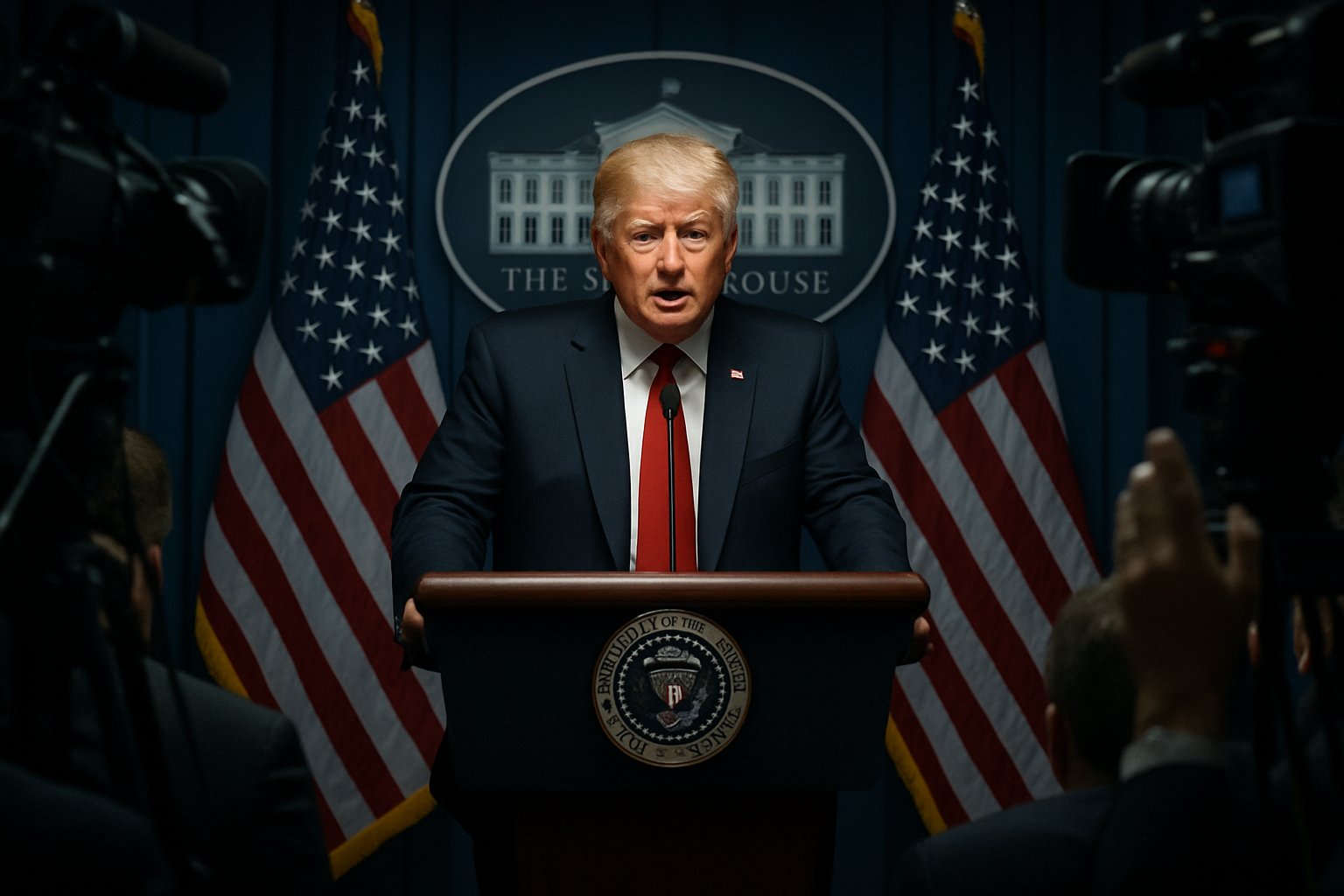
President Donald Trump declared Tuesday that the United States could end its military operations in Iran within two to three weeks, while simultaneously criticizing allies for their refusal to support the month-long conflict that has created the most dangerous international crisis since the Cold War.
Speaking to reporters at the White House, Trump said the US will be "leaving very soon" from Iran, suggesting the exit could occur "within two weeks, maybe two weeks, maybe three weeks." The comments represent a shift in timeline from earlier Pentagon assessments that operations would continue through September, far beyond the initial 4-6 week projection.
The president's remarks underscore the mounting pressure from multiple fronts: unprecedented congressional opposition, historically low public support at just 25%, and a growing rift with traditional allies who have delivered crushing rejections to US requests for military assistance.
Allied Coalition Building Failures
Trump's frustration with NATO allies has reached a boiling point after European nations, Japan, and Australia explicitly refused to send warships to help secure the Strait of Hormuz. German Defense Minister Boris Pistorius led the resistance, asking "What does Donald Trump expect a handful of European frigates to do that the powerful US Navy cannot?"
France explicitly rejected warship deployment requests, while Japan and Australia declined to send naval vessels despite their critical dependence on Middle Eastern oil trade routes. Sweden's Prime Minister Kristersson refused assistance entirely, with European leaders invoking "Iraq lessons" as justification for avoiding what they view as an American military adventure.
The president has lashed out at allies on Truth Social, declaring "We no longer 'need' or want assistance from NATO countries—IN FACT, WE NEVER NEEDED IT!" This represents a complete reversal from earlier coalition-building efforts and highlights Trump's growing isolation from traditional partners.
Economic and Humanitarian Pressures Mount
The Iran conflict has created unprecedented global disruptions that appear to be influencing Trump's timeline calculations. Over 18,000 flights have been cancelled worldwide—the most severe aviation crisis since COVID-19—while oil prices have surged past $100 per barrel with warnings they could reach $200.
"When I leave Iran, gasoline prices will drop. I will do this very soon."
— Donald Trump, President
Iran's mining of the Strait of Hormuz with an estimated 2,000-6,000 naval mines has effectively closed the waterway that handles 40% of global oil transit. The International Energy Agency has released a record 400 million barrels from strategic reserves—the largest intervention in the agency's 50-year history.
The human cost continues to mount, with Iran's Red Crescent reporting over 787 civilian casualties from US-Israeli strikes. The Pentagon has confirmed responsibility for an elementary school attack that killed 165-185 students, citing "outdated targeting data." International evacuations have reached Arab Spring 2011 levels, with Australia reporting 115,000 nationals trapped and Germany evacuating 30,000 citizens.
Operation Epic Fury's Massive Scale
Operation Epic Fury represents the largest coordinated US-Israeli military campaign since the 2003 Iraq invasion, with costs exceeding $11.3 billion in the first week alone. The operation has deployed dual aircraft carriers—the USS Gerald Ford and USS Abraham Lincoln—representing approximately one-third of the US Navy's fleet.
The conflict has expanded far beyond the Middle East, with the USS Charlotte submarine sinking the Iranian frigate IRIS Dena near Sri Lanka, killing over 80 crew members—the first enemy vessel sunk by a US submarine since World War II. First American casualties have been confirmed: three service members killed and 150 wounded, including eight in critical condition.
Iran's retaliation through "Operation True Promise 4" has systematically targeted US allies across the region. The Islamic Revolutionary Guard Corps declared "no red lines remain," striking targets in the UAE (one civilian killed), Kuwait (32 injured in airport strikes), Qatar (eight injured despite Patriot missile intercepts), and Cyprus—marking the first attack on European territory since World War II.
Diplomatic Breakdown and Regime Change Goals
The military escalation followed the complete collapse of nuclear talks in Geneva, despite achieving what Iranian Foreign Minister Abbas Araghchi called "broad agreement on guiding principles"—the most progress since the 2018 JCPOA breakdown. However, fundamental disagreements on scope proved insurmountable, with Iran excluding ballistic missiles and proxy relationships as "red lines" while the US demanded comprehensive coverage.
Trump has explicitly shifted from nuclear-focused objectives to comprehensive regime change, demanding Iran's "unconditional surrender" and claiming the right to personally choose the next Iranian leader. He has rejected the succession of Mojtaba Khamenei, son of the deceased Supreme Leader Ali Khamenei, calling him a "lightweight."
This represents the most direct assertion of American control over Iranian internal affairs since the 1979 revolution and effectively eliminates any near-term diplomatic solutions to the crisis.
Congressional and Public Opposition
Domestic pressure has intensified significantly, with Senator Richard Blumenthal expressing being "more concerned than ever" about potential ground troop deployment. The conflict faces "almost unprecedented" unpopularity for early-stage military operations, with only 25% of Americans supporting the strikes according to recent polling.
Bipartisan lawmakers are demanding comprehensive briefings on strategy, costs, and exit plans. Financial markets have emerged as what analysts call the "ultimate constraint" on escalation, with Pakistan's stock exchange suffering its largest single-day decline in history.
Nuclear Governance Crisis
The Iran crisis occurs against the backdrop of broader nuclear governance breakdown. The New START treaty expired in February 2026—marking the first time in over 50 years without US-Russia nuclear constraints. Iran continues uranium enrichment at 60% purity with over 400 kilograms of weapons-grade material, sufficient for multiple nuclear weapons if weaponized.
UN Secretary-General António Guterres has called the situation "the greatest test of multilateral cooperation in crisis management in the modern era," noting that nuclear risks are at their "highest in decades."
Looking Ahead
Trump's accelerated withdrawal timeline appears driven by multiple converging pressures: allied isolation, domestic opposition, economic disruption, and the military's own extended operational projections. However, the president's demands for Iranian "unconditional surrender" and his rejection of the new Iranian leadership suggest that significant obstacles remain to any negotiated conclusion.
The crisis has fundamentally altered international relations, demonstrating what experts call "multipolar era fragility" in crisis management. The rapid transition from promising diplomatic breakthrough to military confrontation has created a template-setting moment that will influence approaches to territorial and nuclear disputes for decades to come.
As the conflict enters its second month, the world watches whether Trump's timeline proves achievable or whether the most dangerous international crisis since the Cold War continues to escalate, with implications extending far beyond the Middle East to global energy security, nuclear governance, and the sustainability of post-World War II international order.