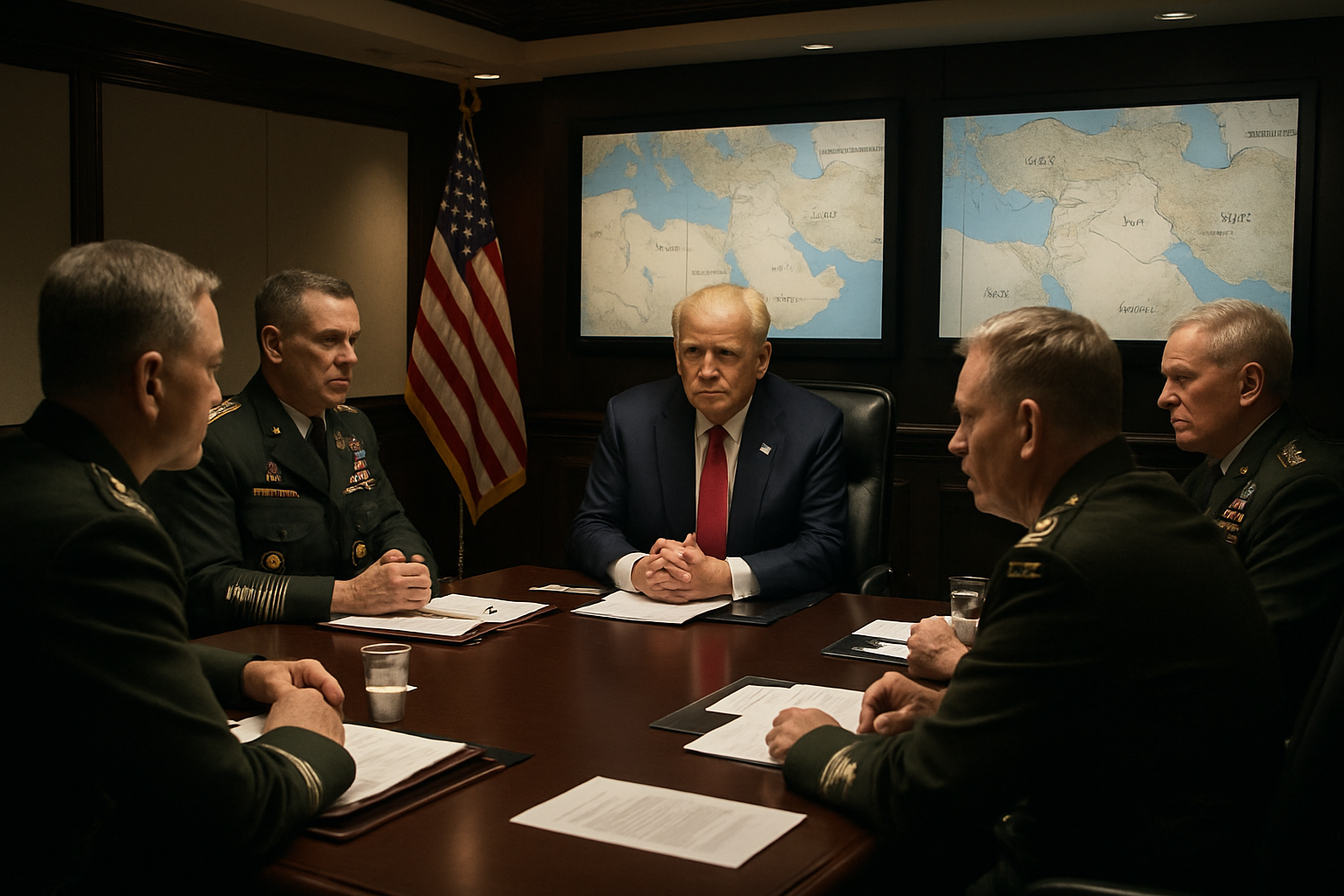
President Donald Trump outlined his comprehensive Iran war strategy as Operation Epic Fury enters its second week, demanding Iran's "unconditional surrender" while rejecting British military assistance and managing increasingly strained relationships with Kurdish forces and regional allies.
Speaking to reporters aboard Air Force One on Saturday evening, Trump declared that the United States does not need the United Kingdom's aircraft carriers for the Iran war, stating "We don't need people that join wars after we've already won!" The comment came in response to reports that Britain was preparing HMS Prince of Wales for potential deployment to the Middle East.
Strategic Military Coalition Management
The President revealed a complex strategy of selective alliance management, dismissing the importance of reported Russian intelligence sharing with Iran. "It was inconsequential if Russia has provided Iran with information to help Tehran target US military personnel and assets in the Middle East," Trump told reporters, despite the week-long conflict continuing to rage across the region.
"We don't need people that join Wars after we've already won!"
— President Donald Trump, aboard Air Force One
Trump's strategy notably excludes Kurdish involvement in the ground war, reversing his earlier position. Having previously called a Kurdish invasion from Iraq "wonderful," the President now says he doesn't want Kurdish forces to enter the Iran conflict because it is "complicated enough as it is." This represents a significant shift in his approach to regional partners and ground force deployment.
Claims of Iranian Responsibility for Civilian Casualties
In a controversial move that could complicate international relations, Trump claimed that Iran was behind the deadly strike on a school that killed dozens of students and staff. "Iran school strike was 'done by Iran,'" Trump declared, though this assertion contradicts reports suggesting US or Israeli involvement in the attack that has drawn international condemnation.
The strike on the Minab elementary school, which killed between 53-85 students and staff during regular school hours, has become a symbol of the human cost of the escalating conflict. If US involvement were confirmed, it would rank among the worst cases of civilian casualties in decades of US conflicts in the Middle East.
Assassination Plot Context Shapes Strategy
Trump's strategic approach occurs against the backdrop of a recent US court ruling that found a Pakistani man guilty of an Iran-linked plot to assassinate the President. Asif Raza Merchant was convicted of seeking to hire a hitman to kill Trump or other US officials in retaliation for the American military killing of Revolutionary Guards commander Qassem Soleimani in 2020.
The assassination plot adds a personal dimension to Trump's Iran strategy, as Merchant testified he was forced into the plot to protect his family in Tehran from Iran's Revolutionary Guards. This revelation underscores the complex web of coercion and retaliation that characterizes US-Iran relations.
Diplomatic Rejection and Isolation Strategy
Trump's war strategy includes a deliberate rejection of traditional alliance structures. Beyond dismissing British naval assistance, the President has adopted what appears to be an isolation strategy, preferring unilateral American action supported only by Israel in Operation Epic Fury.
This approach contrasts sharply with the multilateral coalitions assembled for previous major Middle East operations. Intelligence sources suggest Trump views the conflict as "already won," leading to his dismissal of offers of additional support from European allies.
Regional Power Balance Management
The President's strategy involves careful management of regional power dynamics, particularly regarding Kurdish forces. His decision to discourage Kurdish participation reflects broader concerns about post-conflict governance and regional stability. Sources close to the administration suggest Trump fears Kurdish involvement could complicate reconstruction efforts and create additional ethnic tensions.
"The conflict is complicated enough without Kurds involved, despite friendly relations."
— White House sources on Trump's Kurdish policy
Intelligence and Information Warfare
Trump's dismissal of Russian intelligence sharing with Iran as "inconsequential" reveals a strategy that minimizes the importance of foreign interference in the conflict. This approach may be designed to prevent escalation with Moscow while maintaining focus on Iran as the primary adversary.
The President's claim that Iran orchestrated the school attack suggests an information warfare component to his strategy, aimed at maintaining public support for military operations while deflecting criticism of civilian casualties.
Alliance Management Under Pressure
The rejection of British assistance represents a significant departure from traditional US-UK military cooperation. Defense analysts suggest this reflects Trump's confidence in American military capabilities and his preference for maintaining control over operational decisions without allied consultation.
The strategy appears designed to preserve American flexibility while avoiding the complications that typically arise in coalition warfare, including disagreements over rules of engagement, target selection, and post-conflict planning.
Historical Precedent and Strategic Evolution
Trump's approach to the Iran conflict reflects lessons learned from previous Middle East interventions. By limiting coalition partners and rejecting additional military assistance, the administration appears to be avoiding the coordination challenges that complicated operations in Iraq and Afghanistan.
The President's characterization of the war as "already won" suggests a strategy focused on rapid conclusion rather than prolonged occupation or nation-building efforts that characterized earlier conflicts in the region.
Global Implications and Future Trajectory
As Operation Epic Fury enters its second week, Trump's strategic approach has created both opportunities and risks. The unilateral nature of the operation allows for rapid decision-making but potentially isolates the United States from key allies who might be needed for post-conflict stability.
The rejection of Kurdish ground forces, dismissal of British naval support, and claims about Iranian responsibility for civilian casualties all point to a strategy prioritizing American control over coalition building. This approach will likely define how future Middle East conflicts are managed and may reshape traditional alliance structures for years to come.
The coming days will test whether Trump's streamlined, unilateral approach can achieve the strategic objectives of Operation Epic Fury while maintaining sufficient international legitimacy for long-term regional stability.