President Donald Trump announced Sunday that a US delegation will travel to Pakistan for renewed negotiations with Iran while threatening devastating military strikes if diplomatic talks fail, as conflicting reports emerge about Vice President JD Vance's participation due to security concerns.
In a series of Truth Social posts, Trump declared that US representatives would arrive in Islamabad on Monday evening for talks, offering what he described as "a very fair and reasonable deal" to Iran. However, the delegation's composition remained uncertain after Azerbaijan's AzerNEWS reported that Vance would not travel to Pakistan due to security concerns, contradicting earlier announcements.
Delegation Confusion and Security Concerns
The confusion over the US delegation highlights the volatile nature of the diplomatic mission. While multiple sources initially confirmed Vance would lead the talks, Trump later appeared to walk back these commitments, telling ABC News that security considerations were preventing the Vice President's participation.
According to reports from German and Greek media, the US delegation may instead be led by Special Presidential Envoy Steve Witkoff and Trump's son-in-law Jared Kushner, representing a significant downgrade from the previously announced vice-presidential level engagement.
Pakistani officials, including Prime Minister Shehbaz Sharif and Field Marshal Asim Munir, had successfully mediated previous breakthrough ceasefire negotiations in what became known as the "Islamabad Accord" framework earlier this year.
Iran's Maritime Blockade Continues
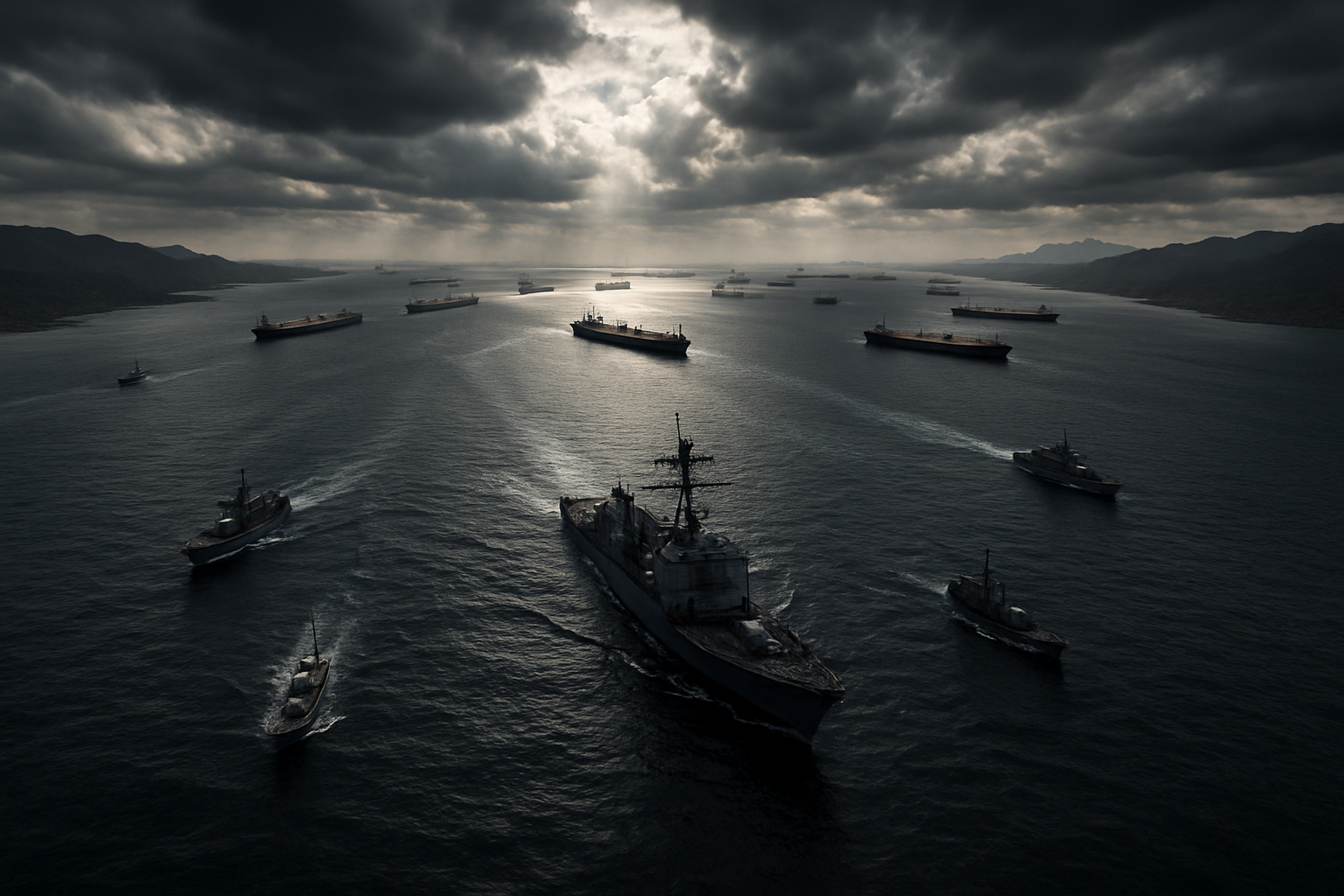
The diplomatic push comes as Iran maintains its blockade of the Strait of Hormuz, with the Islamic Revolutionary Guard Corps (IRGC) claiming "complete control" over the strategic waterway that handles approximately 40% of global oil transit. Iranian officials have demanded the US lift its naval blockade of Iranian ports before allowing normal commercial passage.
Trump accused Iran of violating previous ceasefire agreements, claiming Iranian forces "fired bullets" at French and UK-flagged vessels in the strait on Saturday. The allegations, which remain unverified, prompted Trump to declare the incident a "total violation" of ceasefire commitments.
Iran's Foreign Ministry dismissed Trump's accusations, describing the US naval blockade as "an illegal act of piracy that punishes the Iranian people" and arguing that Washington, not Tehran, was violating international agreements.
Nuclear Program Remains Central Issue
The core sticking point in US-Iran relations remains Iran's nuclear program. US officials continue to demand that Iran suspend uranium enrichment activities and abandon its stockpile of weapons-grade material, while Iranian officials, led by Foreign Minister Abbas Araghchi, have repeatedly stated that Iran "will never abandon enrichment even if war is imposed."
Iran currently maintains uranium enrichment at 60% purity levels with over 400 kilograms of weapons-grade material, according to international monitoring agencies. This quantity is sufficient for multiple nuclear weapons if weaponized, though Iran maintains its nuclear program is for peaceful purposes.
The nuclear standoff occurs against the backdrop of the February 2026 New START treaty expiration between the US and Russia, marking the first time in over 50 years that major nuclear powers operate without formal constraints.
Economic and Energy Implications
The ongoing crisis has severe implications for global energy markets. Oil prices have surged above $100 per barrel for the second time in 2026, with Brent crude reaching $106.04 and WTI climbing to $104.29. Major shipping companies including Maersk and MSC have suspended operations in the Persian Gulf, leaving over 150 tankers stranded with billions of dollars in cargo.
The International Energy Agency maintains its largest strategic oil release in 50 years, deploying 400 million barrels from emergency reserves across 32 countries to stabilize global markets. Consumer impacts are being felt worldwide, with Bangladesh implementing fuel rationing for 170 million citizens and Pakistan maintaining wartime austerity measures.
Aviation industry analysts warn of renewed flight cancellations on the scale of 18,000+ disruptions seen during previous crisis peaks, as airlines avoid Middle Eastern air corridors due to security concerns.
Regional Coalition Under Strain
The crisis continues to test the unprecedented unity among Arab Gulf states. Saudi Arabia, the UAE, Qatar, and Egypt have maintained diplomatic consensus supporting negotiated solutions, despite suffering casualties during Iranian retaliation operations earlier this year.
During previous escalations, Iranian forces targeted coalition territories, killing one person in Abu Dhabi, injuring 32 at Kuwait's airport, and wounding eight in Qatar during missile and drone attacks. Egyptian President Abdel Fattah el-Sisi has warned of "comprehensive chaos among sisterly countries" if diplomatic solutions fail.
International Response Divided
NATO allies have shown reluctance to support expanded US military operations. UK Prime Minister Keir Starmer declared Britain "will not be dragged into an Iran war," while France and Germany emphasize diplomatic approaches. Australia and Japan have declined to provide naval vessels for US operations, representing the most significant rejection of American military leadership since the 2003 Iraq War.
Only Israel has offered full support for US actions, with Prime Minister Benjamin Netanyahu pledging "close coordination" with Washington. However, Netanyahu's exclusion of Lebanon from previous ceasefire agreements created what negotiators called a "critical loophole" that contributed to earlier talks' failure.
Congressional Opposition Mounts
Domestic support for military operations has reached historically low levels, with only 25% of Americans supporting continued confrontation according to recent polls. Senator Richard Blumenthal has expressed being "more concerned than ever" about potential ground troop deployments.
Operation Epic Fury, the US military campaign against Iran, has cost $11.3 billion in its first week alone, with Pentagon officials projecting operations through September, far beyond initial timelines. Financial market pressures have become what officials describe as the "ultimate constraint" on prolonged military engagement.
Pakistan's Mediation Role
Pakistan's emergence as a crucial mediator represents a significant diplomatic innovation. The "Islamabad Accord" framework, developed by Pakistani leadership, previously achieved a temporary ceasefire just 88 minutes before Trump's deadline threats earlier this year, demonstrating middle-power diplomacy's potential to bridge major adversaries when traditional mechanisms fail.
Chinese Foreign Minister Wang Yi has expressed "full support" for Pakistan's initiative, while German officials have noted "positive signs" for continued diplomatic engagement through the Pakistani channel.
Humanitarian Concerns Mount
The Iran Red Crescent reports over 787 civilian casualties since the conflict's escalation, including a Pentagon-acknowledged elementary school strike that killed 165-185 students due to what officials called "outdated targeting data." War crimes investigations are ongoing.
International evacuations have reached levels comparable to the Arab Spring, with Australia extracting 115,000 citizens and Germany evacuating 30,000 people from the region. The European Union activated its ESTIA crisis mechanism for the first time in bloc history following Iranian drone attacks on Cyprus.
Looking Ahead
Trump's renewed diplomatic push represents what may be a final window for negotiated resolution before the crisis escalates further. The President's warning to "knock out every single power plant and every single bridge" in Iran if talks fail underscores the high stakes involved.
UN Secretary-General António Guterres has described the situation as the "greatest test of multilateral cooperation in the modern era," with implications extending far beyond the immediate US-Iran dispute to affect global energy security, nuclear governance, and international law enforcement mechanisms.
As the Monday evening deadline approaches for the US delegation's arrival in Islamabad, the world watches to see whether Pakistani mediation can once again bridge the fundamental disagreements that have prevented a lasting resolution to one of the most dangerous international crises since the Cold War.
The success or failure of these talks will likely determine whether diplomatic innovation can ultimately triumph over military confrontation in setting precedents for 21st-century conflict resolution, with implications extending decades beyond the current crisis.