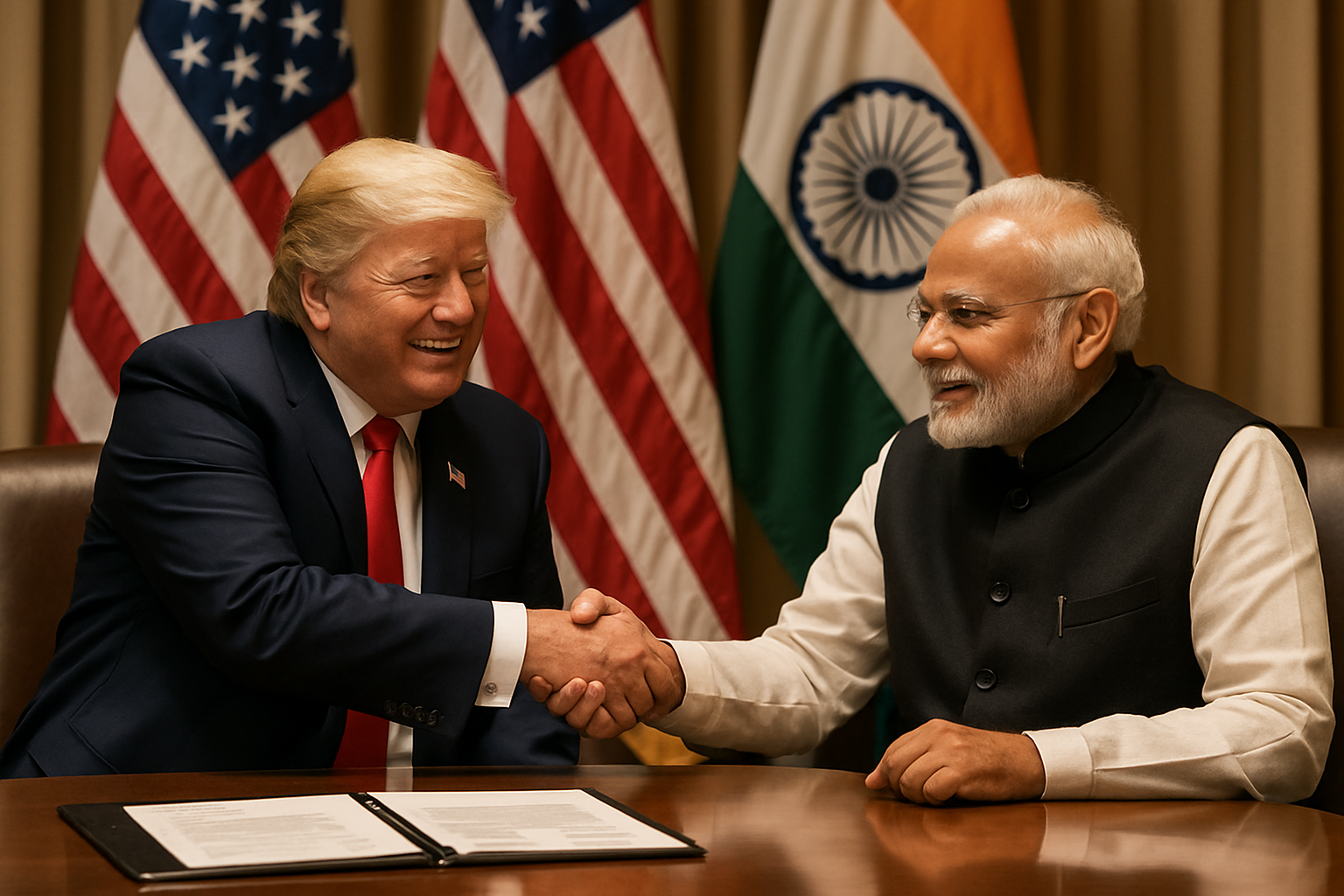
President Donald Trump announced a historic trade agreement with India on February 2, 2026, following a phone conversation with Prime Minister Narendra Modi in which the Indian leader agreed to halt Russian oil purchases and shift energy imports to the United States and potentially Venezuela.
The breakthrough deal, which Trump described as a significant step toward ending the Ukraine war, will see US tariffs on Indian goods reduced from 25% to 18%, giving India one of the most favorable trading positions with the Trump administration. In return, India has committed to eliminating all tariffs on US goods to zero percent and pledged to purchase over $500 billion worth of American products.
Key Terms of the Agreement
According to Trump's announcement on his Truth Social platform, the deal encompasses several major commitments from both nations. India will receive preferential tariff treatment, with the 18% rate being lower than those applied to Pakistan (19%) and Indonesia (19%). This positions India among the countries facing the lowest tariff rates from the Trump administration.
The most significant aspect of the agreement centers on energy security and geopolitical realignment. Modi has agreed that India will "stop buying Russian oil and purchase much more from the United States and potentially Venezuela," Trump stated. This commitment addresses a key concern for the Trump administration, which has been pressuring New Delhi for months to reduce its reliance on Russian crude oil.
"India has agreed to reduce tariffs on US goods to zero, committed to stop buying Russian crude and step up oil purchases from America, and potentially Venezuela."
— Donald Trump, US President
The energy provision is particularly significant given India's status as one of the world's largest oil importers and its continued purchases of Russian crude despite international sanctions. Trump emphasized that this move would "help end the war in Ukraine" by depriving Russia of crucial oil revenue that has been financing its military operations.
Modi's Response and Bilateral Relations
Prime Minister Modi expressed gratitude for the agreement in a post on X (formerly Twitter), thanking Trump "on behalf of the 1.4 billion people of India" for the tariff reduction. Modi described the conversation as "wonderful" and emphasized the potential benefits of cooperation between "two large economies and the world's largest democracies."
"When two large economies and the world's largest democracies work together, it benefits our people and unlocks immense opportunities for mutually beneficial cooperation," Modi stated in his social media response.
The Indian Prime Minister also highlighted Trump's leadership qualities, calling him "my dear friend" and expressing appreciation for what he termed the "wonderful announcement." This personal diplomacy appears to have played a crucial role in facilitating the agreement, with Trump citing his "respect for PM Modi" as a factor in the negotiations.
Strategic and Economic Implications
The agreement represents a significant shift in India's foreign trade policy and energy security strategy. India has historically maintained strong trade relationships with Russia, particularly in the energy sector, but this deal signals a clear pivot toward Western alignment amid ongoing geopolitical tensions.
From an economic perspective, the trade deal provides India with substantial market access benefits. With US tariffs dropping from what sources indicate was as high as 50% to just 18%, Indian exporters will gain significant competitive advantages in the American market. The agreement also removes what Trump had previously described as "penal tariffs" linked to India's Russian oil purchases.
For the United States, the deal advances multiple strategic objectives simultaneously. It weakens Russia's economic position by eliminating a major buyer of its crude oil, strengthens America's position in the global energy market, and potentially opens Venezuelan oil markets through Indian purchases.
International Response and Context
The announcement has drawn attention across multiple continents, with international observers noting the deal's potential impact on global energy markets and geopolitical alignments. European sources have followed the developments closely, particularly given the implications for Russia's energy revenue and the ongoing Ukraine conflict.
The timing of the agreement is notable, coming just days after India's Union Budget 2026-27, which allocated record amounts for defense and infrastructure spending. The trade deal appears to complement India's economic modernization efforts and its "Viksit Bharat" (Developed India by 2047) vision.
The deal also follows recent diplomatic efforts by India, including what sources describe as the "mother of all trade deals" with the European Union. This pattern suggests India is actively diversifying its trade relationships and reducing dependencies on traditional partners like Russia.
Energy Market Realignment
The energy component of the agreement represents one of the most significant aspects of the deal. India's commitment to replace Russian oil with American and potentially Venezuelan crude could reshape global energy flows and pricing dynamics. This shift comes at a time when Russia has been relying heavily on Asian markets, particularly India and China, to maintain oil export revenues despite Western sanctions.
The inclusion of Venezuela as a potential oil supplier adds another layer of complexity to the agreement. This provision could provide Venezuela with increased market access while simultaneously addressing U.S. energy export goals and reducing Russian market share.
Industry analysts suggest that the energy provisions could have immediate impacts on global oil prices and trading patterns, particularly given India's substantial energy import requirements and its role as one of the world's fastest-growing major economies.
Political and Diplomatic Significance
The agreement demonstrates the effectiveness of personal diplomacy in international relations, with Trump's relationship with Modi appearing to facilitate negotiations that might have been more challenging through traditional diplomatic channels. The deal also reinforces India's position as a strategic partner for the United States in the Indo-Pacific region and as a counterweight to Chinese influence.
From India's perspective, the agreement provides economic benefits while allowing the country to maintain its strategic autonomy in foreign relations. By securing favorable trade terms while committing to energy diversification, India appears to have balanced its economic interests with broader geopolitical considerations.
The timing of the announcement, coinciding with ongoing tensions in Eastern Europe and Middle East diplomatic initiatives, positions the deal as part of broader American efforts to isolate Russia economically while strengthening partnerships with key allies.
Implementation and Future Prospects
While the broad terms of the agreement have been announced, specific implementation timelines and mechanisms remain to be detailed. The transition away from Russian oil will likely require time for India to establish new supply chains and logistics arrangements with American and potentially Venezuelan suppliers.
The trade provisions, particularly India's commitment to eliminate tariffs on US goods entirely, will need to be implemented through legislative and regulatory processes in both countries. The scale of India's commitment to purchase over $500 billion in American products suggests a long-term transformation in bilateral trade relationships.
Industry observers will be watching closely to see how quickly the energy transition occurs and whether other major oil importers might follow India's example in reducing Russian energy purchases. The success of this agreement could serve as a model for similar deals with other strategic partners.
The India-US trade deal represents a significant milestone in both countries' foreign economic policies and could mark a turning point in global energy markets and geopolitical alignments. As implementation proceeds, the agreement's full impact on international trade, energy security, and diplomatic relations will become clearer.