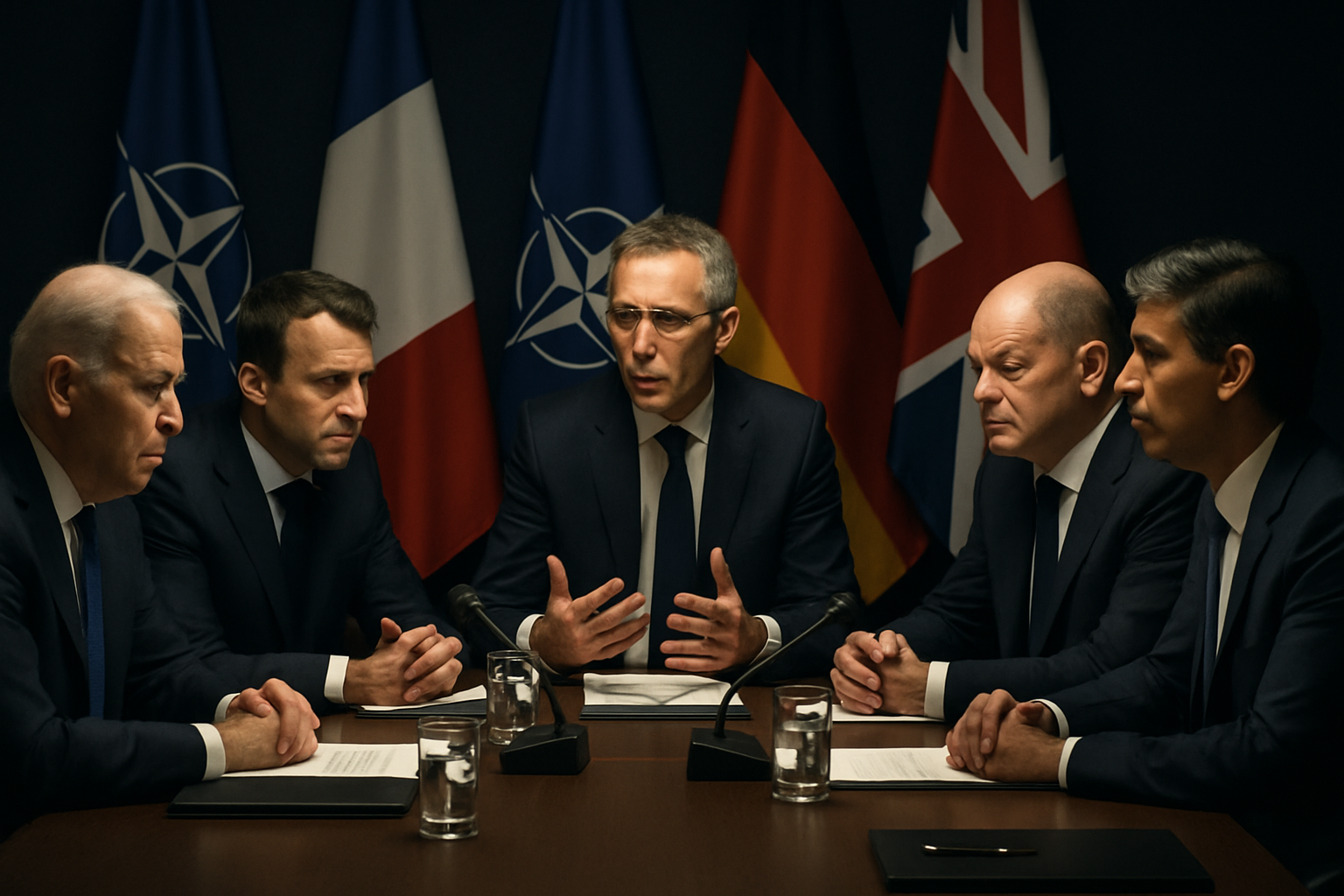
President Donald Trump is considering a dramatic restructuring of NATO that could fundamentally alter the Western alliance, including the withdrawal of American troops from Germany and implementing a "pay-to-play" model that threatens to restrict decision-making rights for countries failing to meet his ambitious defense spending targets.
According to multiple European sources, the Trump administration is exploring unprecedented changes to NATO operations that would penalize member nations not meeting the president's demand for 5% of GDP military spending – more than double the current 2% target that was only recently achieved by all 32 members for the first time in the alliance's 75-year history.
The 5% Defense Spending Ultimatum
The Telegraph reports that Trump is examining a "pay-to-play" model that could prevent countries from participating in alliance decisions, even if NATO decides to go to war. This represents a radical departure from the collective defense principles enshrined in Article 5, which has been the bedrock of transatlantic security since 1949.
The proposed changes would create a two-tiered alliance system where countries failing to meet Trump's 5% GDP target could be denied voting rights on critical security matters. Such a structure would be unprecedented in NATO's history and could effectively sideline traditional allies like Spain, which Trump has already criticized as "terrible" for refusing to support military operations in the Persian Gulf.
German Defense Minister Boris Pistorius has denounced Trump's threats against NATO members as "unacceptable," highlighting the growing tension between Washington and European capitals over burden-sharing arrangements that have defined alliance politics for decades.
German Troop Withdrawal Under Consideration
Perhaps most significantly, Trump administration officials are actively considering the withdrawal of US forces from Germany, according to sources in Bosnia and Herzegovina and Cyprus. This would mark the end of an eight-decade American military presence that has anchored European security architecture since World War II.
Currently, the United States maintains approximately 35,000 troops in Germany across multiple installations, including major bases at Ramstein and Stuttgart that serve as crucial logistics and command hubs for operations across Europe, Africa, and the Middle East. A withdrawal would represent the most dramatic realignment of American military posture in Europe since the end of the Cold War.
The timing of these considerations is particularly sensitive, occurring amid the most dangerous international crisis since the Cold War, with ongoing conflicts in Ukraine and the Middle East straining alliance unity and resources.
Alliance Fractures and European Response
The proposed changes come as NATO has achieved a historic milestone – all 32 members reaching the 2% GDP defense spending target for the first time since the goal was established following Russia's 2014 annexation of Crimea. Combined alliance spending reached $1.4 trillion in the most recent reporting period, representing a 6% increase from the previous year.
However, Trump's demands go far beyond this achievement. Poland currently leads alliance spending at 4.3% of GDP, while the final five nations to reach the 2% target – Spain, Portugal, Albania, Belgium, and Canada – would face enormous fiscal pressure to more than double their military budgets to meet the new 5% threshold.
European allies have responded with a mixture of defiance and concern. Recent events have demonstrated both the alliance's resilience and its vulnerabilities. When Iranian forces attacked British sovereign bases in Cyprus – the first attack on European territory since World War II – NATO allies coordinated an unprecedented naval response within hours, including French, British, Italian, Spanish, Greek, and Dutch vessels.
Constitutional and Legal Implications
The proposed "pay-to-play" model raises fundamental questions about NATO's founding principles and legal framework. Article 5 of the North Atlantic Treaty states that an attack against one member is considered an attack against all, without conditions based on defense spending levels. Implementing spending-based restrictions on decision-making rights would likely require treaty amendments and ratification by all member nations' parliaments.
Legal experts note that such changes could violate the alliance's core principle of collective defense and democratic decision-making. The proposal essentially creates a system where military capability determines political voice, potentially undermining smaller allies who have historically punched above their weight in alliance counsels.
Strategic Autonomy and Nuclear Implications
Trump's demands are accelerating European discussions about strategic autonomy that were already underway. German Chancellor Friedrich Merz has been conducting unprecedented direct negotiations with French President Emmanuel Macron about expanding France's nuclear deterrent beyond national scope – the first serious European nuclear cooperation talks since the Cold War ended.
Sweden has abandoned its nuclear-free policy by announcing willingness to host nuclear weapons during wartime, while Finland is lifting its comprehensive nuclear weapons ban to meet NATO membership requirements. These moves reflect growing European concerns about American security guarantee reliability amid Trump's threats to reduce alliance commitments.
France announced in March 2026 that it will significantly expand its nuclear arsenal (currently approximately 290 warheads) and establish unprecedented European cooperation in nuclear deterrence exercises, with eight countries agreeing to participate including Germany, Poland, Finland, and Sweden.
Economic and Political Pressures
The 5% GDP target would create enormous fiscal pressure on alliance members. For most European countries, this would represent the largest peacetime military spending increase in modern history. Germany, for instance, would need to increase defense spending by approximately €100 billion annually – roughly equivalent to its entire federal education budget.
Congressional sources indicate that domestic political support for Trump's approach is mixed. While Republicans generally support increased burden-sharing, the prospect of abandoning long-standing military partnerships has raised concerns among defense hawks who value forward deployment capabilities and alliance interoperability.
The proposals also come as the alliance faces its most complex security environment since the Cold War, with simultaneous challenges from Russia in the Arctic and Eastern Europe, China's growing global influence, and ongoing conflicts in the Middle East that have already strained alliance unity.
Historical Context and Precedent
The current tensions echo historical debates about burden-sharing that have persisted throughout NATO's existence. However, the scale and specific nature of Trump's proposals are unprecedented. Previous administrations have pushed for increased European defense spending, but none have proposed fundamental changes to decision-making structures or threatened wholesale troop withdrawals from key allies.
The timing is particularly significant given recent achievements in alliance burden-sharing. European defense industrial cooperation has accelerated dramatically, with arms imports tripling since 2021 and Germany becoming the fourth-largest global weapons exporter, surpassing China. Estonia has established the first regional HIMARS maintenance center, while the UK has revealed four operational maintenance, repair, and overhaul facilities in Ukraine.
Regional Security Implications
Any US troop withdrawal from Germany would have cascading effects across European security architecture. German installations serve as critical logistics hubs for NATO operations extending from the Arctic to Africa. The Ramstein Air Base alone coordinates air mobility operations across three continents, while Stuttgart hosts the headquarters for US European and African Commands.
The proposals come as the alliance has launched its most comprehensive Arctic security initiative since the Cold War, with the NATO Arctic Sentry mission addressing a 23% increase in Russian military activity since Finland and Sweden joined the alliance. UK forces are doubling their presence in Norway to 2,000 troops, while Sweden deploys Gripen jets for Greenland exercises.
Alliance Future and Global Implications
The outcome of these negotiations will likely determine NATO's trajectory for decades. Success in implementing Trump's vision could create a more financially robust but potentially fragmented alliance, while failure could accelerate European strategic autonomy initiatives and reduce American influence in European security affairs.
The proposals represent a fundamental test of whether the alliance can adapt to 21st-century challenges while maintaining the unity and democratic principles that have defined its success. European allies are increasingly demonstrating their ability to coordinate military responses independently, as evidenced by their rapid reaction to the Cyprus crisis.
As Secretary-General Mark Rutte noted when announcing the historic achievement of all members meeting the 2% target, the alliance has demonstrated "unprecedented resources for sustained deterrence and defense capabilities preserving peace through strength." Whether this foundation can withstand the pressure of Trump's 5% demand while maintaining alliance unity remains the critical question facing Western security architecture.
The coming months will test whether NATO's institutional resilience can accommodate radical restructuring or whether the alliance will face its most serious existential crisis since the Suez Crisis of 1956. The stakes extend far beyond budget numbers to the fundamental question of how democratic nations coordinate defense in an era of great power competition and emerging global threats.