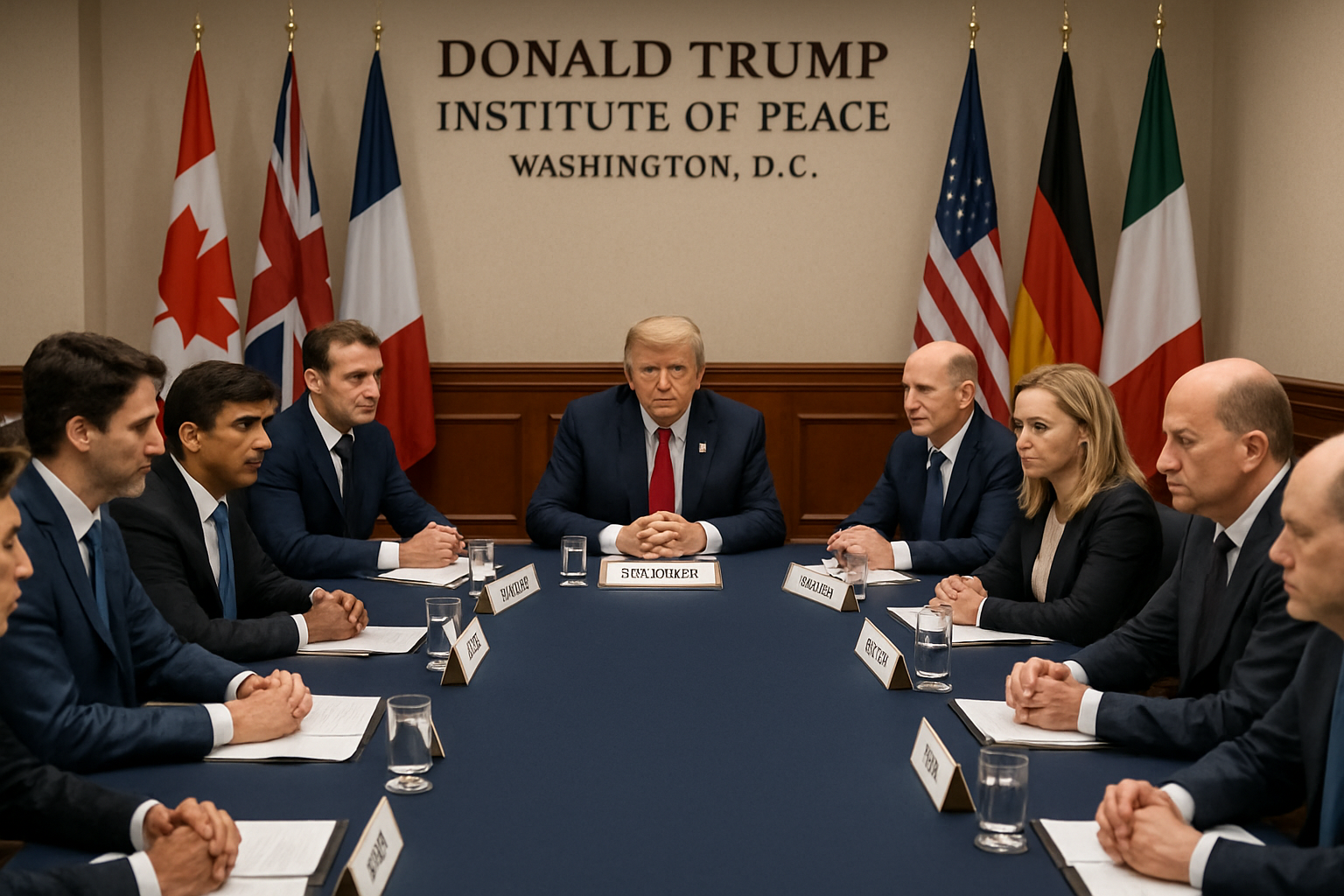
President Donald Trump announced Sunday that member states of his newly established Peace Council have pledged over $5 billion for Gaza reconstruction and humanitarian aid, marking the most significant international funding commitment for the region in recent years.
The announcement, made via Trump's Truth Social platform, confirmed that the formal pledge will be unveiled at the inaugural Peace Council meeting scheduled for February 19, 2026, at the Donald Trump Institute of Peace in Washington, D.C. The commitment represents a dramatic escalation in international involvement in Gaza reconstruction efforts.
"On February 19, 2026, I will once again be joined by the Board of Peace members at the Donald J. Trump Institute of Peace in Washington, D.C., where we will announce that member states have pledged more than $5 BILLION for humanitarian and reconstruction efforts in Gaza," Trump wrote on his social media platform.
International Stabilization Force Commitment
Beyond the financial commitment, Trump revealed that Peace Council members have also pledged "thousands of personnel" to join an International Stabilization Force planned for deployment in the Gaza Strip. This military component represents an unprecedented international intervention in the region's security arrangements.
"Member states have pledged more than $5 billion dollars toward the Gaza humanitarian and reconstruction efforts, and have committed thousands of personnel to the International Stabilisation Force and local police to maintain security and peace for Gazans."
— President Donald Trump
The dual commitment of financial resources and personnel deployment suggests a comprehensive approach to Gaza's post-conflict stabilization, combining immediate humanitarian relief with long-term security guarantees.
Peace Council Framework and Membership
The Peace Council, which Trump has described as potentially "the most consequential International Body in History," represents his administration's departure from traditional UN frameworks toward what officials term a "business approach" to conflict resolution. The initiative emerged from conceptual discussions at the January 2026 World Economic Forum in Davos.
According to multiple diplomatic sources, the Council comprises 27 member nations, with Hungarian Prime Minister Viktor Orbán confirmed as a key participant. The February 19 meeting will take place one day after Trump's scheduled bilateral meeting with Israeli Prime Minister Benjamin Netanyahu, highlighting the coordinated diplomatic calendar.
The initiative has attracted both support and skepticism from international observers. While some European officials support diplomatic innovation, others privately express concerns about undermining established international institutions and frameworks.
Gaza Context and Ongoing Challenges
The Peace Council's Gaza initiative comes amid persistent challenges to the October 2025 ceasefire agreement. According to Palestinian sources, over 1,600 systematic violations have been documented since the truce began, resulting in 573+ Palestinian deaths and 1,553 injuries.
The Rafah crossing, crucial for humanitarian access, continues to operate under severe restrictions. Only 27 Palestinians crossed on the reopening day versus the planned 200 daily quota, with Hamas condemning what they term "systematic harassment" by Israeli security forces. Approximately 20,000 Palestinians still await medical evacuation.
Gaza's Civil Defense has completely shut down due to fuel shortages, hampering emergency response capabilities. The total Gaza death toll has reached 71,800 according to local health authorities, with infrastructure devastation requiring massive international reconstruction efforts.
Regional and International Response
The Peace Council initiative has received mixed international reactions. Eight Arab nations—Saudi Arabia, Jordan, Egypt, UAE, Qatar, Indonesia, Pakistan, and Turkey—had previously condemned ceasefire violations, with some expressing cautious support for innovative peace-building approaches.
Over 400 EU diplomats have called for increased pressure on Israeli authorities regarding ceasefire compliance, while a European Left Coalition petition against EU-Israel partnerships has exceeded 400,000 signatures. The Organization of Islamic Cooperation (OIC) has condemned what it terms "continuing massacres" in Gaza.
European observer nations have expressed constitutional concerns about the initiative. Italy's Prime Minister Giorgia Meloni confirmed participation as an observer after resolving initial constitutional issues. Cyprus President Nikos Christodoulides described the invitation as "particularly important" and will highlight Gaza reconstruction plans during the summit.
Hamas Response and Demilitarization Demands
The Peace Council's effectiveness faces significant obstacles, particularly Hamas's categorical rejection of disarmament demands. In a February 8 policy statement in Doha, Hamas leader Khaled Meshaal declared that armed resistance would continue "while there is occupation," describing disarmament as an "unacceptable" demand.
"Criminalizing resistance, weapons and those who carried it out" is unacceptable, Meshaal stated, arguing that resistance represents a "right of peoples under occupation." This position directly challenges traditional post-conflict demilitarization models typically required for international reconstruction aid.
The organization maintains an estimated 20,000 fighters and significant weapons stockpiles despite the ceasefire, complicating international efforts to establish sustainable security arrangements necessary for reconstruction efforts.
Broader Diplomatic Context
The Peace Council initiative operates within a complex broader diplomatic landscape. Trump's administration is simultaneously managing Iran nuclear negotiations, Ukraine-Russia peace talks with a June 2026 deadline, and various Middle Eastern diplomatic challenges.
The timing is particularly significant given the expiration of the New START treaty between the US and Russia on February 5, creating the first period in over 50 years without nuclear arms control agreements between the superpowers. This nuclear governance crisis adds urgency to diplomatic initiatives across multiple conflict zones.
Energy Secretary Chris Wright's historic visit to Venezuela, resulting in comprehensive energy cooperation agreements, demonstrates Trump's broader strategy of combining economic incentives with diplomatic pressure—what some analysts term the "Corolario Trump" or 21st-century Monroe Doctrine update.
Implementation Challenges and Timeline
The success of the $5 billion commitment faces several implementation challenges. The ongoing ceasefire violations threaten to undermine donor confidence, while Hamas's rejection of disarmament complicates security arrangements necessary for large-scale reconstruction.
Traditional post-conflict reconstruction models require stable security environments and demilitarized territories. The Gaza situation, with ongoing resistance to demilitarization and systematic ceasefire violations, presents unprecedented challenges for implementing international reconstruction programs.
The February 19 summit will need to address these fundamental obstacles while maintaining the political unity necessary for sustained international engagement. The presence of 27 member nations suggests broad international interest, but converting pledges into operational programs requires overcoming significant practical and political barriers.
Strategic Implications
The Peace Council Gaza initiative represents a critical test of Trump's "business approach" to international diplomacy. Success could provide a template for resolving complex territorial and humanitarian crises through leader-driven initiatives outside traditional multilateral frameworks.
However, failure could undermine confidence in alternative diplomatic approaches and potentially accelerate military solutions to ongoing conflicts. The initiative's impact extends beyond Gaza, potentially influencing approaches to the Ukraine conflict, Middle East tensions, and broader international crisis management.
The $5 billion pledge, if successfully implemented, would represent one of the largest international reconstruction commitments in recent history, potentially transforming Gaza's infrastructure and economic prospects while testing innovative conflict resolution mechanisms.
As delegations from over 20 countries prepare for the Washington summit, the international community faces a defining moment in 21st-century diplomacy—whether leader-driven peace initiatives can succeed where traditional frameworks have struggled, and whether economic incentives can overcome deep-rooted political and security challenges.