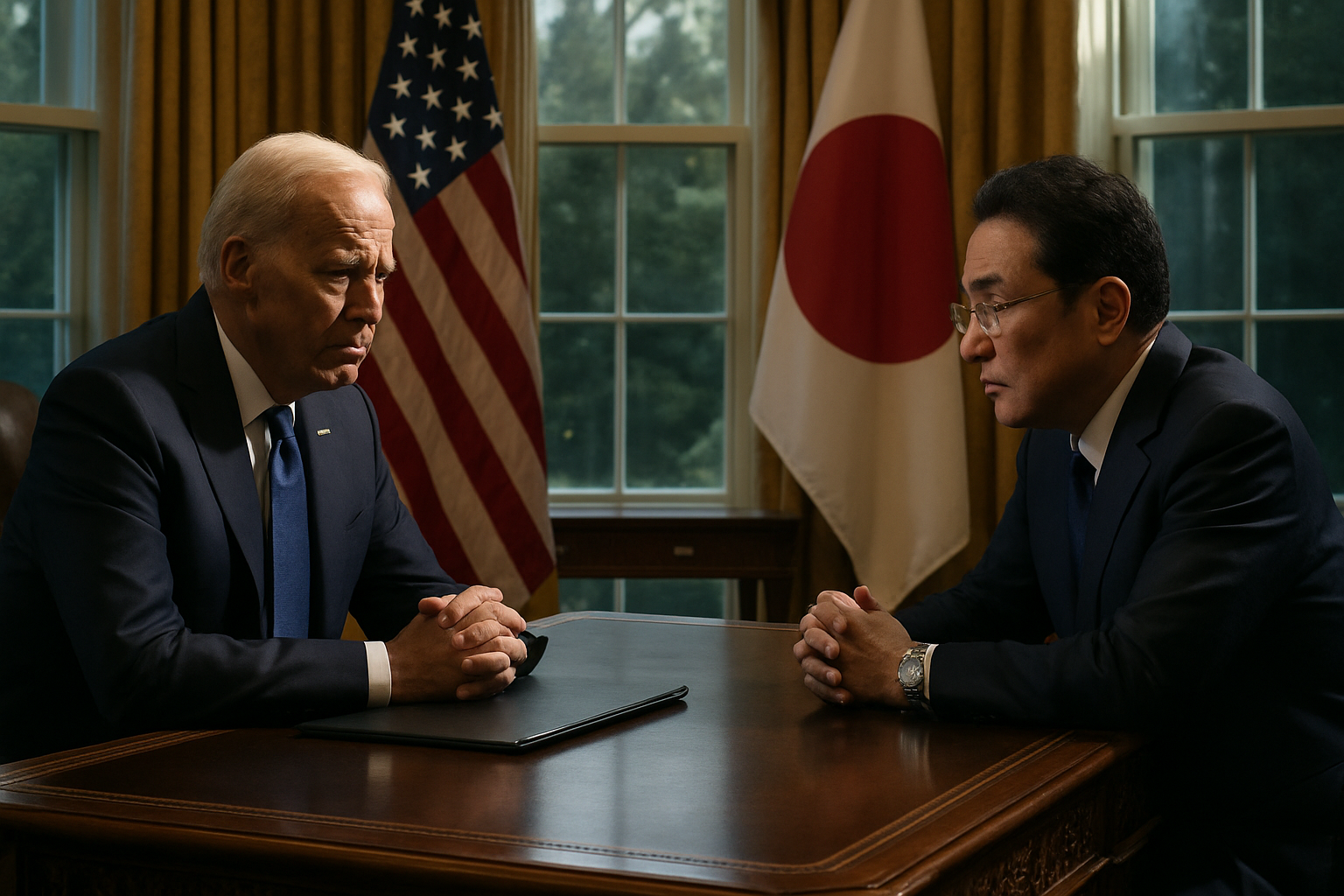
President Donald Trump's comparison of recent U.S. strikes on Iran to Japan's 1941 attack on Pearl Harbor has triggered a diplomatic crisis with one of America's closest allies, as Japanese officials and citizens express shock over the historically insensitive remarks made during a critical White House meeting.
The controversial comments came during Thursday's Oval Office meeting with Japanese Prime Minister Sanae Takaichi, when Trump was asked why the United States had not consulted allies before launching strikes against Iran. "We wanted surprise. Who knows better about surprise than Japan?" Trump said, directly referencing the December 7, 1941 attack that killed over 2,400 Americans and drew the United States into World War II.
The Pearl Harbor comparison has sent shockwaves through Japan, with citizens across the country expressing outrage over what many perceive as a deliberate insult to a longstanding ally. According to multiple international sources, the Japanese delegation was visibly stunned by the president's remarks, with Prime Minister Takaichi appearing to stiffen during the joint press conference.
Historical Context and Diplomatic Fallout
The Pearl Harbor reference touches the most sensitive point in U.S.-Japan relations despite the countries' post-war alliance transformation. The 1941 surprise attack fundamentally changed the course of World War II and remains one of the most traumatic events in American history, making Trump's casual invocation particularly inflammatory.
People across Japan have recoiled in shock over Trump's comments, with many viewing the incident as deeply disrespectful to a nation that has been a crucial ally for decades. The timing of the remarks—during ongoing tensions over Iran policy and while seeking Japanese cooperation in Middle East security—has only amplified the diplomatic damage.
"This represents the most provocative diplomatic statement of the current crisis,"
— Senior U.S. Official, speaking anonymously
Despite the controversial nature of Trump's comments, Prime Minister Takaichi demonstrated remarkable diplomatic restraint, continuing with planned meetings and issuing joint statements. Her professional handling of the situation has drawn praise domestically, with Japanese observers noting her ability to maintain alliance commitments while managing the historical sensitivities involved.
Broader Context of Iran Crisis
The Pearl Harbor comparison came amid the most dangerous international crisis since the Cold War, as Trump has been seeking international support for military operations against Iran. The president has demanded that allies including Japan contribute naval vessels to secure the Strait of Hormuz, through which 40% of global oil transit passes.
Japan has declined Trump's requests for military support despite its significant energy vulnerabilities—the country depends on the Middle East for 95% of its oil imports, with 70% transiting through the Strait of Hormuz. This economic dependence makes Japan's refusal to provide military assistance particularly notable, suggesting the depth of concern over Trump's approach.
The crisis has emerged from the complete breakdown of nuclear diplomacy with Iran, despite earlier progress in Geneva talks that achieved "broad agreement on guiding principles." Iran continues uranium enrichment at 60% purity—approaching weapons-grade levels—while maintaining that ballistic missiles and regional proxy activities remain "red lines" excluded from nuclear negotiations.
Alliance Strain and European Response
Trump's Pearl Harbor comments reflect a broader pattern of tensions with traditional allies during the Iran crisis. European partners including Germany, France, and the United Kingdom have all refused military support for Iran operations, with German Defense Minister Boris Pistorius leading resistance by asking, "What does Donald Trump expect a handful of European frigates to do that the powerful U.S. Navy cannot?"
The rejection by allies represents the most comprehensive rebuff of American military leadership since the Iraq War. Even as European nations refuse to join Gulf operations, they have demonstrated unprecedented unity in defending their own territory—responding swiftly when Iranian drones struck RAF Akrotiri in Cyprus, the first attack on European soil since World War II.
This selective cooperation highlights European frustration with what they view as Trump's optional war rather than a defensive necessity. NATO allies have struggled to define their role in a conflict many perceive as an American military adventure rather than a collective security issue.
Economic and Strategic Stakes
The diplomatic rift comes as the Iran crisis has created unprecedented global disruptions. Oil prices have surged past $100 per barrel for the first time since 2014, while over 18,000 flights have been cancelled worldwide—the most severe aviation disruption since COVID-19. The International Energy Agency has released 400 million barrels from strategic reserves, the largest intervention in the agency's 50-year history.
Iran has effectively closed the Strait of Hormuz by deploying thousands of naval mines, stranding over 150 tankers worth billions of dollars. This has exposed the fundamental vulnerability of global supply chains dependent on the 21-mile waterway, prompting calls for restructuring energy architecture to reduce single-point-of-failure risks.
For Japan specifically, the energy crisis has forced the first strategic petroleum reserve deployment since the 2011 Fukushima disaster, releasing 80 million barrels as part of international efforts to stabilize markets. Natural gas prices have increased 24% in Europe and 78% in the United States, creating inflationary pressures worldwide.
Congressional and Domestic Opposition
The Pearl Harbor controversy has intensified domestic criticism of Trump's Iran policy, with bipartisan lawmakers demanding answers about strategy, costs, and the risk of ground troop deployment. Operation Epic Fury has already cost $11.3 billion in its first week, far exceeding initial projections and timelines.
Public support for the Iran conflict remains at historically low levels, with only 25% of Americans backing the military action—what experts describe as "almost unprecedented" opposition for early-stage operations. This domestic skepticism, combined with international isolation, creates significant political constraints on further escalation.
"I am more concerned than ever about boots on the ground,"
— Senator Richard Blumenthal, after classified briefings
The financial markets have emerged as another constraint, with analysts describing economic volatility as the "ultimate limitation" on prolonged military action. Pakistan's stock exchange recorded its largest single-day decline in history, while supply chain disruptions affect industries from automotive to electronics worldwide.
Nuclear Governance and Global Implications
The Pearl Harbor incident occurs against the backdrop of a broader nuclear governance crisis. The New START treaty expired in February 2026, marking the first time in over 50 years without U.S.-Russia nuclear constraints. Combined with China's nuclear expansion and Iran's continued enrichment activities, UN Secretary-General António Guterres has warned that nuclear risks are at their "highest in decades."
This crisis represents a template-setting moment for 21st-century international relations, testing whether diplomatic solutions can resolve complex security challenges or whether military confrontation becomes the preferred approach. The rapid transition from diplomatic breakthroughs to military escalation demonstrates the fragility of crisis management in a multipolar era.
Historical Significance and Future Implications
March 2026 may be remembered as a watershed moment in international relations, determining whether multilateral cooperation can manage security challenges or whether Western alliance fragmentation accelerates during critical moments. The success or failure of diplomatic crisis management will influence approaches to nuclear disputes, territorial sovereignty enforcement, and conflict resolution for decades.
Trump's Pearl Harbor comparison, while shocking, reflects deeper challenges in maintaining alliance unity when military actions echo sensitive historical parallels. The incident demonstrates how historical memory and contemporary security cooperation intersect, potentially complicating future diplomatic effectiveness when international cooperation is most needed.
As the crisis continues, the international community faces unprecedented tests of multilateral cooperation. The outcome will establish precedents for nuclear proliferation prevention, territorial sovereignty enforcement, and the credibility of diplomatic versus military solutions in an increasingly complex global landscape.
The stakes extend far beyond the immediate participants, affecting global energy security, nuclear governance mechanisms, and the post-World War II international order. How world leaders navigate these challenges will shape international relations and conflict resolution approaches for generations to come.