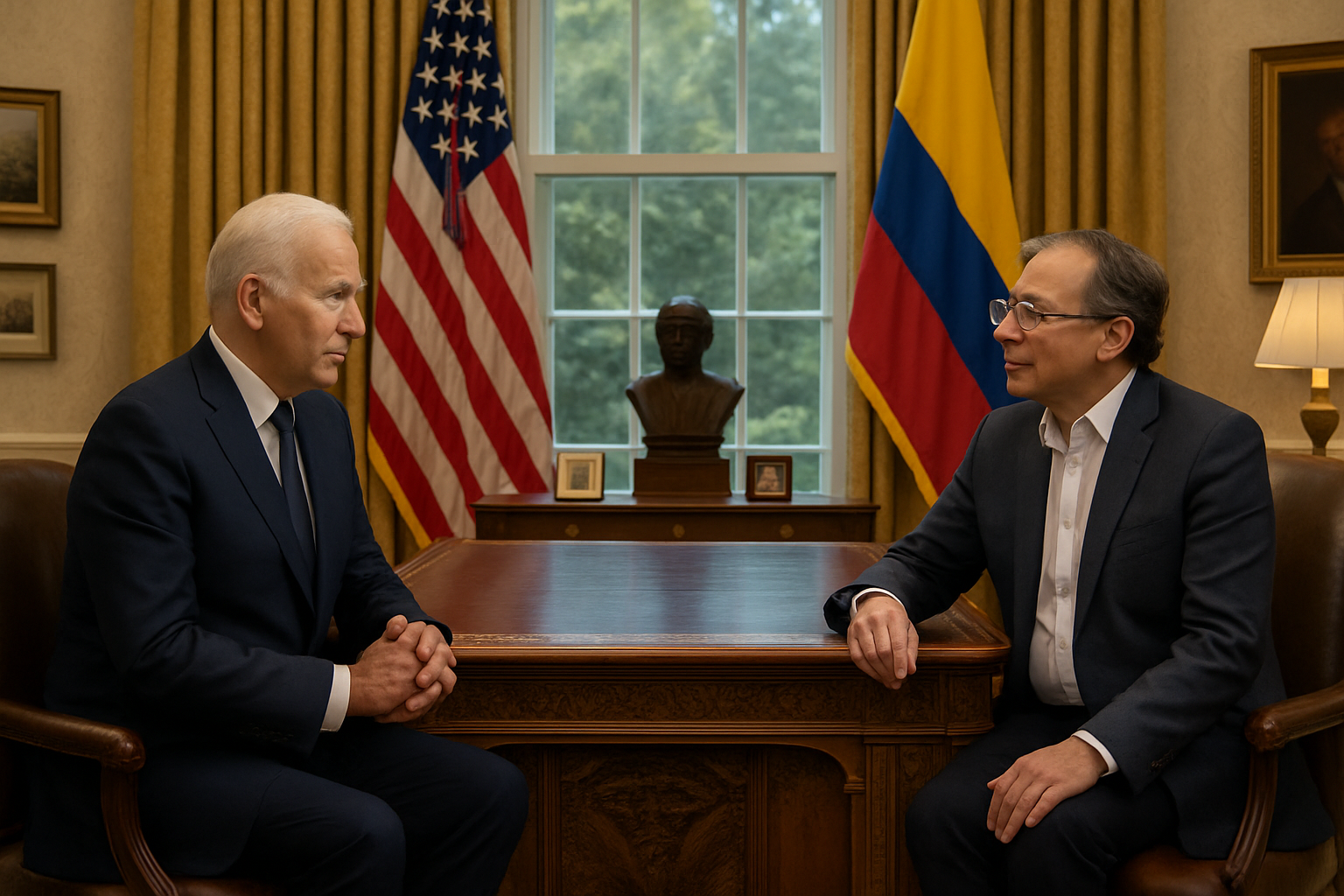
US President Donald Trump and Colombian President Gustavo Petro held their first face-to-face meeting at the White House on February 3, 2026, after nearly a year of escalating diplomatic tensions over immigration policies, drug enforcement, and trade disputes.
The two-hour private meeting in the Oval Office, which began at 10:53 AM and concluded at 1:03 PM Washington time, marked a dramatic shift from the public feuding that had characterized US-Colombia relations throughout 2025 and early 2026. The encounter was conducted behind closed doors with no press access, though both administrations released carefully choreographed images of the leaders seated together.
From Online Feuds to Diplomatic Dialogue
The meeting represented a remarkable turnaround for two leaders who had engaged in bitter public exchanges on social media platforms. Trump had previously accused Petro of being a "narcotraficante" (drug trafficker), while the Colombian leader had criticized Trump's immigration enforcement tactics and broader foreign policy approach toward Latin America.
The diplomatic breakthrough was evidenced by Trump's personal gesture of signing a copy of his 1987 book "The Art of the Deal" with the inscription "Gustavo: Un gran Honor. Amo a Colombia" (Gustavo: A great Honor. I love Colombia). Additionally, Trump presented Petro with a photograph of their handshake, writing "You are great" on the image.
"You are great," Trump wrote to Gustavo Petro as he signed a copy of his 1987 book Art of the Deal.
— According to photos posted by the Colombian presidency
Key Issues on the Agenda
According to multiple sources familiar with the discussions, the meeting centered primarily on counter-narcotics cooperation. A pamphlet visible in photographs held by one of Petro's aides read "COLOMBIA: America's Ally against Narcoterrorists," signaling the Colombian administration's attempt to reframe the relationship around shared security concerns.
The timing of the meeting was particularly significant, coming as Petro prepares to leave office in August 2026. The Colombian president faces domestic political challenges while seeking to stabilize relations with the United States during his final months in power.
Vice President JD Vance was also present during portions of the meeting, underscoring the administration's commitment to high-level engagement with Colombia despite previous tensions.
Absence of Traditional Protocol
Notably absent from the encounter were the typical ceremonial elements of a presidential visit. Petro was not received with military honors, there was no honor guard, and no formal joint press conference was held. This streamlined approach suggested both sides prioritized substance over symbolism in their attempt to reset relations.
The meeting format allowed both leaders to engage in candid discussions without the pressure of public statements that had previously escalated tensions. The cordial atmosphere was evident from the exchange of gifts and the leaders' tour of the "presidents' corridor" in the White House.
Regional Implications
The diplomatic rapprochement comes at a critical time for US-Latin American relations, as the Trump administration pursues broader regional initiatives including ongoing negotiations with Venezuela and pressure campaigns against Cuba. Colombia's strategic importance as a key ally in counter-narcotics efforts and regional stability makes the relationship crucial for both nations.
The meeting also occurs amid broader geopolitical tensions, with Trump simultaneously engaging in high-stakes diplomacy with Iran and managing the ongoing conflict in Ukraine. The administration's ability to compartmentalize these various diplomatic tracks while maintaining focus on Latin American partnerships demonstrates the strategic priority placed on the Western Hemisphere.
Looking Forward
While no immediate policy announcements emerged from the meeting, the tone shift represents a significant development. Both administrations signaled their commitment to working collaboratively on shared challenges, particularly in addressing drug trafficking networks that affect both countries.
The encounter sets the stage for potential cooperation during Petro's remaining months in office and establishes a framework for future US engagement with Colombia's next administration. The personal rapport evidently established between the two leaders could prove valuable in addressing ongoing regional challenges.
International observers noted the meeting as evidence of Trump's pragmatic approach to diplomacy, prioritizing strategic interests over ideological differences. The successful conclusion of the talks without major incident also demonstrates both leaders' capacity for diplomatic engagement despite their history of public disagreements.