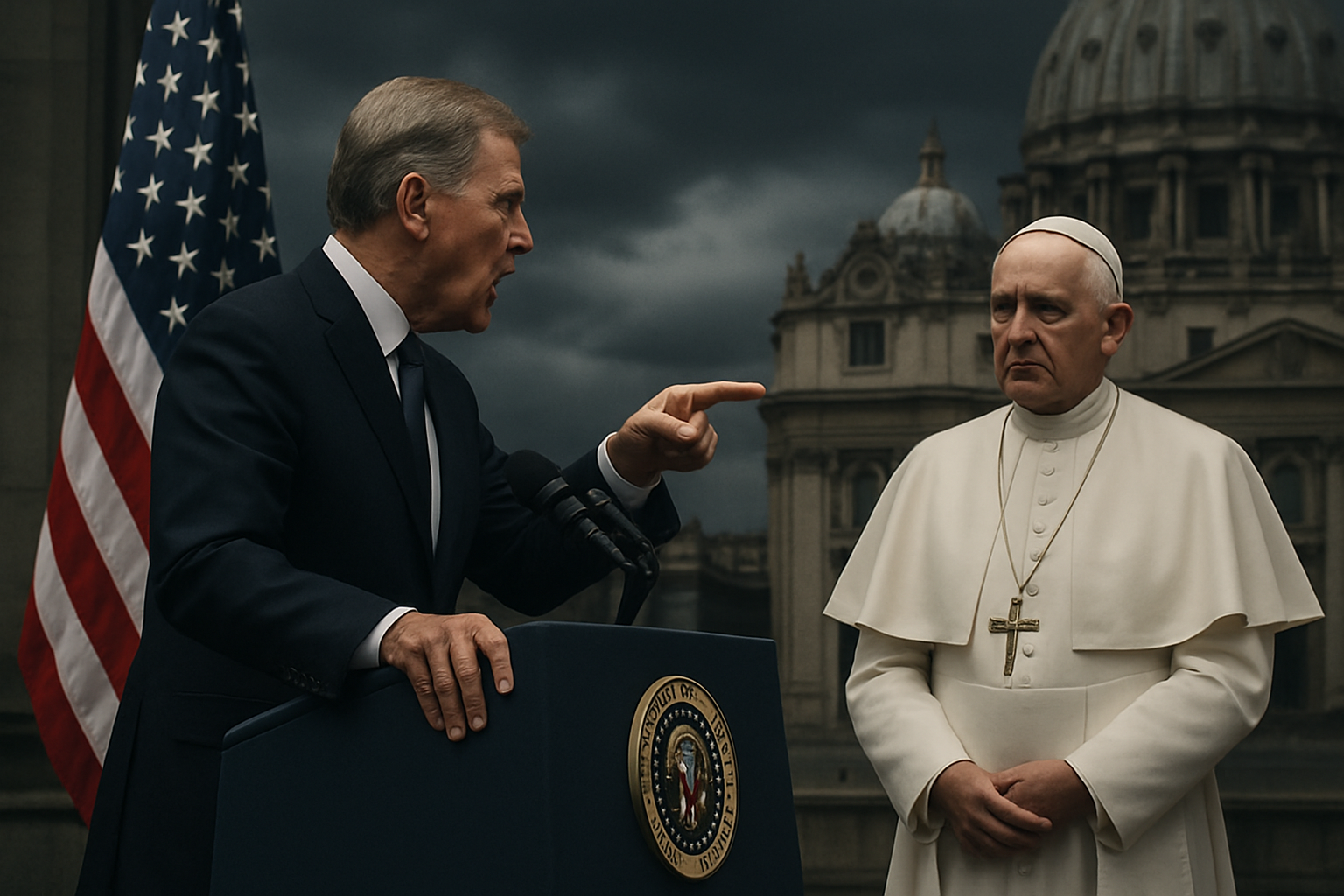
A historic diplomatic feud has erupted between President Donald Trump and Pope Leon XIV, with the first American pontiff declaring he has "no fear" of the Trump administration while vowing to continue speaking out against war despite unprecedented presidential criticism.
The confrontation represents the most direct attack on a pope by an American president in modern history, fundamentally reshaping US-Vatican relations as the world's first American pope confronts his home country's leader over matters of war and peace.
Vatican Stands Firm Against Presidential Attack
Speaking aboard the papal plane en route to Algeria for a historic visit, Pope Leon XIV delivered his strongest response yet to Trump's Sunday attacks, stating: "I am not a politician, and I have no intention to debate with [Trump]. The message is the same: to promote peace." The pontiff emphasized his commitment to peace advocacy, declaring, "I have no fear of the Trump administration and no fear of loudly proclaiming the Gospel message, because that is what I am here for."
The papal response came after Trump launched an unusually sharp attack via Truth Social, calling the Pope "WEAK on Crime, terrible for Foreign Policy" and posting AI-generated images depicting the president as a Christ-like figure. Vatican sources confirm this marks a "fundamental departure from traditional Vatican protocols" as the first American pope confronts American presidential authority over moral leadership.
Unprecedented Escalation in US-Vatican Relations
Trump's criticism escalated from frustration with the Pope's consistent calls for peace amid the ongoing Iran conflict. The president explicitly rejected the pontiff's stance, stating he's "not a fan" of Pope Leon XIV and demanding the Vatican focus on religious rather than political matters. The attacks represent what Vatican experts describe as "the most direct assault on papal authority by any world leader in decades."
The feud has exposed deep philosophical divisions between Trump's military approach to international conflicts and Pope Leon XIV's unwavering peace advocacy. Since his election in May 2025, the American-born pontiff has evolved from expressing "deep concern" about global conflicts to delivering increasingly forceful condemnations of warfare, including his Easter message calling on leaders to "lay down weapons" and his Palm Sunday declaration that God rejects leaders with "hands full of blood."
"This is our God: Jesus, King of Peace, who rejects war, whom no one can use to justify war. [Jesus] does not listen to the prayers of those who wage war, but rejects them."
— Pope Leon XIV, Palm Sunday Mass
International Support for Vatican Position
The papal stance has garnered significant international support, with Iranian President Pezeshkian condemning Trump's "insult to Pope" as unacceptable for "any free person." Maltese Archbishop Scicluna expressed concern over the "unrestrained and unjustifiable attack" on the Catholic Church's leader, while Italian Prime Minister Giorgia Meloni called Trump's criticism "unapproved."
European leaders have increasingly referenced papal peace appeals in their own diplomatic initiatives, positioning the Vatican as a moral voice during international diplomatic failures. The Pope's message has resonated particularly strongly during the concurrent Iran crisis and ongoing conflicts in the Middle East.
Algeria Visit Symbolizes Interfaith Bridge-Building
The timing of the diplomatic feud coincides with Pope Leon XIV's historic visit to Algeria – the first papal visit to the Muslim-majority nation in Catholic Church history. President Abdelmadjid Tebboune welcomed the Pope as the "best advocate for peace in the world" during wars "particularly in the Middle East."
The Algeria visit holds profound significance as the birthplace of Saint Augustine, patron saint of the Pope's Augustinian order. The 11-day African tour across four nations (Algeria, Cameroon, Angola, Equatorial Guinea) demonstrates the Vatican's commitment to Catholic-Muslim dialogue and acknowledges Africa as the fastest-growing Catholic region worldwide.
During his visit to the Grand Mosque of Algiers, Pope Leon XIV called for living together "in peace and harmony," emphasizing his role in promoting interfaith understanding despite political tensions with his home country.
Template-Setting Moment for Vatican Diplomacy
Vatican sources confirm Pope Leon XIV is prioritizing "moral authority over diplomatic comfort" – representing a fundamental shift from traditional Vatican protocols that favored careful diplomatic language. This approach has created unprecedented dynamics as the first American pope directly challenges American foreign policy through moral rather than political arguments.
The confrontation represents what experts describe as a "template-setting moment for 21st-century Vatican diplomacy," testing whether moral authority can influence international affairs despite political pressure. The Pope's unwavering stance demonstrates how ancient spiritual traditions can provide contemporary moral guidance for a world seeking peace amid global warfare.
Context of Global Peace Advocacy
The papal criticism comes during one of the most dangerous international periods since the Cold War, with ongoing conflicts in the Middle East threatening global energy security and nuclear governance. Pope Leon XIV's peace advocacy has evolved significantly since his election, moving from diplomatic expressions of concern to direct moral challenges against world leaders claiming divine justification for warfare.
The Pope's approach includes concrete actions beyond rhetorical appeals, including special peace vigils, the historic Africa tour, and plans for continued interfaith dialogue initiatives. This demonstrates a Vatican strategy emphasizing direct engagement with contemporary challenges rather than ceremonial protocols.
Implications for Future US-Vatican Relations
The relationship deterioration represents a complete breakdown from Trump's initial enthusiasm for the "first American pope" following Cardinal Levada's election in May 2025. Vatican experts describe this as a watershed moment that could influence Catholic-American political dynamics for decades.
The success or failure of the Pope's independence from political pressure could either strengthen Vatican global influence or signal limitations of religious leadership in international affairs. The confrontation embodies the fundamental tension between moral authority and political power that defines 21st-century global governance challenges.
As Pope Leon XIV continues his African tour and maintains his peace advocacy despite presidential opposition, the world watches whether the Vatican's moral voice can transcend political boundaries and provide guidance for international conflicts. The stakes extend far beyond US-Vatican relations, affecting how religious authority interacts with political power in an increasingly interconnected but conflict-prone world.