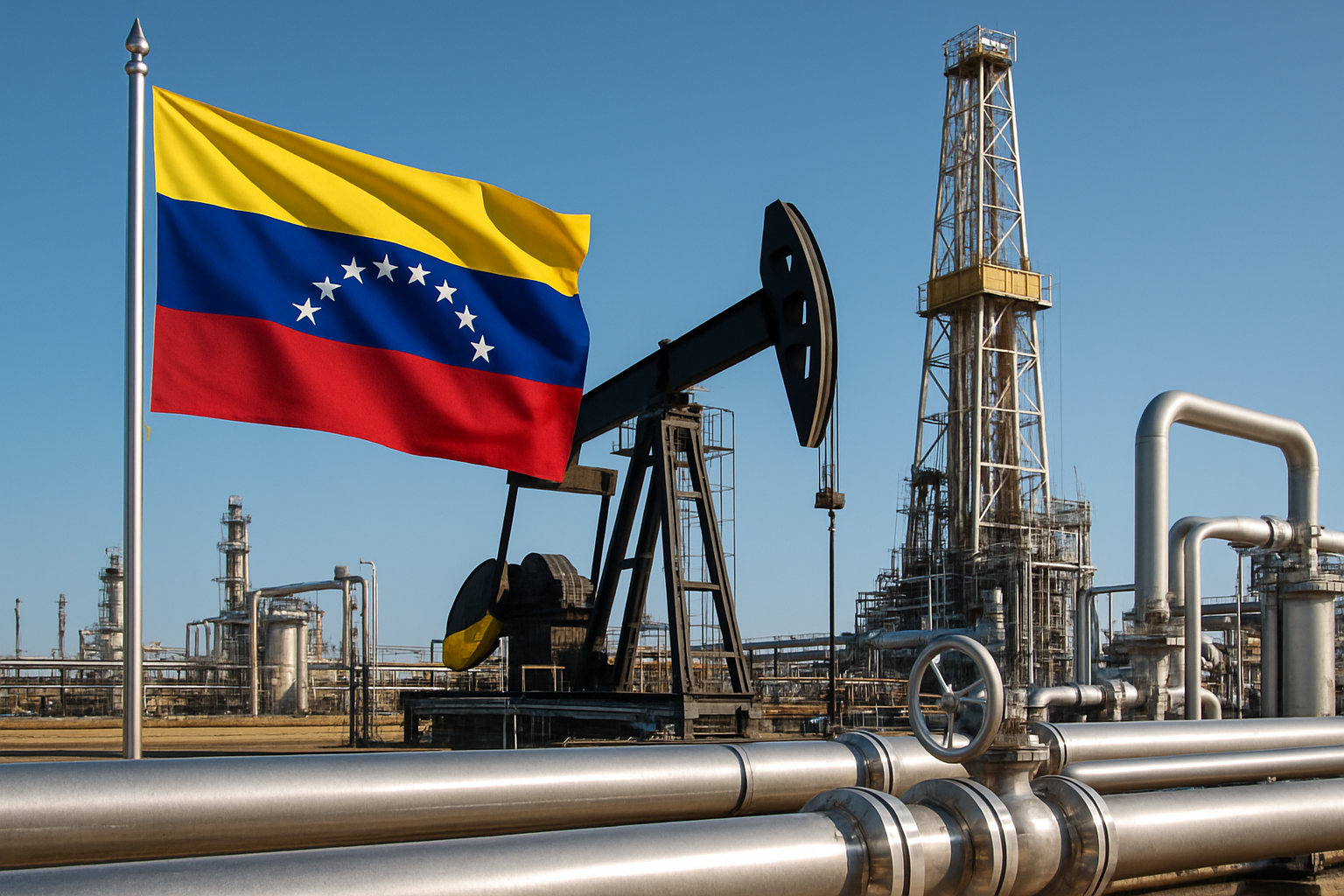
The Trump administration has declared "extraordinary economic progress" in its evolving partnership with Venezuela, as oil production surges 60% under Acting President Delcy Rodríguez's leadership and bilateral cooperation reaches unprecedented levels since the January 2026 transition.
President Donald Trump announced Wednesday that Venezuelan oil is finally "beginning to flow," praising Rodríguez for doing "an excellent job" during his State of the Union address. The remarks came as US Secretary of the Interior Doug Burgum concluded a landmark visit to Caracas, the highest-ranking American official to meet with Venezuelan leadership in recent years.
Historic Diplomatic Breakthrough
Burgum's meetings at the Miraflores Presidential Palace with Acting President Delcy Rodríguez mark the culmination of what French President Emmanuel Macron described as the Trump administration's "kind disposition to work together" with Venezuela's interim government. During his visit, Burgum announced Venezuela's commitment to comprehensive mining code reforms that will open unprecedented access for American companies.
"We see unlimited opportunities for cooperation with Venezuela,"
— Doug Burgum, US Secretary of the Interior
The diplomatic engagement represents a dramatic reversal from the "maximum pressure" campaign that characterized US-Venezuela relations during the previous Maduro regime. Since January 2026, bilateral cooperation has expanded rapidly across energy, mining, and security sectors.
Oil Production Transformation
Venezuelan oil exports have surged from 498,000 to 800,000 barrels daily—a remarkable 60% increase—since the political transition. The United States has displaced China as Venezuela's top oil customer, with American companies like Chevron doubling their Venezuelan operations under the comprehensive energy cooperation agreements signed in February 2026.
Energy Secretary Chris Wright's historic February visit to Caracas formally ended the Trump administration's 2019 oil embargo, describing the policy shift as "absolutely dramatic" for Venezuela's trajectory. The Treasury Department has since authorized five major oil companies—Chevron, BP, Shell, Eni, and Repsol—to expand operations significantly.
Mining Sector Opens to US Investment
During the Miraflores meetings, Rodríguez announced sweeping reforms to Venezuela's mining code, creating what Burgum described as "significant investment opportunities and bureaucracy reduction." The reforms specifically target critical minerals essential to US supply chain security, addressing longstanding concerns about Chinese dominance in strategic materials.
The mining sector opening complements broader economic cooperation that has seen US investment in Venezuela exceed $1 billion since the January transition, with projections of an additional $5 billion in energy sector commitments over the coming year.
Political Reconciliation Progress
The economic cooperation advances amid Venezuela's most comprehensive political amnesty in Latin American history. Over 750 political prisoners have been released under Rodríguez's administration, with the National Assembly unanimously approving a historic amnesty law covering 1999-2026 political offenses.
Former Spanish Prime Minister José Luis Rodríguez Zapatero, who continues mediating Venezuelan reconciliation efforts, praised the "unprecedented scope" of the amnesty process. Cardinal Baltazar Porras has organized nationwide prayer vigils supporting national healing and democratic transition.
Strategic Regional Realignment
The Venezuela transformation has triggered broader Caribbean geopolitical realignments. The Dominican Republic has reopened full diplomatic and commercial relations, while Brazil and European Union nations maintain cautious but growing support for the democratic transition.
Secretary of State Marco Rubio's three-phase reconstruction plan—stabilization, economic recovery, and democratic transition—appears to be progressing according to administration officials. The first phase has seen dramatic improvements in security cooperation and prisoner releases, while economic recovery accelerates through sanctions relief and international investment.
Energy Security Partnership
Beyond bilateral benefits, the US-Venezuela energy partnership addresses broader global energy security challenges. With Venezuelan production capacity potentially reaching 3 million barrels daily under proper investment and technical assistance, the cooperation could significantly impact global energy markets currently strained by Middle East tensions and supply chain disruptions.
The partnership also creates a template for "bilateral energy diplomacy" that the Trump administration views as crucial for countering Chinese influence throughout Latin America. Venezuela's rapid transformation from maximum pressure target to strategic partner demonstrates what administration officials describe as America's economic gravitational pull in regional partnerships.
Implementation Challenges Remain
Despite remarkable progress, significant challenges persist in Venezuela's democratic transition. Oil production remains at 700,000 barrels daily compared to historical peaks of 3 million, while infrastructure decay, hyperinflation, and power outages continue affecting daily life for millions of Venezuelans.
Human rights organizations note that over 600 political prisoners remain detained despite the amnesty law's passage, and questions persist about the sustainability of democratic reforms beyond the immediate transition period.
Congressional and International Response
The rapid policy reversal has generated mixed responses in Washington. Republicans generally support the approach as a strategic victory against Chinese regional influence, while Democrats have introduced legislation demanding greater transparency in Venezuelan oil sales and sanctions relief procedures.
European allies have welcomed the diplomatic breakthrough while emphasizing the need for sustained commitment to human rights and democratic institutions. Spain has announced its intention to request EU sanctions relief for Venezuelan officials who demonstrate continued progress on democratic reforms.
Looking Forward
As Venezuela enters what National Assembly President Jorge Rodríguez described as "a new phase" of democratic development, the success of US-Venezuela cooperation will likely influence broader American foreign policy approaches throughout Latin America and potentially globally.
President Trump has indicated his intention to visit Venezuela, which would make him the first US president to do so since 1997. Such a visit would represent the capstone of one of the most dramatic foreign policy transformations in recent American history, from maximum pressure to strategic partnership in just over a year.
The template established through Venezuela cooperation—combining military pressure, economic incentives, and selective engagement—may prove influential for addressing similar challenges in other regions where democratic transitions and great power competition intersect with vital American interests.