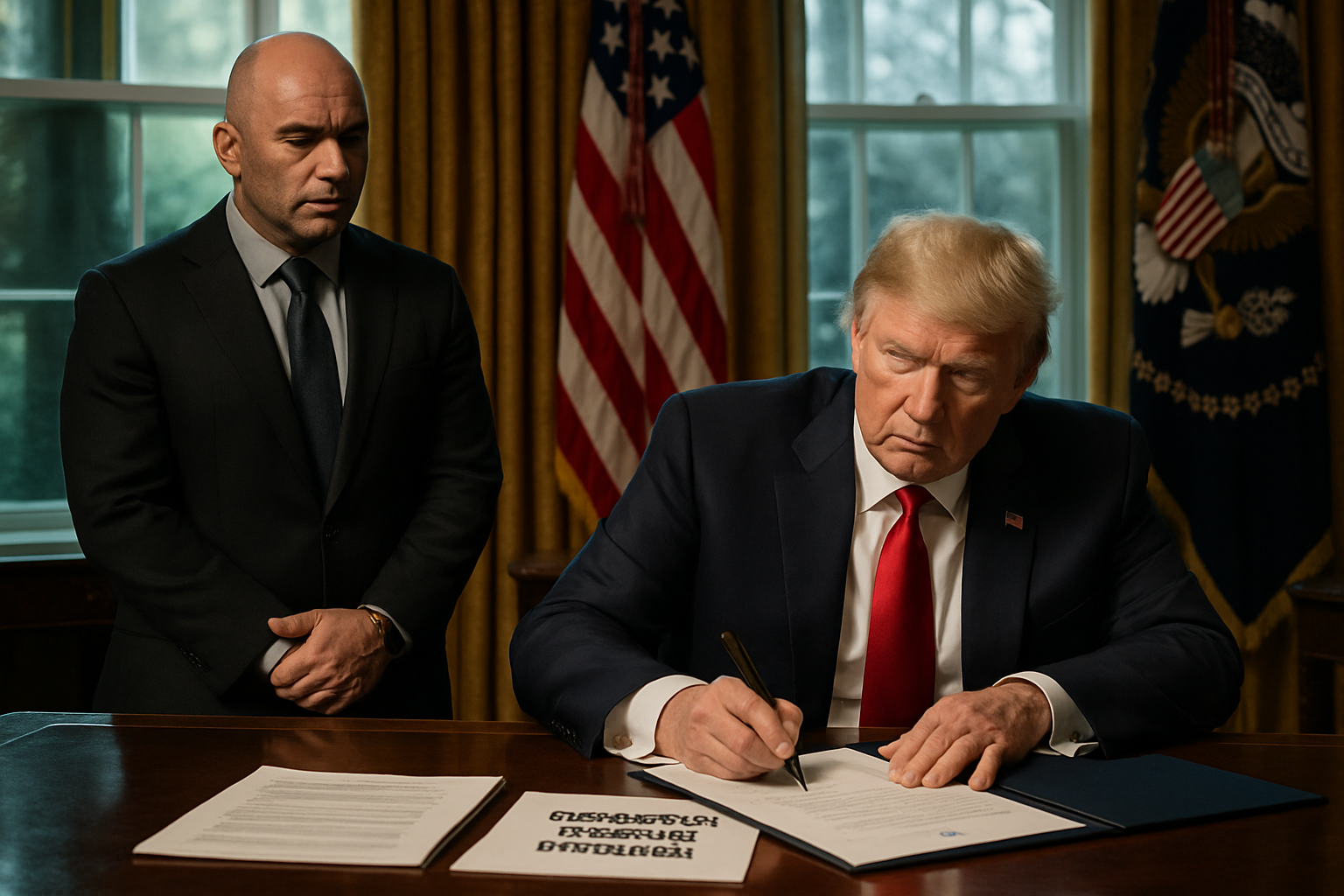
President Donald Trump signed a landmark executive order Saturday directing federal agencies to accelerate reviews of psychedelic drugs including ibogaine and psilocybin for treating mental health conditions, marking a dramatic shift toward alternative therapies with popular podcaster Joe Rogan prominently featured at the Oval Office signing ceremony.
The executive order calls on the federal government to relax restrictions on psychedelic substances for potential medical treatments, representing the most significant policy shift on psychedelics since the drugs were classified as Schedule I controlled substances decades ago. Health Secretary Robert F. Kennedy Jr. has championed the initiative as part of a broader push for alternative treatments for conditions including depression, PTSD, and addiction.
Breaking Through Regulatory Barriers
The order specifically targets substances already designated as potential breakthrough therapies by the FDA, despite their current Schedule I status under the Controlled Substances Act. Ibogaine, derived from the African iboga plant, has shown promising results in treating opioid addiction and PTSD among military veterans, though it remains controversial due to potential cardiac risks requiring careful medical supervision.
Psilocybin, the psychoactive compound found in "magic mushrooms," has demonstrated significant efficacy in clinical trials for treatment-resistant depression and end-of-life anxiety. The president's endorsement of both substances, captured in remarks where he jokingly asked "Can I have some, please?" according to NPR coverage, signals a remarkable evolution in federal drug policy.
"This represents a historic moment for breakthrough mental health treatments that have been trapped in bureaucratic red tape for far too long"
— Health Secretary Robert F. Kennedy Jr.
Joe Rogan's Influential Presence
The inclusion of Joe Rogan at the signing ceremony underscores the cultural significance of this policy shift. Rogan, whose podcast reaches millions of Americans weekly, has been a vocal advocate for psychedelic research and therapy, frequently hosting leading scientists and researchers who discuss the therapeutic potential of these substances.
Rogan's presence signals the administration's recognition of shifting public opinion on psychedelic medicine, particularly among younger demographics who view these treatments as potentially safer and more effective than traditional pharmaceutical approaches for mental health conditions.
Mental Health Crisis Context
The executive order comes amid what experts are calling a "Therapeutic Revolution of 2026," marking a global paradigm shift from crisis-response to prevention-first mental healthcare approaches. Recent research shows 96% of children aged 10-15 use social media, with 70% experiencing harmful content exposure and over 50% facing cyberbullying.
Veterans Affairs has expressed particular interest in ibogaine therapy for PTSD treatment among military personnel who have not responded to conventional treatments. The substance has shown remarkable efficacy in some studies, though researchers emphasize the critical importance of proper medical supervision due to potential cardiovascular effects.
Scientific Foundation and Safety Concerns
The executive order builds on mounting scientific evidence supporting therapeutic applications of psychedelics. Recent Romanian research has even suggested that certain compounds used in cosmetic procedures might function as neurologically-based antidepressant treatments, representing a broader understanding of how various substances can impact mental health through different biological pathways.
However, medical experts stress that these treatments require rigorous oversight and specialized training. The administration has committed to maintaining strict safety protocols while streamlining the approval process for legitimate medical research and treatment applications.
Regulatory Framework and Implementation
The order directs multiple federal agencies including the FDA, DEA, and Department of Veterans Affairs to coordinate on establishing new pathways for psychedelic medicine research and treatment. This represents a fundamental shift from prohibition to regulated medical access, though recreational use remains illegal under federal law.
Kennedy Jr. has emphasized that this initiative focuses specifically on medical applications under professional supervision, not broader decriminalization or recreational access. The framework will likely include specialized training requirements for healthcare providers and strict protocols for patient selection and monitoring.
Industry and Medical Community Response
The pharmaceutical and biotech industries are closely watching this development, as it potentially opens significant new market opportunities for companies developing psychedelic-based therapies. Several publicly traded companies working on psilocybin and MDMA treatments saw immediate stock price increases following news of the executive order.
Medical organizations have expressed cautious optimism while emphasizing the need for continued rigorous research and safety protocols. The American Psychiatric Association noted that while early results are promising, these treatments require specialized training and careful patient screening.
Political and Cultural Implications
This executive order represents a rare area of potential bipartisan agreement, as support for psychedelic medicine research has grown across political lines in recent years. Several Democratic lawmakers have previously introduced legislation supporting expanded research, while Republican governors in states like Texas have signed bills allowing psychedelic therapy studies.
The cultural shift is particularly notable given the historical association of psychedelics with counterculture movements. The inclusion of mainstream figures like Rogan and the medical community's growing acceptance suggests these treatments are entering mainstream medicine rather than remaining on the cultural periphery.
Looking Forward
Implementation of the executive order will likely take months as agencies develop new regulatory frameworks and safety protocols. The Veterans Affairs Department has indicated it will prioritize establishing pilot programs for PTSD treatment using ibogaine therapy, potentially serving thousands of veterans who have exhausted traditional treatment options.
This policy shift occurs as part of broader healthcare innovations, including advances in AI-assisted mental health support and prevention-first approaches that countries like Finland have used to achieve remarkable population wellness outcomes. The combination of traditional wisdom about natural medicines with modern scientific rigor represents a new chapter in American healthcare policy.
The executive order establishes the United States as a potential global leader in psychedelic medicine research, with implications extending far beyond American borders as other nations observe the outcomes of this unprecedented policy experiment in alternative mental health treatments.