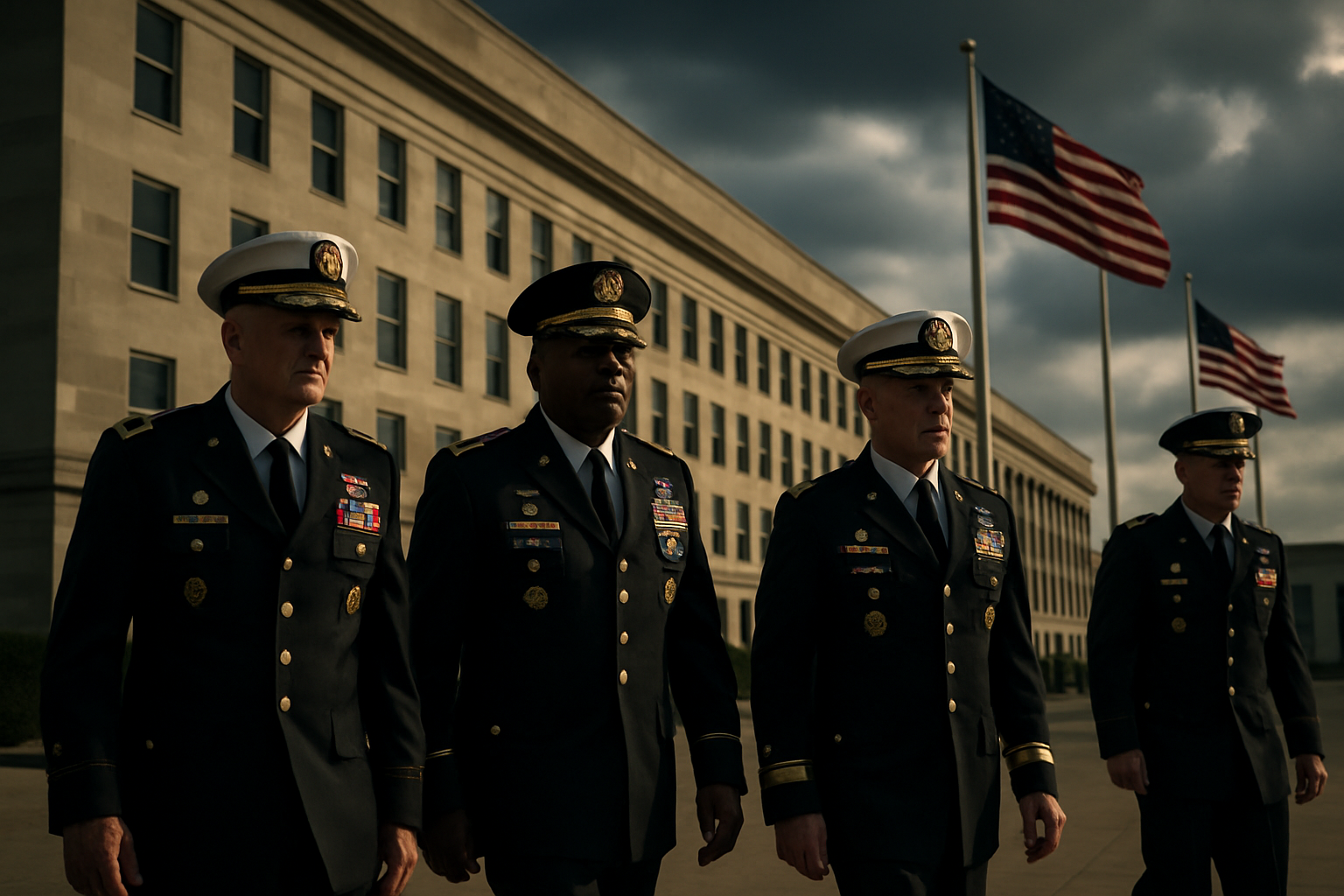
President Donald Trump has submitted an unprecedented $1.5 trillion defense budget request to Congress for fiscal year 2027, representing a staggering 44% increase from current military spending levels as the United States remains deeply engaged in Operation Epic Fury against Iran.
The massive defense spending proposal, released by the White House on Friday, underscores the Trump administration's commitment to military investment as the country faces mounting costs from the ongoing Iran war, which has already consumed over $27 billion in its first month alone. The budget request, if approved by Congress, would represent the largest single-year increase in US military spending since World War II.
Unprecedented Military Investment
The proposed $1.5 trillion budget represents a fundamental shift in American defense spending priorities, driven primarily by the escalating costs of Operation Epic Fury. Sources within the Pentagon confirm that the Iran conflict is currently running at approximately $1 billion per day, far exceeding initial projections of a 4-6 week campaign.
The defense budget increase coincides with Trump's broader fiscal strategy that includes a proposed 10% reduction in non-defense federal spending. Treasury Secretary Scott Bessent indicated that the administration views military readiness as the paramount national priority, stating that current global threats necessitate unprecedented defense investment.
"This administration has only one responsibility: military protection of the American people."
— President Donald Trump, Budget Statement
Iran War Driving Costs
The astronomical defense budget request comes as Operation Epic Fury enters its second month with no clear end in sight. The conflict, which began following the collapse of Geneva nuclear talks despite achieving "broad agreement on guiding principles," has evolved from targeted strikes to what officials describe as a comprehensive campaign against Iranian military infrastructure.
Congressional sources confirm that classified briefings have revealed Iran war costs of $11.3 billion in just the first week, with Pentagon officials now preparing operations extending through September 2026. The dual-carrier deployment of USS Gerald Ford and USS Abraham Lincoln represents approximately one-third of the active US Navy fleet, creating massive operational expenses.
The military campaign has already resulted in significant casualties, with 3 confirmed American deaths and over 150 wounded service members. The USS Charlotte submarine's sinking of the Iranian frigate IRIS Dena marked the first enemy vessel destroyed by a US submarine since World War II, demonstrating the conflict's escalating intensity.
Congressional Resistance Mounting
The defense budget request faces unprecedented congressional scrutiny, with bipartisan lawmakers expressing alarm at both the size of the increase and the lack of clear strategic objectives. Senator Richard Blumenthal (D-CT) stated he is "more concerned than ever" about potential ground troop deployment, while demanding comprehensive briefings on exit strategies and cost projections.
The conflict's unpopularity among the American public—with only 25% supporting the Iran operations according to recent polling—has created significant political constraints for lawmakers considering the massive spending increase. Financial markets have emerged as what sources describe as the "ultimate constraint" on further military escalation, with global economic disruption already evident.
The Iran war has triggered the worst aviation crisis since COVID-19, with over 18,000 flights cancelled worldwide and eight Middle Eastern countries simultaneously closing their airspace. Oil prices have surged past $100 per barrel as Iran's mining of the Strait of Hormuz has effectively closed 40% of global oil transit.
International Alliance Strain
The defense budget request comes amid unprecedented strain in traditional US alliances, with European partners delivering what officials describe as the most comprehensive rejection of American military leadership since the Iraq War. German Defense Minister Boris Pistorius led European resistance to Trump's naval coalition requests, questioning what "handful of European frigates" could accomplish that the "powerful US Navy cannot."
Spain's closure of its airspace to US military flights related to Iran operations represents a historic break in NATO cooperation, while France, Japan, and Australia have all explicitly declined to provide military support despite US requests. This isolation has forced the administration toward increasingly unilateral approaches to international crisis management.
"We no longer 'need' or want assistance from NATO countries—IN FACT, WE NEVER NEEDED IT!"
— President Trump, Truth Social
Nuclear Governance Crisis Context
The massive defense spending request occurs within the broader context of a global nuclear governance crisis. The expiration of the New START treaty in February 2026 marked the first time in over 50 years without US-Russia nuclear constraints, while Iran continues uranium enrichment at 60% purity with over 400kg of weapons-grade material.
The collapse of diplomatic negotiations with Iran, despite achieving the most progress since the 2018 JCPOA breakdown, has highlighted the limitations of traditional diplomatic tools in addressing 21st-century security challenges. Trump's explicit regime change demands, including claiming the right to "personally choose" Iran's next Supreme Leader, represent a fundamental departure from nuclear-focused negotiations toward comprehensive political transformation.
Economic and Strategic Implications
The proposed defense budget would fundamentally reshape American fiscal priorities, with military spending approaching levels not seen since the height of World War II. Economic analysts warn that such massive military investment, combined with the ongoing costs of the Iran war, could create significant inflationary pressures and complicate the Federal Reserve's monetary policy objectives.
The strategic implications extend far beyond immediate military needs. The budget reflects the administration's assessment that the United States faces a fundamentally altered global security environment requiring sustained military superiority across multiple domains simultaneously. Pentagon planners indicate that the increased spending would support everything from advanced weapons systems to expanded personnel and enhanced readiness capabilities.
Regional Consequences
The Iran conflict's expansion has created what UN Secretary-General António Guterres calls the "greatest test of multilateral cooperation in the modern era." Iranian retaliation through Operation True Promise 4 has targeted US allies across the Middle East, with casualties reported in UAE, Kuwait, Qatar, and the first European territory attacked since World War II when Iranian drones struck RAF Akrotiri in Cyprus.
The regional coalition that initially supported diplomatic efforts—including Saudi Arabia, UAE, Qatar, and Egypt—has become severely strained as Iranian attacks have directly targeted their territories. Egyptian President Sisi's warnings of "comprehensive chaos" reflect growing concern about the conflict's potential for regional expansion.
Long-term Defense Strategy
Military officials indicate that the $1.5 trillion budget represents more than just Iran war costs, encompassing a broader strategic shift toward great power competition with China and Russia. The budget includes significant investments in emerging technologies, space-based systems, artificial intelligence, and cyber warfare capabilities deemed essential for 21st-century military superiority.
The timing of the budget request also reflects lessons learned from the Iran conflict about the limitations of allied support and the need for enhanced unilateral capabilities. Pentagon sources suggest that future military operations may require greater self-reliance given the reluctance of traditional allies to support what they view as discretionary American military adventures.
Congressional Oversight and Accountability
The unprecedented nature of the defense budget request has prompted calls for enhanced congressional oversight mechanisms. Lawmakers are demanding detailed accounting of how previous Iran war spending has been allocated, with particular focus on cost overruns and the expansion of operations beyond initial timelines.
The resignation of counterterrorism chief Joseph Kent in protest over the Iran war has highlighted internal administration divisions over military priorities. Kent's warning that "Iran posed no imminent threat" and accusations of Israeli and media pressure creating a "disinformation campaign" have emboldened congressional critics seeking greater scrutiny of defense spending justifications.
Future Implications
The outcome of the defense budget request will establish precedents for American military spending and international engagement for years to come. Success in securing congressional approval would validate the administration's approach of military deterrence backed by unprecedented fiscal commitment. Failure could force reconsideration of both the Iran strategy and broader defense priorities.
The budget request represents what analysts describe as a "template-setting moment" for 21st-century American foreign policy, determining whether the United States will sustain military superiority through massive investment or seek alternative approaches to international security challenges. The decision will influence not only immediate military capabilities but also America's credibility in future international crises.
"This represents the greatest test of our multilateral cooperation and crisis management in the modern era."
— UN Secretary-General António Guterres
As Congress prepares to evaluate the historic defense spending request, the stakes extend far beyond fiscal policy to encompass fundamental questions about American power projection, alliance relationships, and the sustainability of military solutions to complex international challenges. The outcome will shape not only the trajectory of the Iran conflict but also America's approach to global security for generations to come.