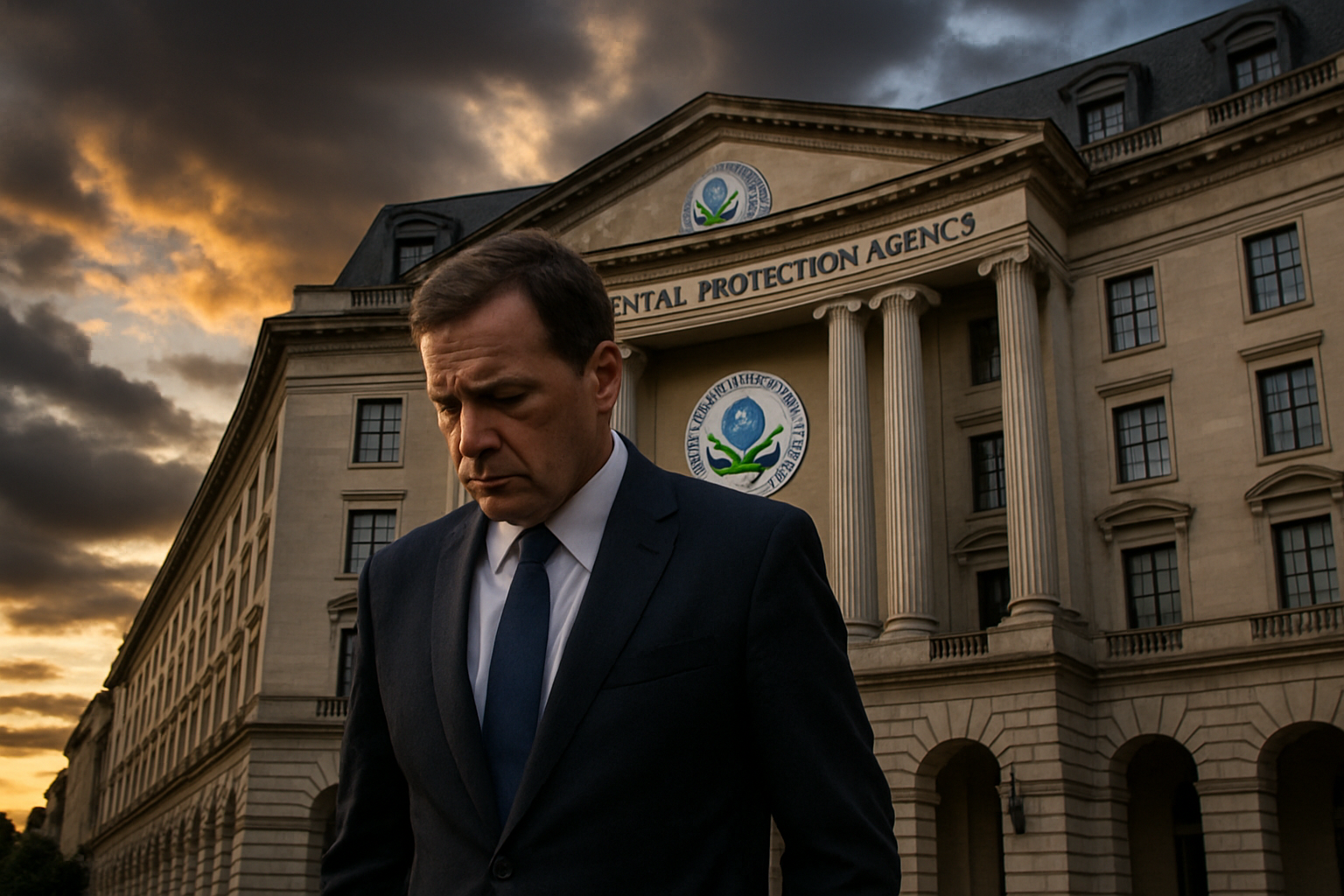
President Donald Trump on Thursday revoked the landmark scientific finding that has served as the legal foundation for U.S. climate regulations since 2009, eliminating federal authority to regulate greenhouse gas emissions and marking what the White House called the "largest deregulatory action in U.S. history."
The Environmental Protection Agency's formal repeal of its "endangerment finding" — the scientific determination that greenhouse gases endanger public health and welfare by driving climate change — immediately terminated vehicle emission standards and opened the door for wholesale dismantling of climate rules governing power plants, oil and gas operations, and other major sources of carbon pollution.
The decision, implemented by EPA Administrator Lee Zeldin, reverses the Obama administration's 2009 scientific assessment that established the regulatory framework for America's greenhouse gas reduction efforts over the past decade and a half. Trump characterized the move as eliminating what he called the "biggest scam in history" and freeing Americans from "catastrophic" climate regulations.
Immediate Impact on Vehicle Standards
The most immediate consequence was the elimination of emission standards for vehicle and engine models from 2012 through 2027, affecting millions of cars and trucks already on American roads. The decision removes fuel efficiency requirements that had been steadily tightening under both Republican and Democratic administrations, creating immediate uncertainty for an automotive industry that has invested billions in clean technology compliance.
EPA Administrator Zeldin said the action would "save thousands of billions of dollars for American consumers" by reducing vehicle costs, though environmental groups disputed these claims and warned of increased air pollution and public health consequences.
The regulatory elimination extends far beyond vehicles to encompass industrial greenhouse gas regulations across oil refining, chemical manufacturing, and electricity generation. Aviation emission standards, methane leak regulations for oil and gas operations, and carbon dioxide limits for power plants are all now vulnerable to removal under the new framework.
Legal and Political Challenges Expected
Environmental organizations and Democratic-led states are expected to immediately challenge the decision in federal court, arguing that the EPA failed to consider current scientific evidence showing accelerating climate change. The original endangerment finding was established following the 2007 Supreme Court ruling in Massachusetts v. EPA, which required the agency to determine whether greenhouse gases pose a danger to public health and welfare.
"This leaves Americans less safe, less healthy, and represents a dangerous gift to billionaire polluters at the expense of working families."
— Barack Obama, Former President
Legal experts predict the decision will face significant court challenges, as the 2009 endangerment finding was based on extensive scientific review and has been upheld through multiple legal challenges over 15 years. However, the current conservative-majority Supreme Court may be more receptive to the Trump administration's arguments about regulatory overreach.
Democratic governors from California to New York have already announced they will maintain their own emission standards and pursue legal action to preserve federal coordination on climate policy. California's Advanced Clean Cars II program and other state-level initiatives remain in place, but the loss of federal leadership significantly weakens national emissions reduction effectiveness.
International Implications and Climate Context
The decision occurs as global climate conditions continue to deteriorate, with January 2026 confirmed as the hottest month on record — the 18th out of the last 19 consecutive months to exceed 1.5°C above pre-industrial levels. Climate scientists warn of a dangerous disconnect between the acceleration of warming and the rollback of policies designed to address it.
European officials have expressed concerns about American climate leadership credibility, with the decision creating a stark contrast to the European Union's recently approved 90% emissions reduction target by 2040. The timing complicates international relationships with climate-committed allies and undermines U.S. standing in global climate negotiations.
Chinese officials noted the policy reversal with interest, as it potentially reduces American competitiveness in clean energy technologies where China has established significant market leadership. The decision comes amid ongoing concerns about Chinese dominance in critical materials needed for renewable energy infrastructure, controlling 60% of global production and 90% of refining capacity for lithium, cobalt, and rare earth elements.
Economic and Industry Response
The automotive industry faces particular uncertainty after years of planning and investment based on federal emission standards. Major manufacturers have spent billions developing electric vehicle technology and improving fuel efficiency to meet federal requirements that no longer exist.
Some energy companies welcomed the deregulation, arguing it would reduce compliance costs and regulatory uncertainty. However, renewable energy firms and clean technology companies expressed concerns about reduced federal support for the transition to lower-carbon energy sources.
Financial markets showed mixed reactions, with traditional energy stocks gaining while clean technology companies declined. Long-term investment planning becomes more complex without clear federal policy direction on emissions and climate risk.
Historical Context and Precedent
The endangerment finding repeal represents the most comprehensive reversal of American climate policy since the environmental movement began in the 1970s. It eliminates decades of federal environmental progress and creates a template for systematic deregulation across government agencies.
The decision exceeds even the Reagan administration's environmental rollbacks in scope and impact, fundamentally altering the federal government's role in addressing climate change. Previous Republican administrations had slowed implementation of climate policies but had not eliminated the underlying scientific and legal foundation.
Environmental historians noted that the decision represents a fundamental test of whether state and local action can be sufficient to address a global crisis without federal leadership and coordination.
Public Health and Scientific Community Response
Medical and scientific organizations condemned the decision, citing extensive evidence linking air pollution to respiratory disease, cardiovascular problems, and premature death. The American Lung Association warned that removing emission standards would worsen air quality in communities already disproportionately affected by pollution.
Climate scientists emphasized that the underlying physics of greenhouse gas warming remain unchanged regardless of regulatory decisions. The scientific consensus on human-caused climate change, supported by every major scientific organization worldwide, was not affected by the policy change.
Public health experts noted that the decision comes as extreme weather events continue to increase in frequency and intensity, creating additional health risks that the removed regulations were designed to help mitigate.
Path Forward and Future Implications
The success or failure of this historic policy reversal will likely influence environmental regulation worldwide, as other nations observe whether comprehensive deregulation can coexist with economic prosperity and public health protection.
The decision creates a natural experiment in federalism, testing whether state and local governments can effectively address climate change without federal coordination. States like California, New York, and Washington are positioned to maintain aggressive climate policies, while others may follow the federal lead toward deregulation.
Coming weeks will be decisive for determining whether innovative policy solutions emerge at the state level or whether the United States faces a sustained retreat from climate action unprecedented in the modern era. The international community continues to monitor developments closely, as American climate policy significantly influences global efforts to address what scientists describe as the defining challenge of the 21st century.
The ultimate test will be whether this regulatory rollback can deliver the promised economic benefits while avoiding the environmental and public health consequences that the scientific community has consistently predicted from unconstrained greenhouse gas emissions.