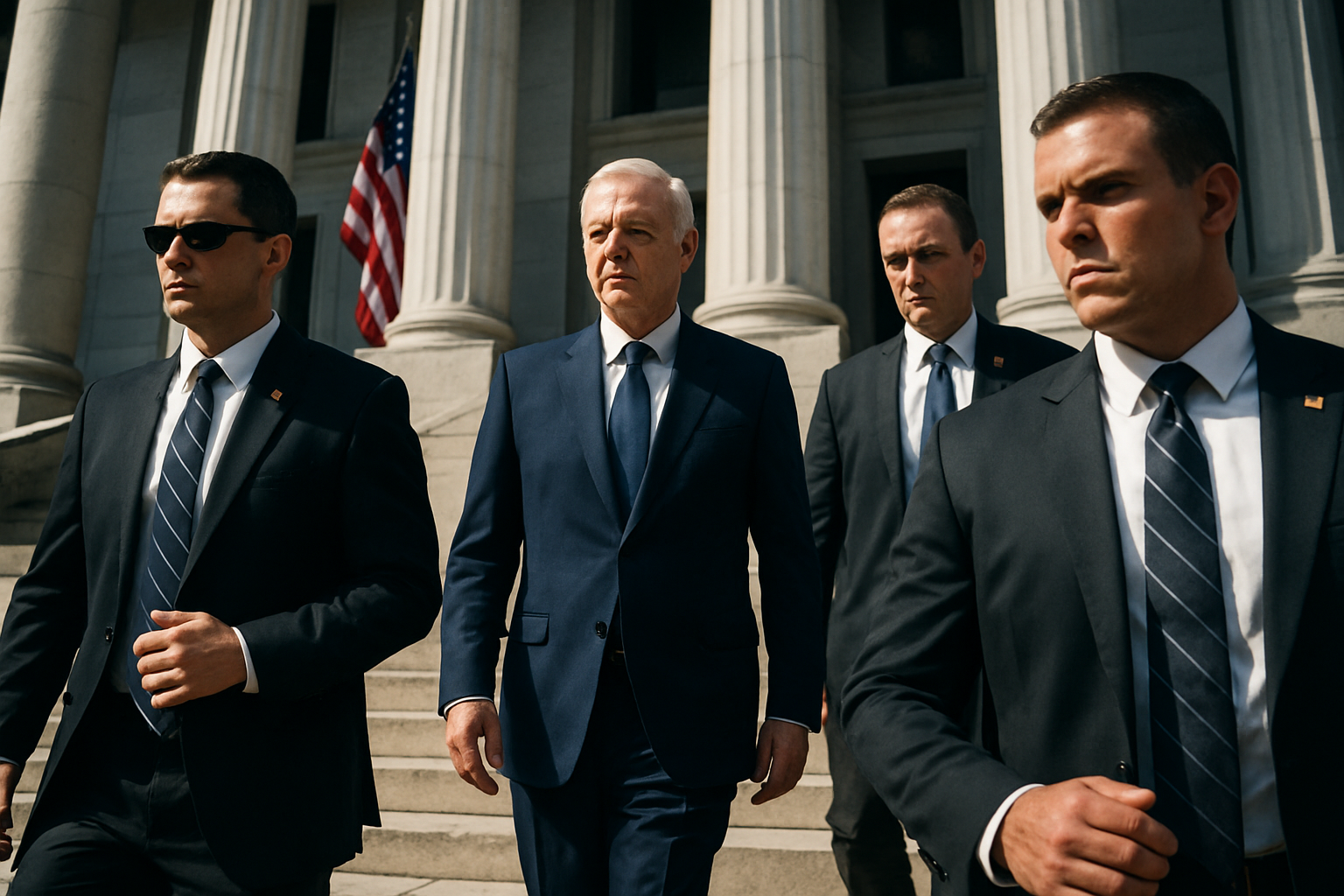
President Donald Trump faces a convergence of security threats and legal challenges as authorities investigate his second major assassination attempt in 2026, raising serious questions about presidential protection protocols and institutional accountability during his presidency.
The latest crisis emerged from the April 26 White House Correspondents' Dinner shooting, where Cole Thomas Allen, a 31-year-old California elementary school teacher, breached multiple security layers at the Washington Hilton armed with a shotgun, handgun, and knives. Allen managed to reach within 90 meters of the president before being subdued by Secret Service agents, marking the third major security incident targeting Trump since his return to office.
Secret Service Under Fire
Sean Curran, the newly appointed Secret Service Director who previously saved Trump during the 2024 assassination attempt in Butler, Pennsylvania, now faces intense scrutiny over how Allen penetrated what should have been impenetrable security at one of Washington's most protected events. The irony is stark: the man who once heroically protected Trump must now explain how another would-be assassin came dangerously close to the president.
According to German news sources, Allen sent an anti-Trump manifesto to his family just ten minutes before the attack, describing himself as a "Friendly Federal Assassin" with explicit anti-Christian content. The manifesto outlined his intention to target administration officials in "hierarchical order, from highest to lowest rank," demonstrating sophisticated planning that raises questions about intelligence gathering and threat assessment.
"This is the third major incident in less than three months. We're seeing a pattern of escalating threats that suggests our current security protocols may be fundamentally inadequate."
— Security Expert Analysis
Pattern of Escalating Threats
The White House Correspondents' Dinner attack follows two other serious security breaches targeting Trump properties and events. In February 2026, Austin Tucker Martin, a 21-year-old from North Carolina, was shot and killed by law enforcement after breaching Mar-a-Lago's secure perimeter armed with a shotgun and fuel canister. This incident occurred just months after Ryan Wesley Routh received a life sentence for his September 2024 assassination attempt at Trump's West Palm Beach golf course.
What makes these incidents particularly concerning is the sophistication of the planning involved. Allen, described by colleagues as "teacher of the month" in December 2024, had no criminal history but managed to travel from Los Angeles to Washington, staying as a hotel guest while conducting reconnaissance of the venue.
International Diplomatic Complications
The security crisis unfolds as Trump navigates complex international relationships, particularly with the United Kingdom during King Charles III's state visit. British officials have pushed for private meetings between the monarch and president, specifically to avoid a repeat of scenes where Trump publicly berated Ukrainian President Volodymyr Zelenskyy.
Sources indicate that despite the heightened security concerns following the correspondents' dinner attack, the royal visit will proceed as planned. However, the timing highlights the broader challenges facing Trump's presidency as he deals with strained international relationships while confronting domestic security threats.
Media Relations and Political Fallout
The assassination attempt has also reignited controversies over Trump's relationship with the media. First Lady Melania Trump used the incident to demand accountability from ABC over Jimmy Kimmel's joke referring to her as an "expectant widow" - a comment that now carries eerie resonance given the actual threat to her husband's life.
Pakistani sources report that right-wing commentators have seized on the incident to argue that Democratic criticism of Trump helps fuel political extremism, even as investigation details suggest Allen acted as a lone wolf motivated by personal grievances rather than organized political opposition.
Congressional Response and Oversight
The latest security breach has prompted calls for congressional hearings on presidential protection, with lawmakers from both parties expressing concern about the apparent vulnerabilities in what should be the most secure events in Washington. The fact that Allen managed to breach security at the same hotel where President Reagan was shot in 1981 has added historical weight to questions about whether lessons from past incidents have been adequately learned.
Spanish reporting indicates that Trump has also faced setbacks in other areas, including the dismissal of all 22 members of the National Science Council, raising questions about his administration's relationship with scientific expertise and advisory bodies.
Legal and Political Pressures
Beyond security concerns, Trump continues to face legal challenges that have carried over from his first presidency. Russian media coverage of the correspondents' dinner incident included references to ongoing investigations and legal proceedings, though Trump has maintained his innocence and characterized such matters as politically motivated.
The convergence of security threats, legal challenges, and political controversies creates a complex environment for Trump's presidency. As Venezuela's El Nacional noted, the royal visit proceeds despite these mounting challenges, suggesting that diplomatic protocols and international relationships must continue even amid domestic crises.
Institutional Responses and Reforms
The repeated security incidents have prompted broader discussions about reforming presidential protection protocols. Law enforcement experts argue that the current system, while professional and generally effective, may not be adequately adapted to contemporary threat patterns that involve highly educated, seemingly normal individuals who can conduct sophisticated reconnaissance and planning.
The FBI's ongoing investigation into Allen's background, motivations, and potential connections continues to examine whether he acted entirely alone or had any assistance in planning the attack. Initial findings suggest he was a "lone wolf," but the sophistication of his approach raises questions about how such individuals can be identified and stopped before they act.
Looking Forward: Security and Governance
As Trump's presidency continues, the balance between maintaining democratic accessibility and ensuring adequate security protection remains a critical challenge. The White House Correspondents' Dinner has traditionally symbolized the relationship between a free press and democratic government, but Saturday's events have fundamentally altered that symbolism.
The incident serves as a stark reminder of the ongoing threats facing democratic institutions and political leaders in an era of increasing polarization. Whether through enhanced security measures, improved threat assessment capabilities, or broader societal efforts to reduce political violence, the response to these challenges will likely shape presidential security protocols for years to come.
For Trump, navigating this environment while managing international relationships, legal challenges, and the basic functions of governance represents one of the most complex leadership tests any president has faced in modern American history.